

Can you mix panels at all? The short answer
Yes, within defined limits. Modules of different power ratings, different makes and different ages can be combined and will produce energy. What changes is efficiency and predictability: a mismatched arrangement produces less than the sum of its parts, and the shortfall can range from negligible to severe depending on how the mismatch is arranged.
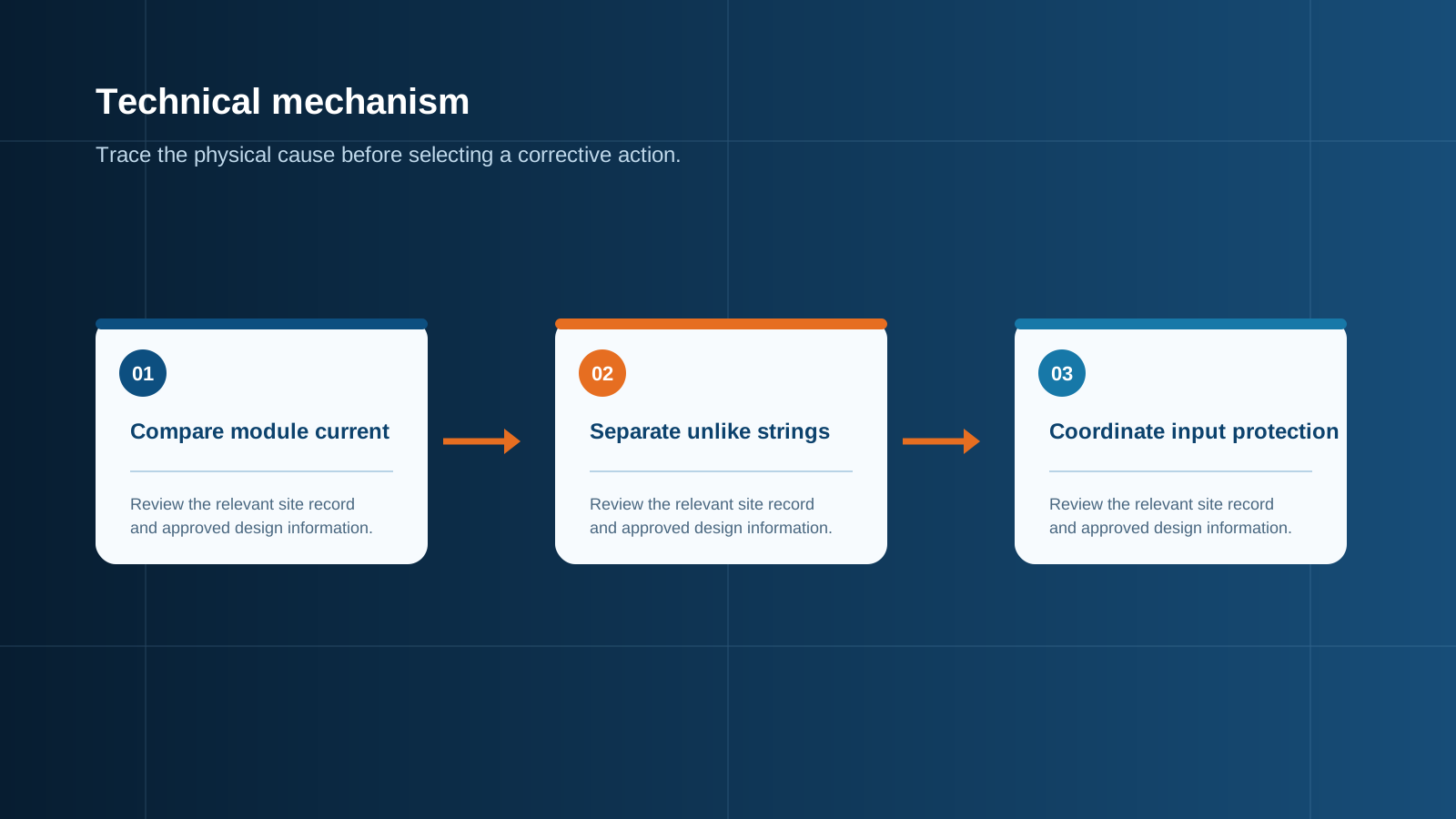
The governing principle is straightforward. In a series connection the string current is limited by the weakest module in the chain. In a parallel connection the group voltage is pulled toward the lowest string voltage. Therefore mismatched current is a problem in series, and mismatched voltage is a problem in parallel. Understanding which parameter differs tells you immediately how to wire the modules.
Technical diagram shown at a readable responsive scale.
Series mixing: current is set by the weakest panel
When modules are connected in series, the same current flows through every module in the string. If one module can only pass 9 A while its neighbours can pass 11 A, the whole string operates near 9 A. The higher-capability modules are held below their maximum power point and their surplus capacity is simply unused. Voltages, by contrast, add normally, so a series string tolerates voltage differences without penalty.
Worked example: five modules of 11 A maximum power current combined in series with one module of 9 A. The string operates at approximately 9 A. Assuming all six modules have a similar maximum power voltage of 41 V, the string delivers roughly 6 multiplied by 41 multiplied by 9, or about 2214 W, whereas six matched 11 A modules would deliver about 2706 W. The loss is close to 18 percent, and almost all of it is surplus capacity in the five good modules being wasted.
- Match maximum power current, Imp, as closely as possible within a series string.
- Differences in Vmp between modules in series are acceptable because voltages add.
- A single low-current module penalises the entire string, so never place one odd module in a long string.
- Keep the same cell count and technology within a string where possible so temperature behaviour matches.
Parallel mixing: voltage must match, current adds
In a parallel connection the opposite rule applies. All parallel strings are held at a common voltage, and currents add. If one string has a materially lower maximum power voltage than the others, the common operating voltage is dragged down and every string operates away from its optimum. Current mismatch, however, is harmless in parallel because each string simply contributes what it can.
Worked example: one string with a maximum power voltage of 205 V paralleled with a string at 246 V. The tracker settles at a single voltage that compromises both, and total harvest falls short of what the two strings would deliver separately. Where two groups of modules differ significantly in voltage, the correct solution is not to parallel them at all but to feed them into separate tracker inputs so each can operate at its own optimum.
- Match maximum power voltage, Vmp, between strings that are paralleled.
- Differences in current between parallel strings are tolerable, but each string still needs its own fuse.
- Where voltage differs materially, use separate tracker inputs instead of paralleling.
- Never parallel strings with different series counts on the same input.
Technical diagram shown at a readable responsive scale.
Mismatched wattage, make and age: worked examples
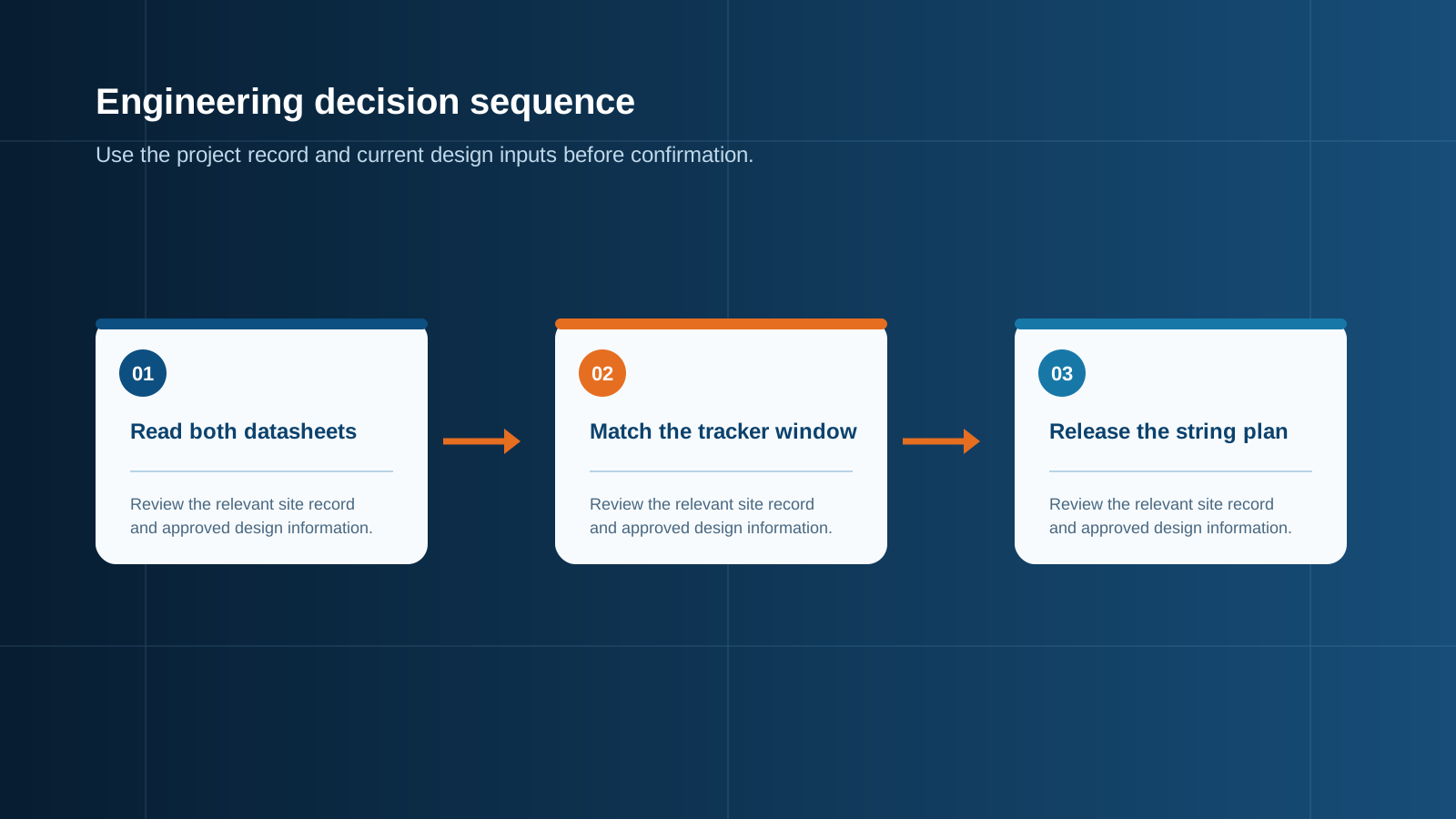
Mixing wattage is often acceptable because two modules of different rated power may have very similar current and differ mainly in voltage. A 400 W and a 450 W module from the same product generation frequently share a nearly identical maximum power current, differing instead in cell count and therefore in voltage. Those two modules combine well in series and poorly in parallel.
Mixing age introduces a second effect. A module that has operated for eight years has typically lost four to six percent of its output through gradual degradation, and its current capability has fallen accordingly. Placing an eight-year-old module in series with new modules therefore imposes that same shortfall on the whole string. Mixing makes is the least problematic case provided the electrical parameters are compared directly on the datasheets rather than assumed from the power rating.
- Same current, different voltage: combine in series, avoid parallel.
- Same voltage, different current: combine in parallel, avoid series.
- Different in both: use separate tracker inputs and do not combine at all.
- Old and new modules together: expect the string to inherit the degraded module's current.
Power loss you can expect and when it is acceptable
Loss is proportional to the size of the mismatch and to how many good modules are penalised by it. A current mismatch of five percent within a series string typically costs three to five percent of string output. A ten percent mismatch costs eight to twelve percent. A thirty percent mismatch, for example one distinctly different module in an otherwise matched string, can cost twenty to twenty-five percent.
Whether that is acceptable is an economic judgement rather than a technical one. Adding four surplus modules with a ten percent mismatch still adds net energy, and if those modules were inexpensive the return may be perfectly reasonable. What is not acceptable is an unquantified mismatch, because the owner then attributes the shortfall to equipment failure and troubleshooting effort is spent looking for a fault that does not exist.
When mixing is safe and when to avoid it
Mixing is safe when the mismatch is in the parameter that does not matter for the chosen topology, when both modules carry the same certification and maximum system voltage rating, and when the resulting string voltage and current remain inside the equipment limits at temperature extremes. It is also safe when the mismatched group is given its own tracker input, which isolates the effect entirely.
Mixing should be avoided where the maximum system voltage ratings differ, because the string must then be limited to the lower rating; where the maximum series fuse rating differs, because protection coordination becomes ambiguous; and where one module has a materially different temperature coefficient, because the mismatch will vary through the day and across seasons instead of remaining predictable.
- Avoid mixing modules with different maximum system voltage ratings in one string.
- Avoid mixing modules whose maximum series fuse ratings differ, since the lower value governs.
- Avoid mixing markedly different temperature coefficients, which makes mismatch vary with conditions.
- Prefer separate tracker inputs whenever two groups differ in more than one parameter.
Fuse and protection sizing for mixed strings
Protection for a mixed string is governed by the highest short-circuit current present and by the lowest maximum series fuse rating present. The fuse must be rated at not less than 1.25 times the highest string short-circuit current so that it does not operate under normal peak conditions, and it must not exceed the lowest maximum series fuse rating on any module label, because that value defines what the weakest module can withstand.
Where those two constraints conflict, the modules cannot share one protected input and must be separated. This is the practical point at which mixed arrays become a protection design question rather than a wiring question, and it is the reason mixed strings should be documented input by input inside the combiner enclosure rather than treated as an undifferentiated array.
- Fuse rating floor: 1.25 times the highest short-circuit current in the protected string.
- Fuse rating ceiling: the lowest maximum series fuse rating printed on any module in that string.
- If the floor exceeds the ceiling, split the modules across separate protected inputs.
- Record the module type and fuse rating for each input so future maintenance is unambiguous.
Planning a clean string layout in the combiner box
A mixed array is manageable when it is organised, and unmanageable when it is improvised. The practical approach is to group modules into matched sets, give each set its own protected input in the combiner enclosure, and label the input with the module type, series count and fuse rating. Monitoring at input level then makes any future underperformance immediately attributable to a specific group.
NEUTRON configures PV combiner equipment with the number of protected inputs, individual fuse ratings and per-input monitoring that a mixed or phased array requires. Supplying the module datasheets and the intended grouping allows each input to be protected for the modules actually connected to it, rather than to a single assumed rating applied uniformly across the enclosure.
This is general technical guidance. Confirm final ratings, protection coordination, installation and applicable local requirements against current standards, manufacturer documentation and the approved project design.
Frequently asked questions
Can I mix 400W and 450W panels?
Often yes, and the deciding factor is not the wattage but which electrical parameter differs. If the two modules have a similar maximum power current and differ mainly in voltage, they combine well in series because voltages add while current stays common. If they have similar voltage but different current, they combine well in parallel instead.
How much power do I lose mixing panels?
The loss tracks the size of the mismatch in the parameter that matters for the topology. Within a series string, a five percent current mismatch typically costs three to five percent of string output, a ten percent mismatch costs eight to twelve percent, and a thirty percent mismatch can cost twenty to twenty-five percent.
Discuss your PV requirement
Share the system voltage, string arrangement, inverter interface and installation environment. NEUTRON can review the equipment configuration around your project documentation.
Discuss a projectContinue learning
Explore related technical guidance in Solar PV.



Published from the approved Period 06 source package. Technical values and final design decisions must be verified against the current applicable standard, manufacturer documentation and approved project design.