

What HJT (heterojunction) is
Heterojunction technology stacks a thin amorphous silicon layer onto crystalline silicon wafers, lifting efficiency and improving low-light and temperature behaviour. For system design, the headline benefit is not just watts but the temperature coefficient, which reshapes how many modules fit in a string and how the balance of system is specified.
Technical diagram shown at a readable responsive scale.
Superior temperature coefficient
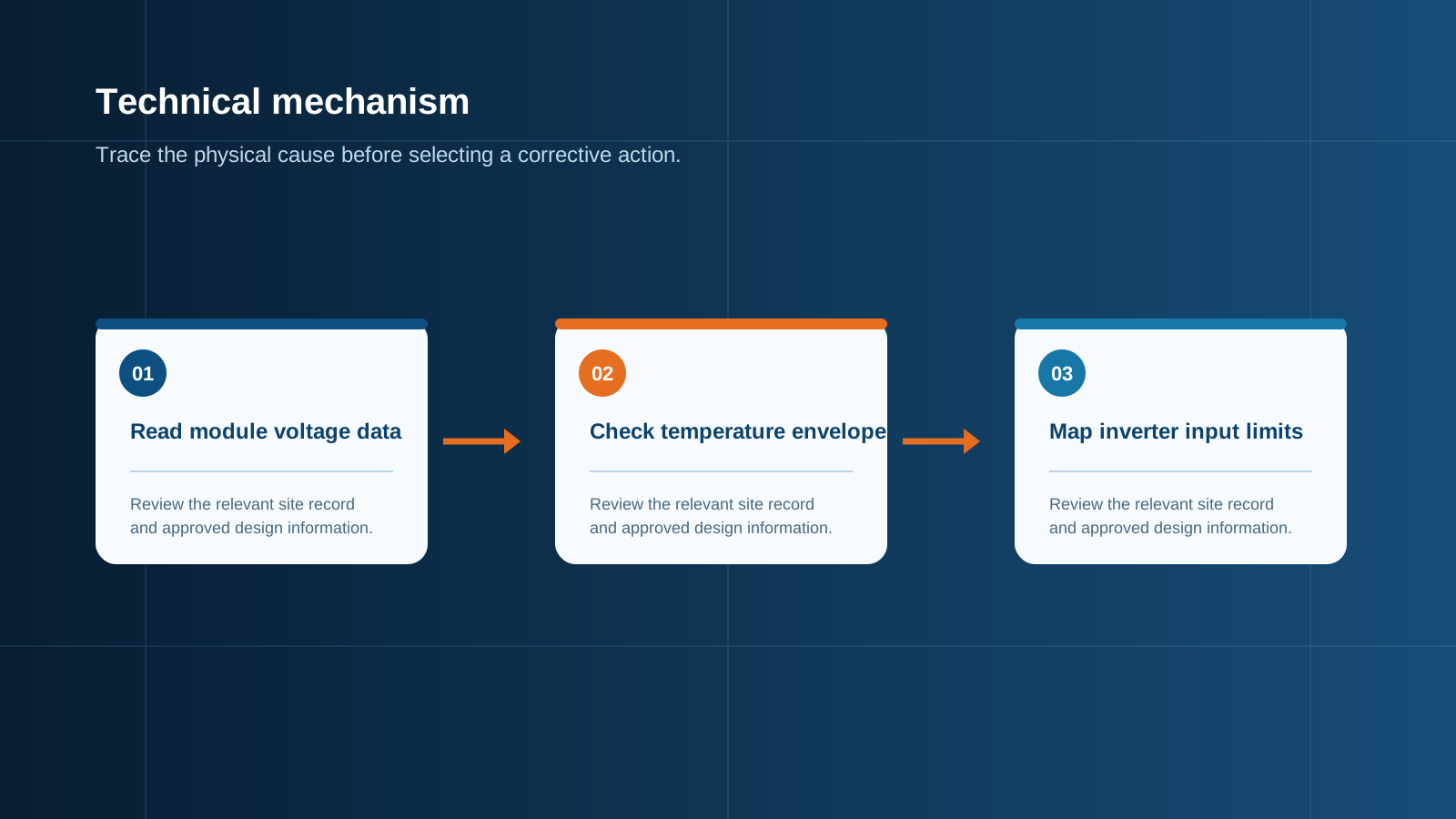
HJT modules typically show a lower power temperature coefficient than PERC, losing less output as cells heat up. The flip side is also design-relevant: a lower Voc temperature coefficient means voltage rises less in cold weather, so the cold-string voltage ceiling is gentler and more modules can be placed in series without exceeding limits.
More panels per string, why
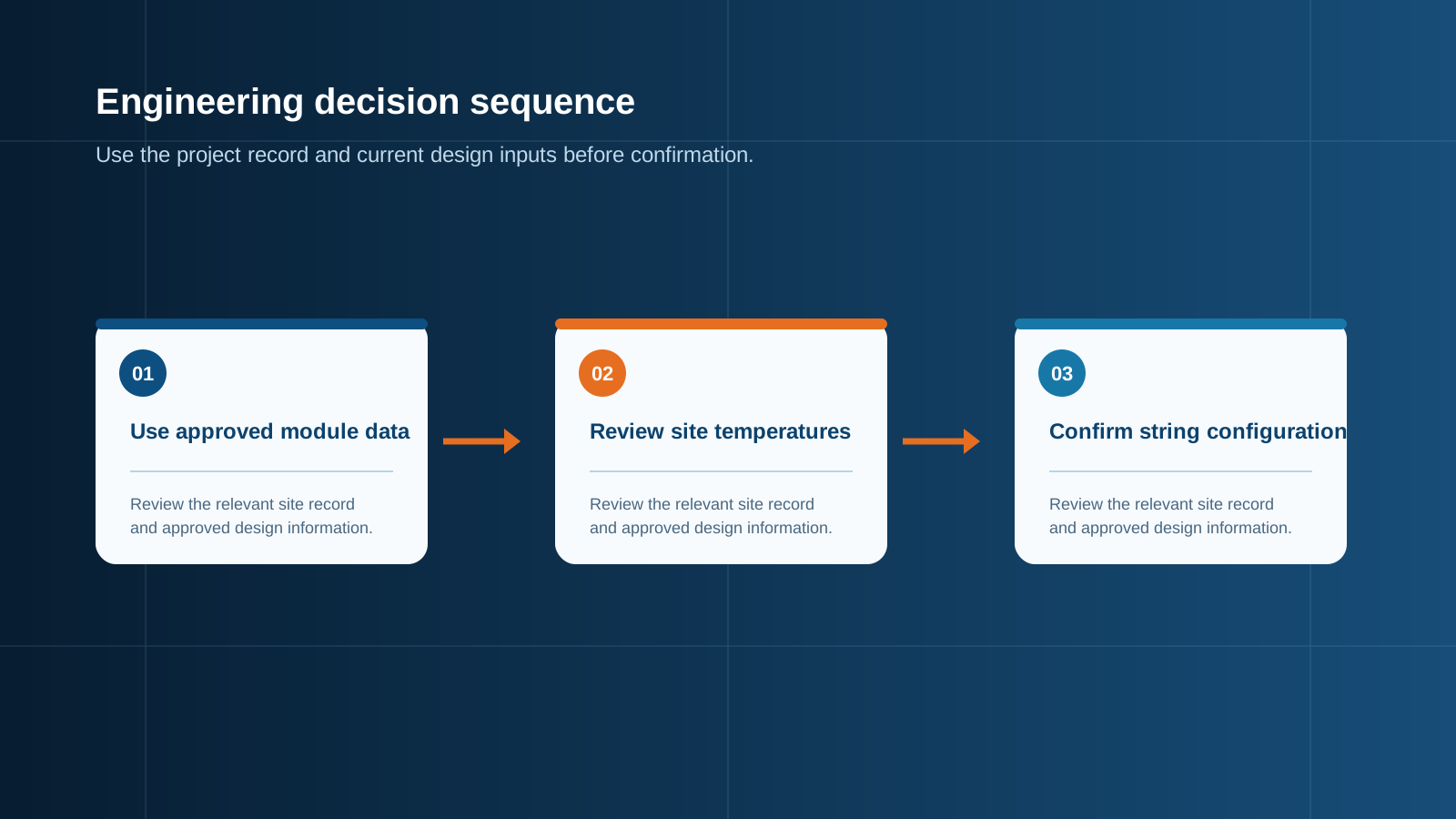
Because cold-weather Voc is lower with HJT, the maximum system voltage is reached with more series-connected modules than an equivalent PERC string. This can reduce the number of strings and combiner inputs for a given array, simplifying the DC architecture.
Technical diagram shown at a readable responsive scale.
Worked example HJT vs TOPCon vs PERC
Take a 1500 V system with a cold-weather Voc budget of about 1100 V. A PERC module at −10 °C might allow ~20 in series; a TOPCon module slightly more; an HJT module, with its gentler Voc coefficient, may allow ~22–24. The exact count comes from the datasheet Voc and the coefficient, not a generic rule.
Cold-weather Voc limits
Even with HJT’s advantage, the cold-string voltage must stay under the inverter maximum and the combiner’s rated insulation. Always compute Voc at the site’s lowest expected temperature and confirm margin. NEUTRON sizes the DC isolation and SPD to the resulting envelope.
Fuse and busbar implications
More panels per string can raise string current if HJT modules also carry higher Isc; the gPV fuse must still cover 1.25× Isc. The combiner busbar must aggregate the summed string current, and with fewer but larger strings the busbar rating and termination torque deserve careful checking.
Combiner box configuration
With HJT allowing fewer, larger strings, the combiner box may collect less input count but higher per-string current. NEUTRON configures gPV fuses, DC SPD and busbar cross-section to the HJT string data, confirming the enclosure matches the reduced input count and raised current.
Matching BOS to HJT strings
The HJT module changes the numbers fed into the same BOS design: more panels per string, possibly higher Isc, and a gentler voltage curve. Hand the datasheet Voc, coefficient, Isc and target string count to the BOS specification, and the combiner and protection will be correct for heterojunction arrays.
This is general technical guidance. Confirm final ratings, protection coordination, installation and applicable local requirements against current standards, manufacturer documentation and the approved project design.
Frequently asked questions
How many HJT panels per string?
It depends on the module Voc, its temperature coefficient and the system voltage limit. Because HJT typically has a lower Voc coefficient, a cold string can often hold more modules than an equivalent PERC string — compute from the datasheet, not a fixed count.
Why does HJT allow more per string?
The lower Voc temperature coefficient means voltage rises less in cold weather, so the cold-string voltage ceiling is reached with more series modules before hitting the inverter or combiner limit.
Does HJT change fuse sizing?
The fuse rule is unchanged — size the gPV fuse to 1.25× the string Isc. If the HJT module’s Isc is higher, the fuse and busbar rating must follow that current, even though the panel count per string may be larger.
HJT vs TOPCon string sizing?
Both improve on PERC, but HJT’s typically gentler Voc coefficient gives the most headroom for panels per string. The exact comparison requires the two datasheets; NEUTRON sizes the BOS from the actual numbers.
Discuss your PV requirement
Share the system voltage, string arrangement, inverter interface and installation environment. NEUTRON can review the equipment configuration around your project documentation.
Discuss a projectContinue learning
Explore related technical guidance in Solar PV.


Published from the approved Period 06 source package. Technical values and final design decisions must be verified against the current applicable standard, manufacturer documentation and approved project design.