 NEUTRONPower Distribution & New Energy
Menu
Reviewed configuration
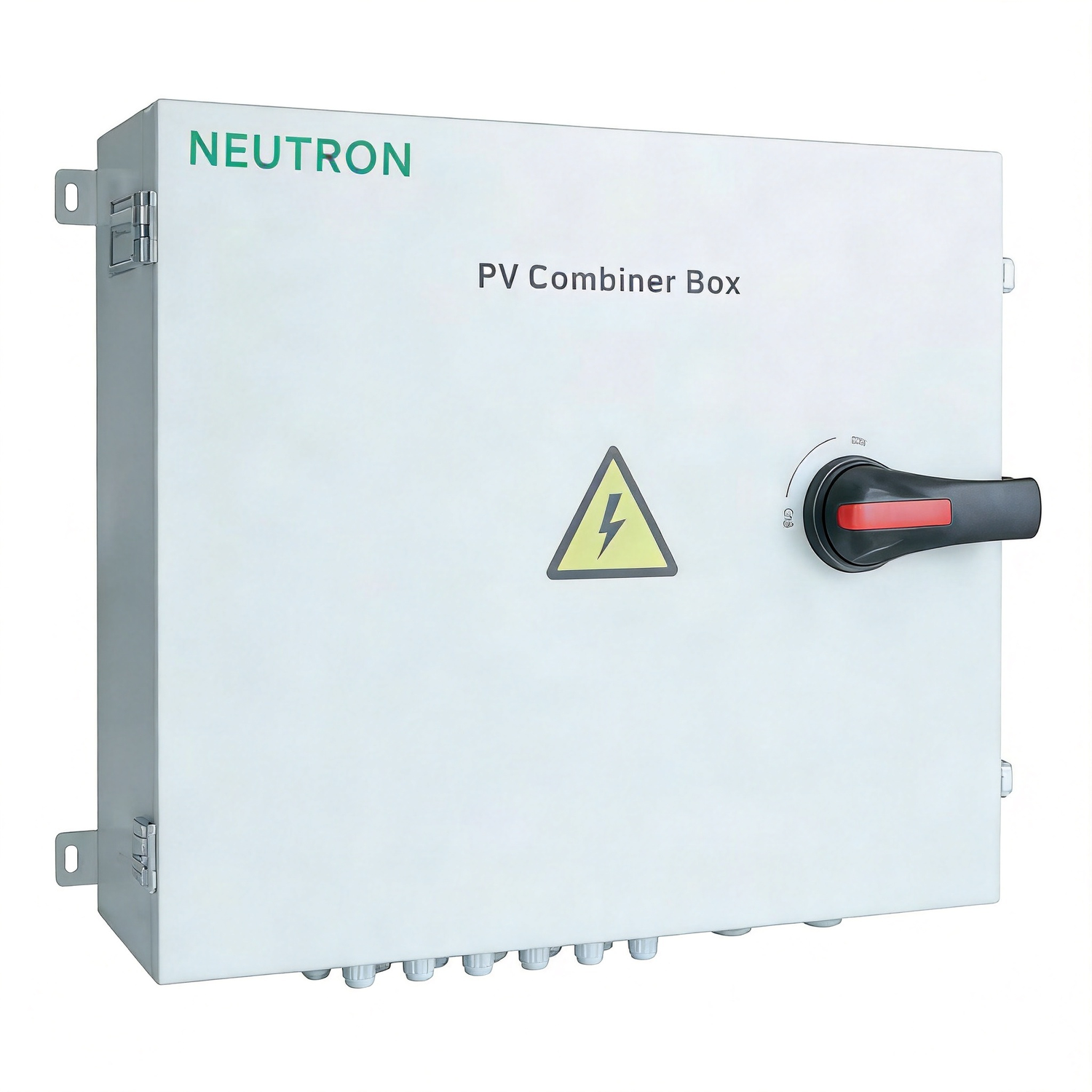
NHT-16/1 DC disconnect combiner
A 1000V DC configuration with 16 input and 1 output boundary. Confirm the project specification before release.
Purchase readiness
Move from product interest to a review-ready request.
Pricing is confirmed per configuration and quotation. Project builds are engineered to spec; final ratings, documents and delivery are confirmed before quotation.
- MOQ
- 1 unit
- FOB
- Ningbo / Shanghai
- Standard lead time
- 3-5 days
- Project lead time
- 5-30 days
- Sample route
- Drawing review before quotation
Source-backed technical data
Complete configuration parameters, not only a model summary.
The table below is transcribed from the approved catalogue technical sheet for this configuration. The final drawing, BOM and inspection scope remain subject to the agreed project specification.
Configuration summary
| Model | NHT-16/1 |
|---|---|
| Configuration type | DC disconnect combiner |
| Voltage class | 1000V DC |
| Input count | 16 |
| Output count | 1 |
| Protection / switching architecture | disconnect + SPD |
Technical specifications
| Input | 16 string |
|---|---|
| Output | 1 string |
| Maximum Voltage | 1000V |
| Max DC Short Circuit Current Per Input(Isc) | 15A (Changeable) |
| Maximum Current Output | 250A |
| Enclosure Material Type | Metal |
| Degree of Protection | NEMA-3R / 4 / 4X |
| Degree of Resistance to Impacts | IK 10 |
| Dimension (WxHxD) | 19.68x23.6x7.8 inches |
| Cable input Entry | #14-8 AWG |
| Output Cable Gland | #6-350 AWG |
| DC Switch Disconnector | BH 250 |
| Rated Insulation Voltage(Ui) | 1000V |
| Rated Current(Ie) | 250A |
| DC Switch Standard Compliance with | UL98B |
| DC Switch Certification | UL |
| Rated conditional short-circuit current(KA) | 10 kA |
| DC Surge Arrester | BUD-40/3 |
| SPD Max Operation Voltage(Ucpv) | 1000V |
| SPD Standard Compliance with | UL1449/ IEC/EN 61643-31 |
| SPD Maximum Discharge Current | 40KA |
| SPD Certification | UL / TUV |
| DC fuse holder | OSPV-30 |
| LED Indicator | YES |
| Fuse Rated Working Voltage | 1500V |
| Fuse Link | OSPV-30L In=15A DC 1000V |
| Fuse Certification | TUV |
| Fuse Breaking capacity | 25kA |
| Operating Temperature | -20℃~+60℃ |
| Humidity | 99% |
| Altitude | 2000M |
| Installation | Wall Mounting |
Related configurations
Compare nearby arrangements in the same family.
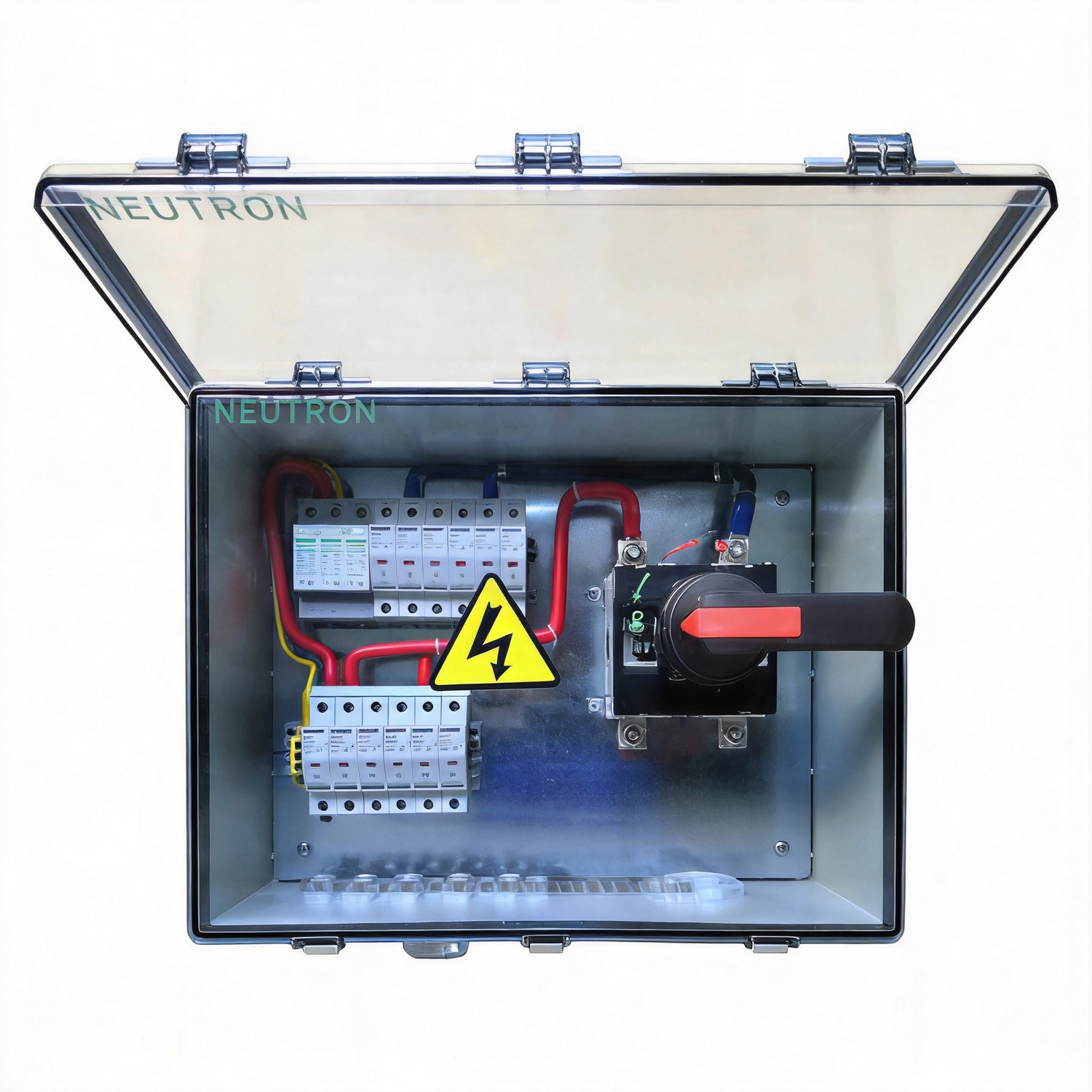
DC disconnect combiner
- Voltage
- 1000V DC
- Input / output
- 6 / 1
- Arrangement
- load-break disconnect
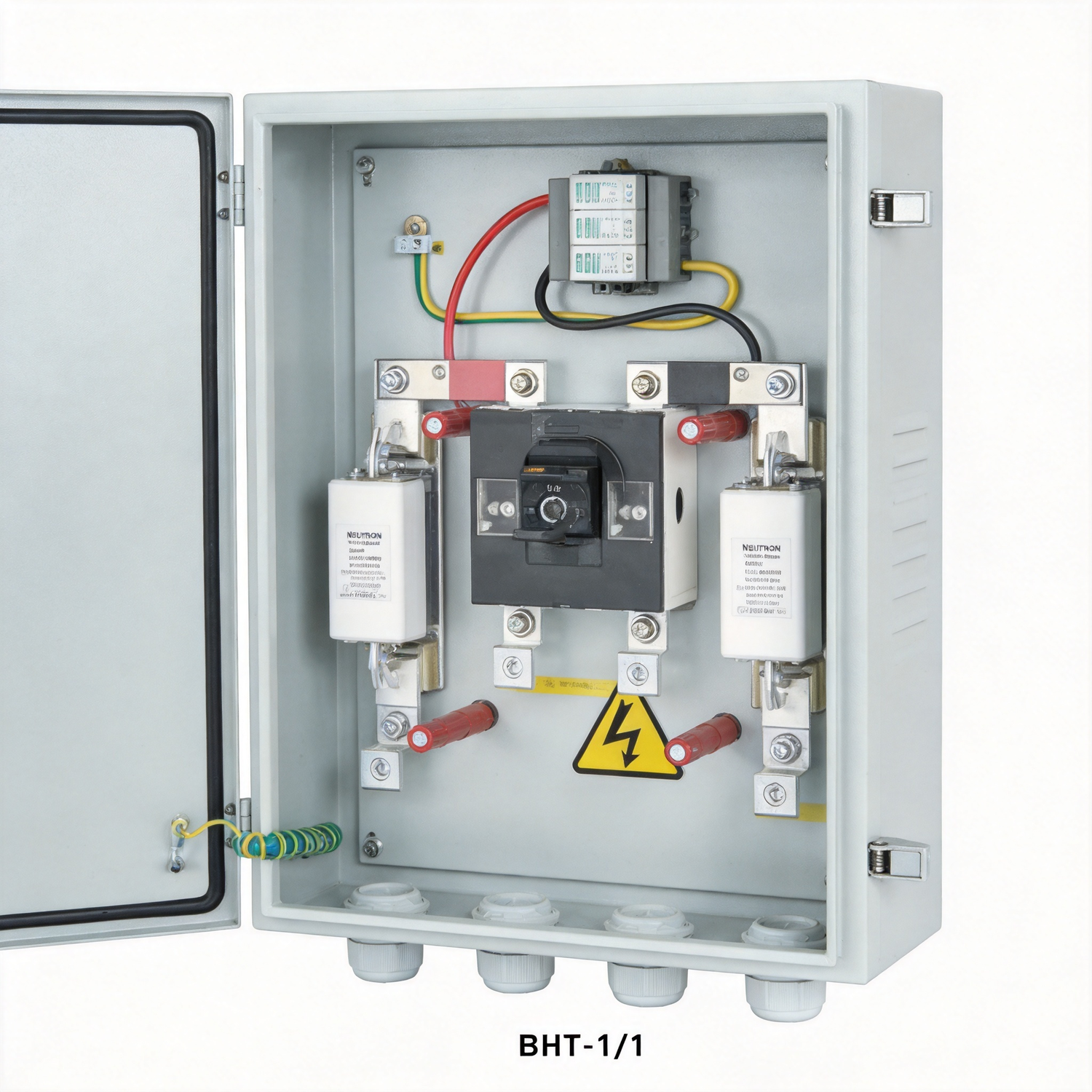
DC disconnect combiner
- Voltage
- 1500V DC
- Input / output
- 1 / 1
- Arrangement
- load-break disconnect
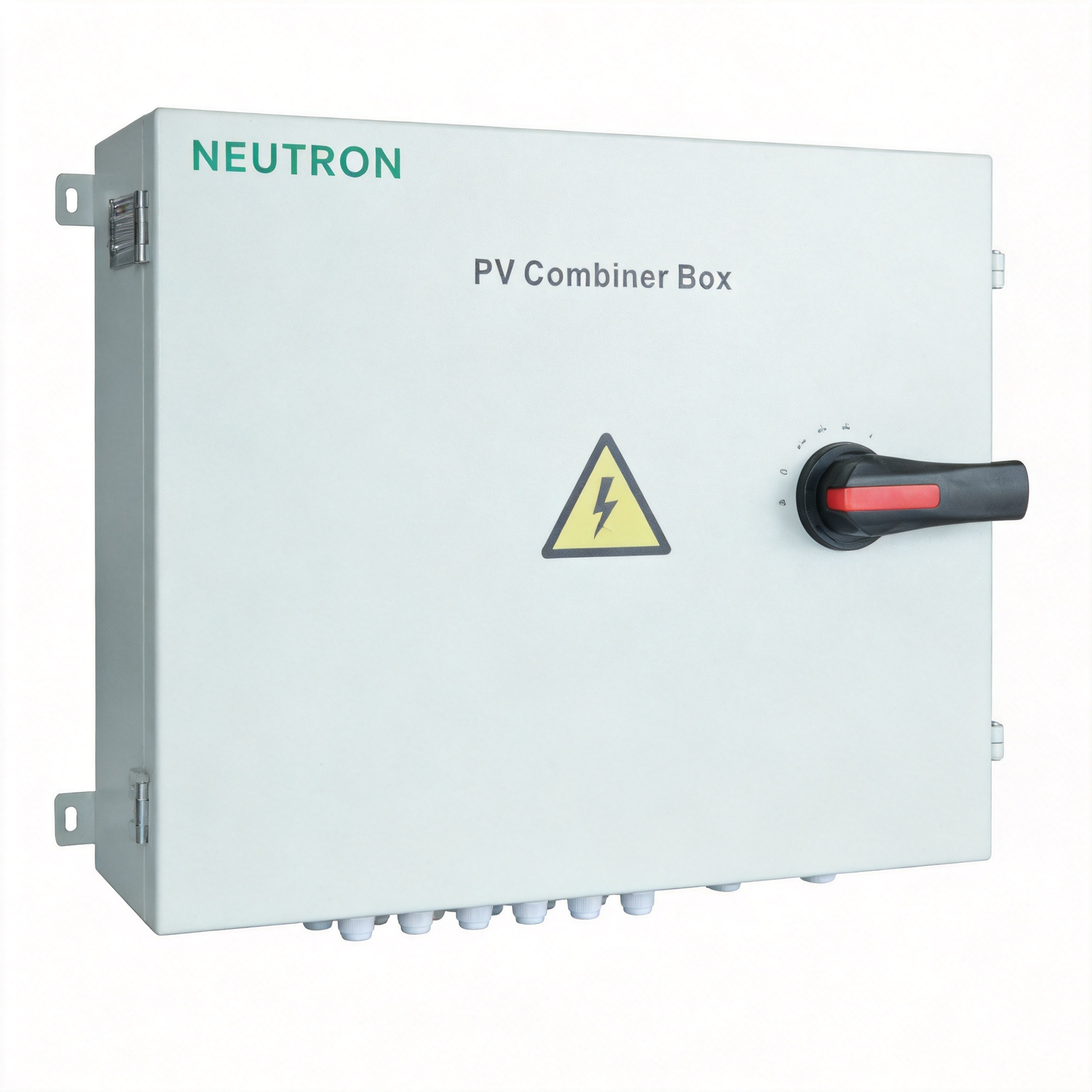
DC disconnect combiner
- Voltage
- 1000V DC
- Input / output
- 12 / 1
- Arrangement
- disconnect + SPD
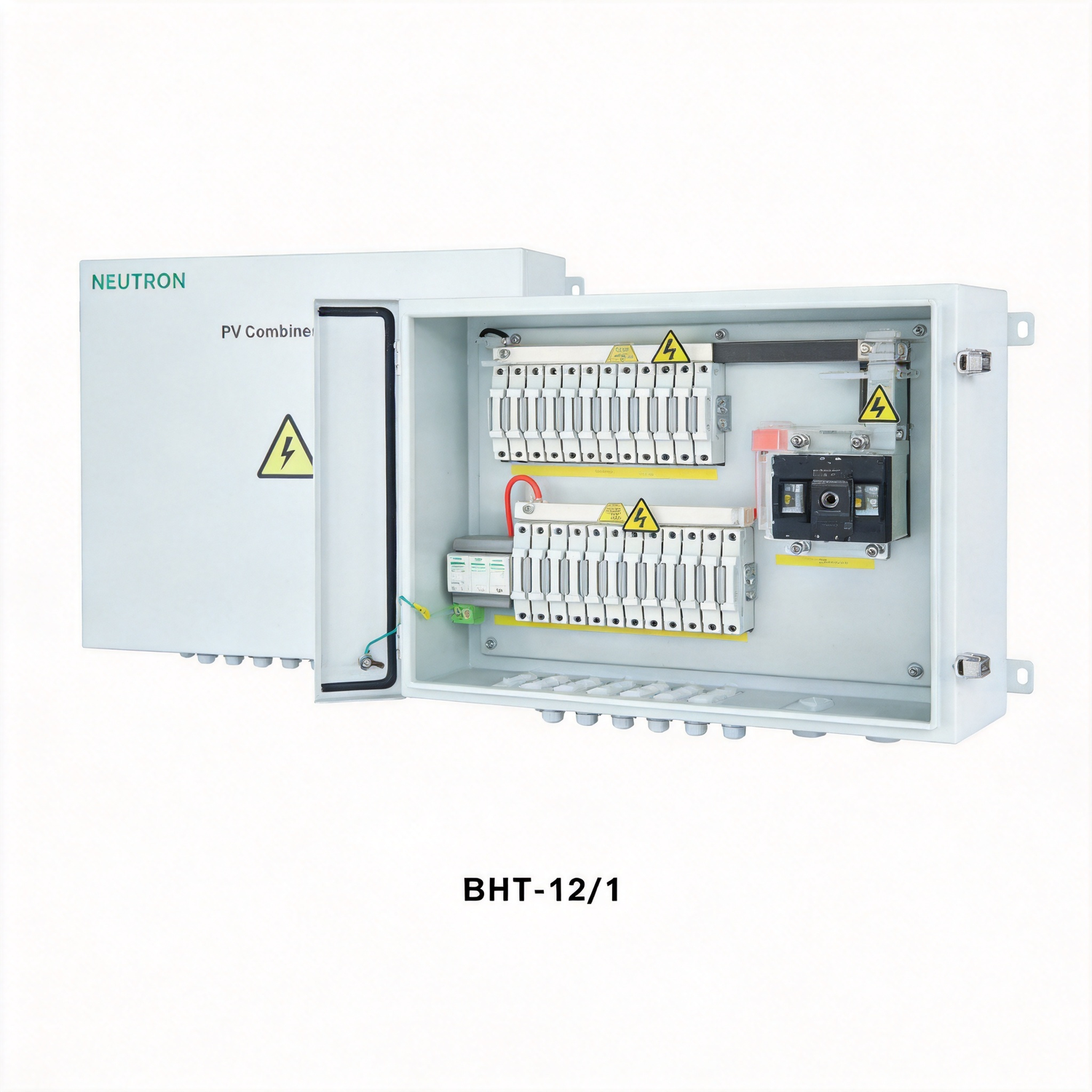
DC disconnect combiner
- Voltage
- 1500V DC
- Input / output
- 12 / 1
- Arrangement
- disconnect + SPD
Technical context
Use the relevant selection guide before finalizing the scope.
Why 1500 V Is the Utility PV Standard for DC Protection
The move to 1500 V is a response to project economics at the megawatt scale. A 1500 V array carries roughly the same power with two-thirds of the current of an equivalent 1000 V design, which shrinks conductor cross-sections, lowers resistive losses, and reduces the number of combiner boxes and inverters needed per hectare. As module currents and conversion efficiencies climb, the industry has pushed the standardized maximum system voltage upward to keep the levelized cost of energy falling. For equipment engineers, the change is not cosmetic: every component on the DC side must now be qualified for the higher insulation and transient environment.
Read Insight →Solar PV / Technical guide1500V DC Solar BOS Selection: Cable, Connector and Junction Box
The move from 1000V to 1500V maximum DC system voltage, enabled by NEC 690.7 amendments and IEC 60364-7-712 revisions, changed the economics of solar balance of system (BOS). A 1500V system fits roughly 1.5x more modules per string before hitting the inverter MPPT voltage ceiling, which means fewer strings per inverter.
Read Insight →