
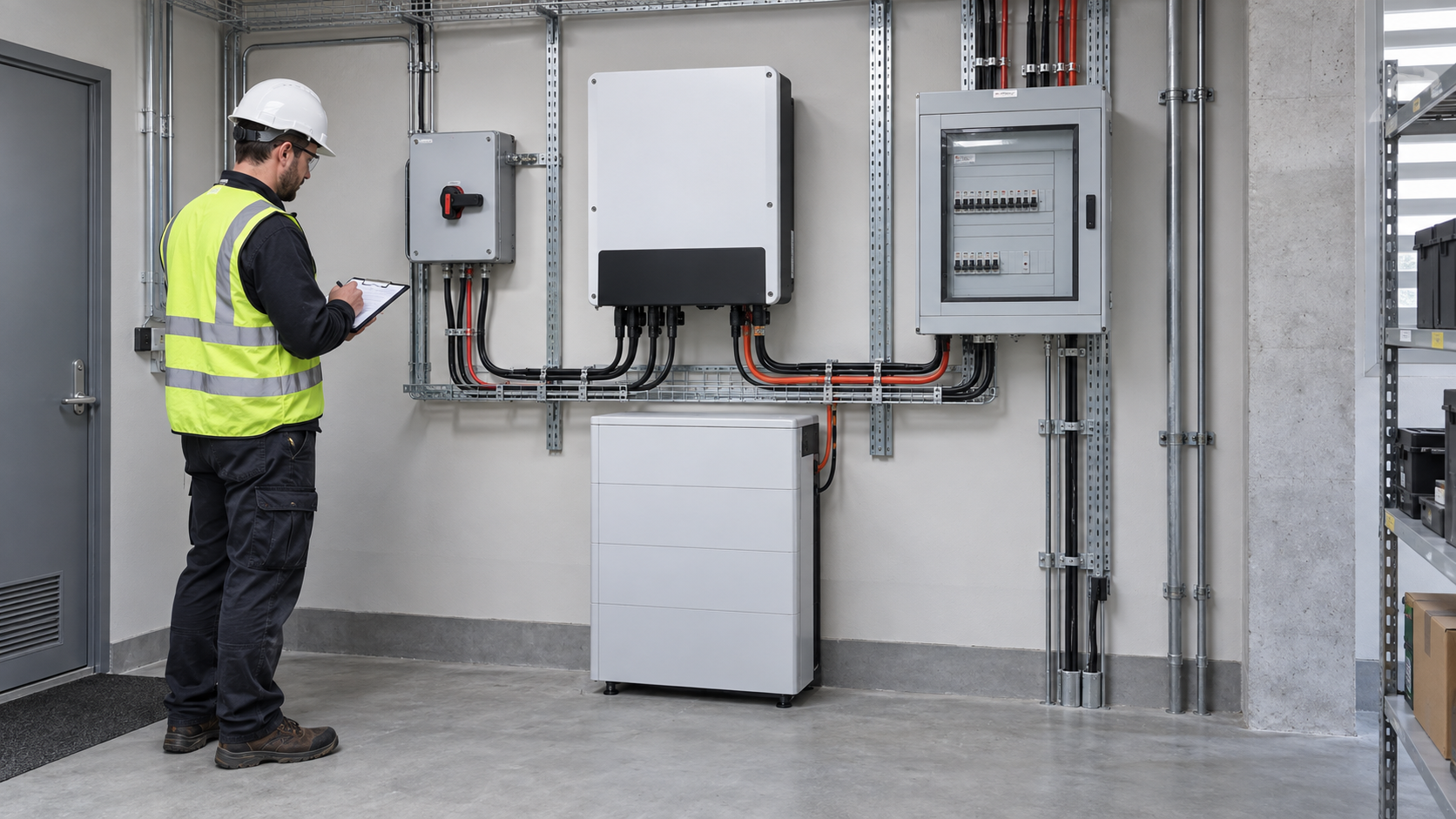
The three inverter families
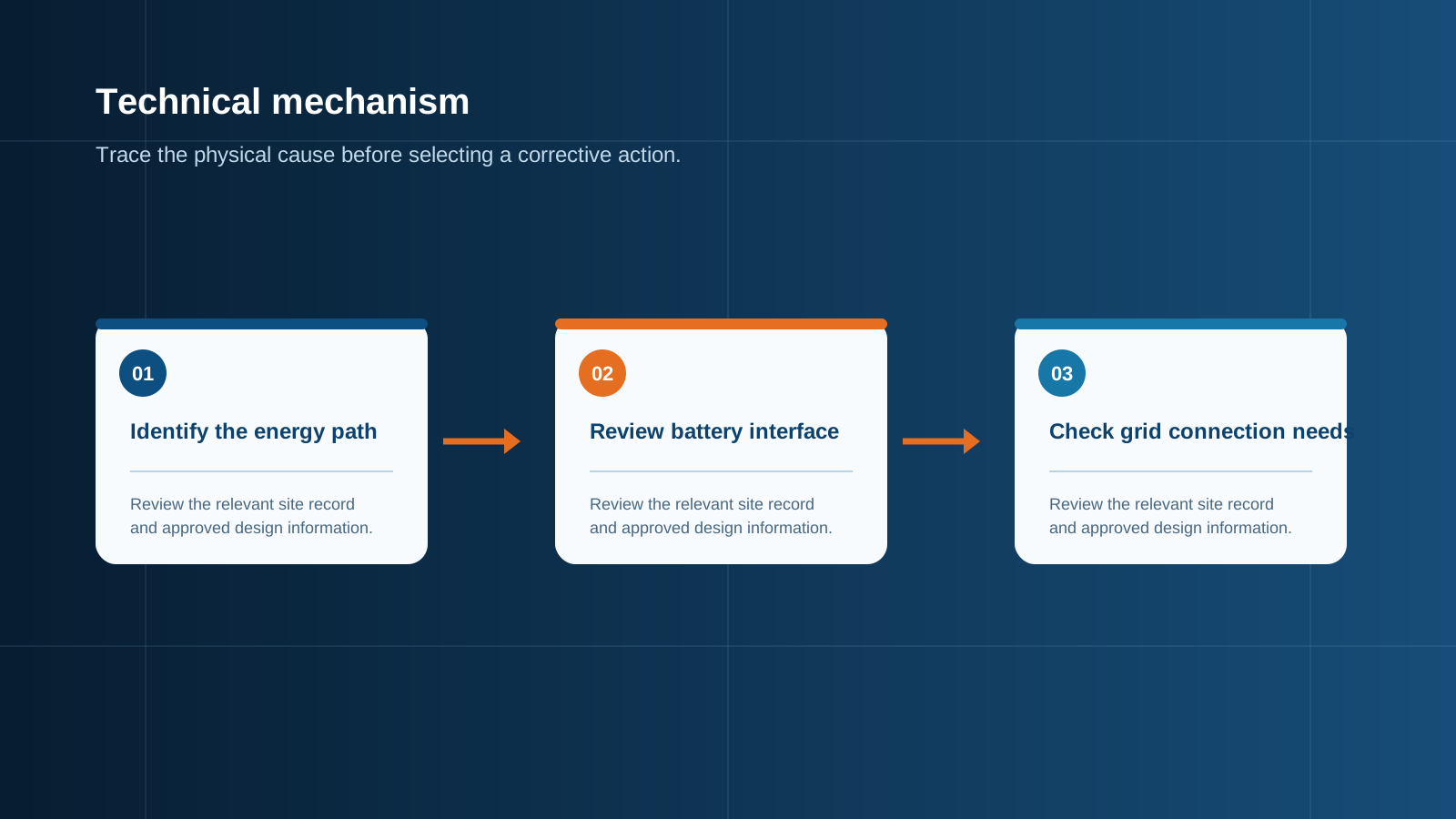
Inverter selection starts with how the system relates to the utility grid. On-grid units export and self-consume, hybrid units add a battery port, and off-grid units run a standalone AC bus with no grid connection. NEUTRON supplies the balance of system around each: combiner boxes, DC control and protection, energy-storage control cabinets and low-voltage switchgear.
Technical diagram shown at a readable responsive scale.
On-grid: grid-tied only
A grid-tied inverter synchronises to the utility and shuts down when the grid fails — a safety requirement. It is the lowest-cost path for self-consumption and export, and it pairs with a standard PV combiner and DC protection chain. There is no battery, so no storage control equipment is required.
- Lowest capital cost per watt.
- No backup during outages.
- Pairs with PV combiner and DC protection only.
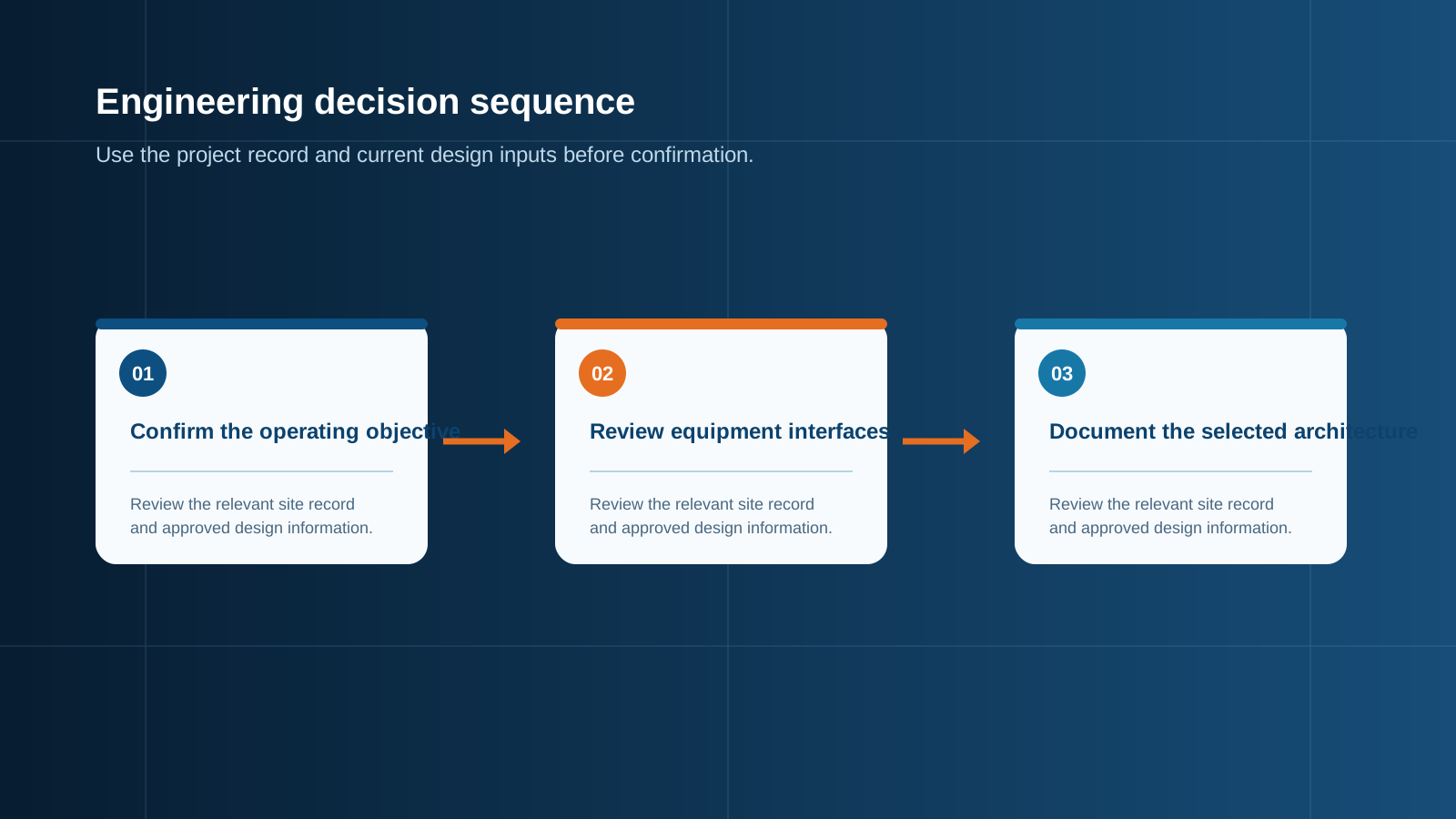
Hybrid: battery-ready
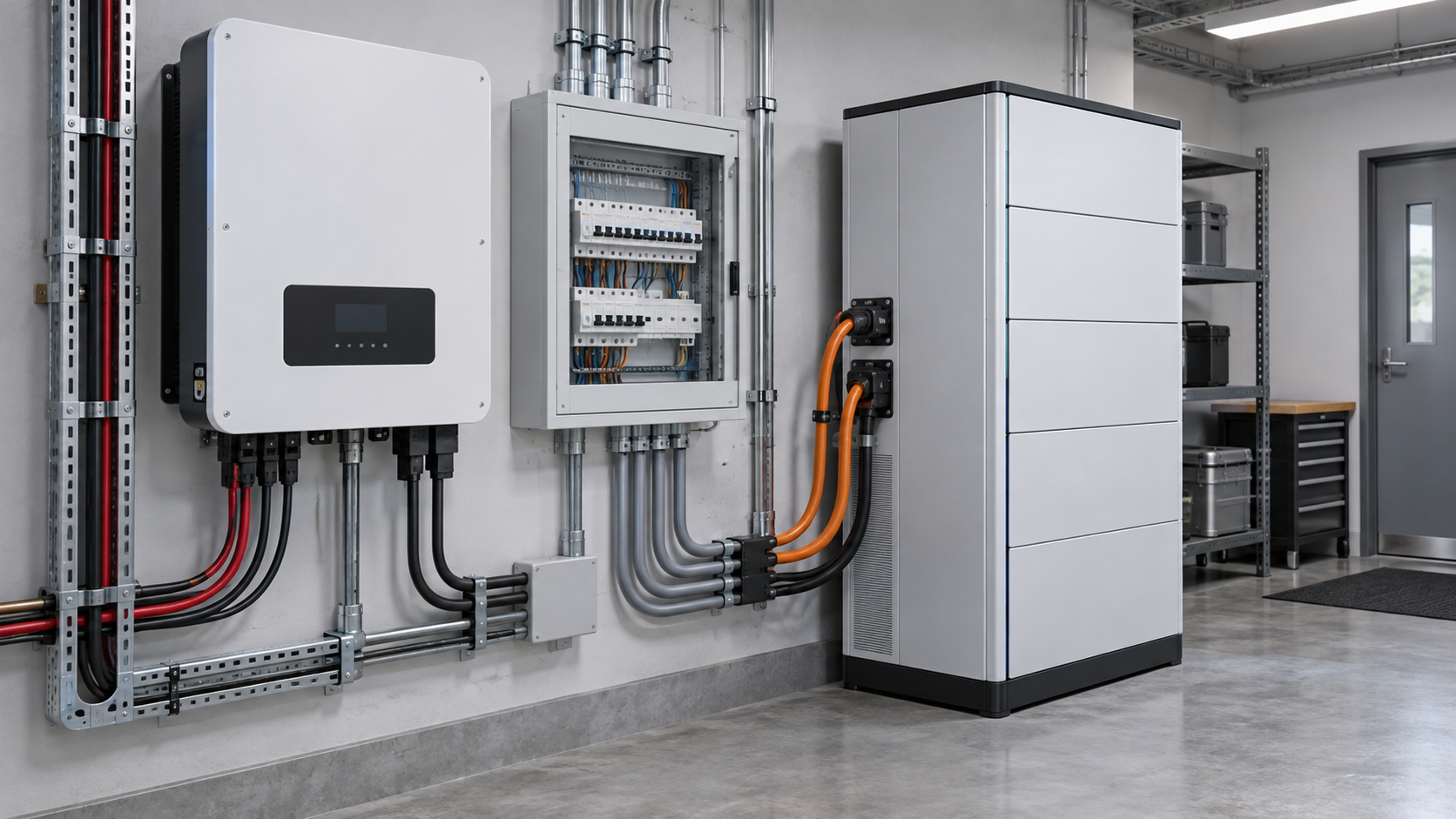
A hybrid inverter adds a battery DC port and an energy-management function, allowing time-shifting of solar and limited backup. NEUTRON energy-storage control equipment coordinates the battery isolation, fuse and disconnect path so the hybrid DC bus stays protected during charge and discharge.
Technical diagram shown at a readable responsive scale.
Off-grid: standalone
An off-grid inverter builds its own AC reference with no grid present, usually backed by a battery bank and often a generator. The DC side needs careful combiner, fuse and disconnect coordination, and NEUTRON provides the DC control and protection plus storage control enclosure that ties the array and battery together safely.
Battery support and blackout backup
Only hybrid and off-grid architectures provide backup. The difference is that hybrid still leans on the grid when available, while off-grid must survive indefinitely on stored energy. Both need correctly rated battery disconnect and overcurrent protection supplied as part of the BOS.
Cost and ROI differences
On-grid delivers the fastest simple payback because it omits the battery. Hybrid and off-grid recover their premium through resilience and, where tariffs allow, through load shifting. The BOS cost scales with the architecture: more strings, more protection points and storage control gear add to the bill of materials.
BOS and protection per architecture
Regardless of inverter type, the array side still needs string collection and DC protection. NEUTRON configures:
- On-grid — PV combiner box + gPV fuses + DC SPD.
- Hybrid — combiner plus energy-storage control cabinet with battery isolation.
- Off-grid — combiner, DC control protection and storage control with generator interface where used.
Choosing for your setup
Pick on-grid for pure export or self-consumption, hybrid where backup and time-shifting add value, and off-grid where no utility connection exists. Define the inverter class first, then specify the matching NEUTRON BOS so the protection, combiner and storage control are built for the same architecture.
This is general technical guidance. Confirm final ratings, protection coordination, installation and applicable local requirements against current standards, manufacturer documentation and the approved project design.
Frequently asked questions
What is a hybrid inverter?
A hybrid inverter is a grid-tied unit with an added battery port and energy-management function, allowing solar energy to be stored and used during outages or peak tariff periods. It still connects to the utility when available.
Do off-grid systems need batteries?
Almost always. An off-grid inverter builds its own AC bus with no grid reference, so a battery bank (or another generation supply) must supply stable energy. The battery connects through DC control and storage protection equipment.
Which inverter allows backup?
Hybrid and off-grid inverters provide backup capability; a standard on-grid inverter does not, because it must shut down when the grid loses voltage for safety.
How does BOS differ by type?
On-grid needs only array-side combiner and DC protection. Hybrid and off-grid add energy-storage control and battery isolation. Off-grid further adds generator interface and standalone AC protection.
Discuss your PV requirement
Share the system voltage, string arrangement, inverter interface and installation environment. NEUTRON can review the equipment configuration around your project documentation.
Discuss a projectContinue learning
Explore related technical guidance in Solar PV.

Published from the approved Period 06 source package. Technical values and final design decisions must be verified against the current applicable standard, manufacturer documentation and approved project design.