
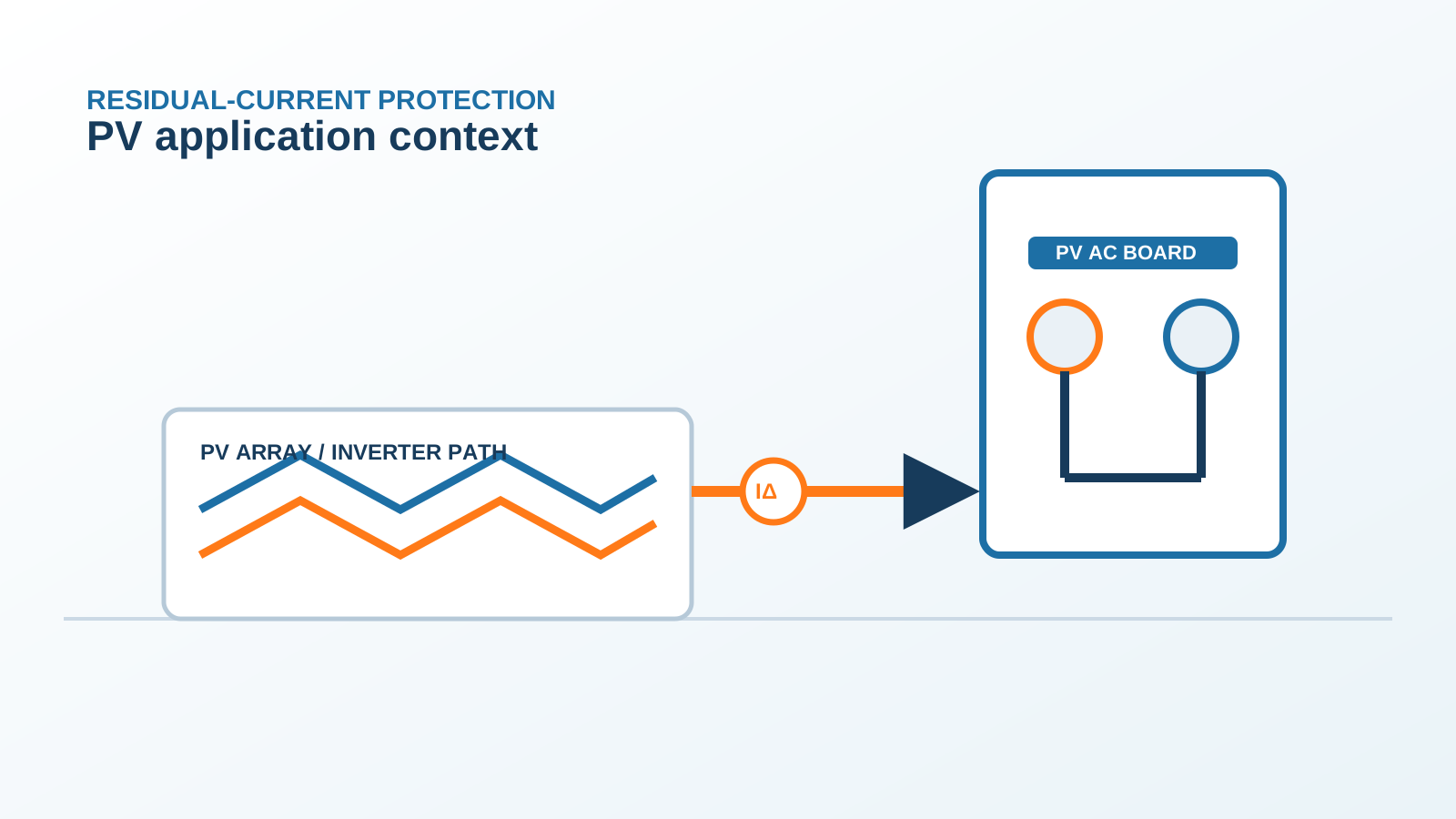
1 Harmonics from PV inverters
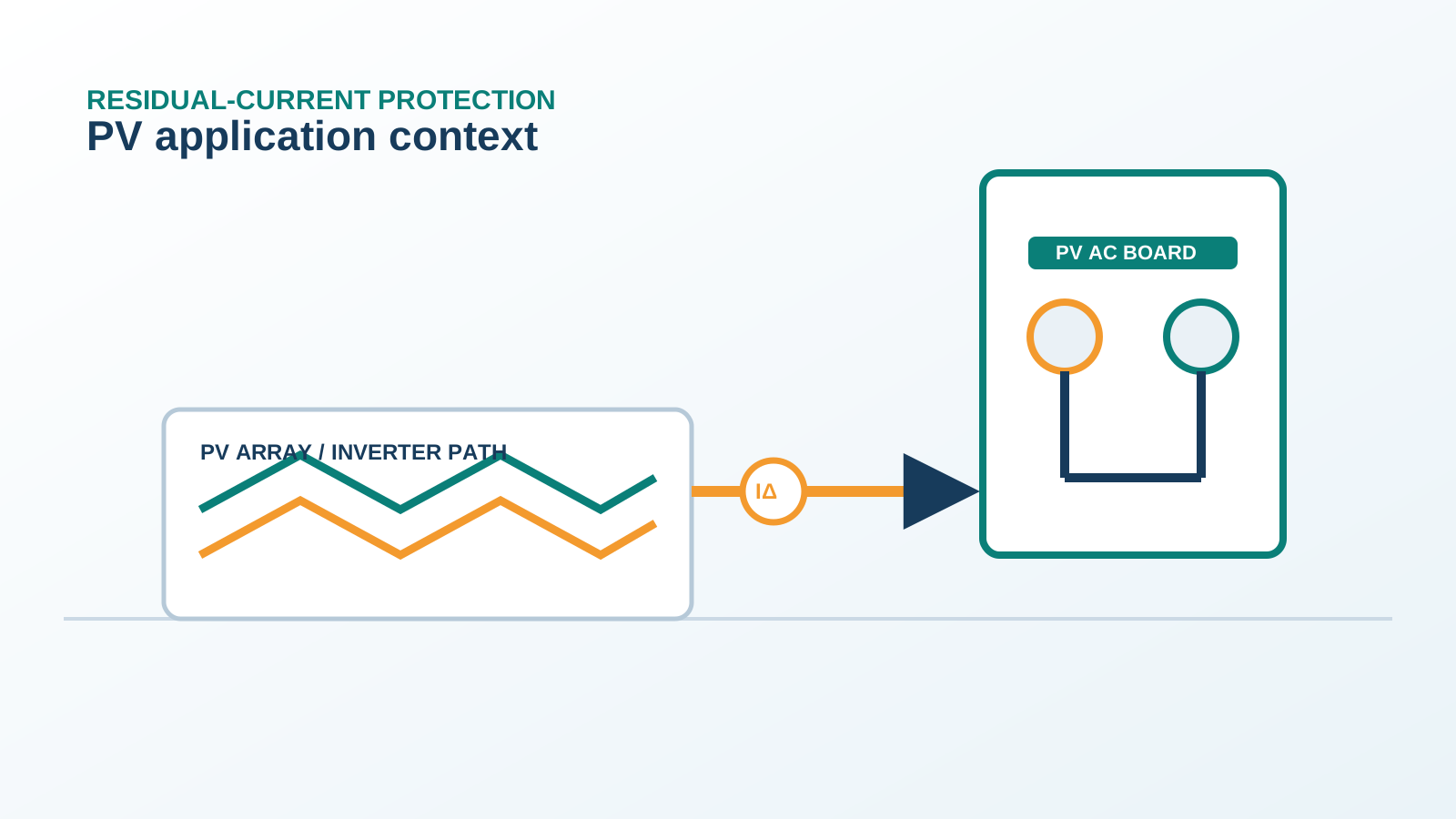
Grid-tied PV inverters synthesize AC by high-frequency switching of DC, and the resulting output always carries some harmonic content. Modern inverters keep total harmonic distortion low, but residual harmonics at the switching frequency and its multiples are still present on the AC output and can reach the protection devices.
This harmonic content is a normal property of the switching process, not a fault by itself.
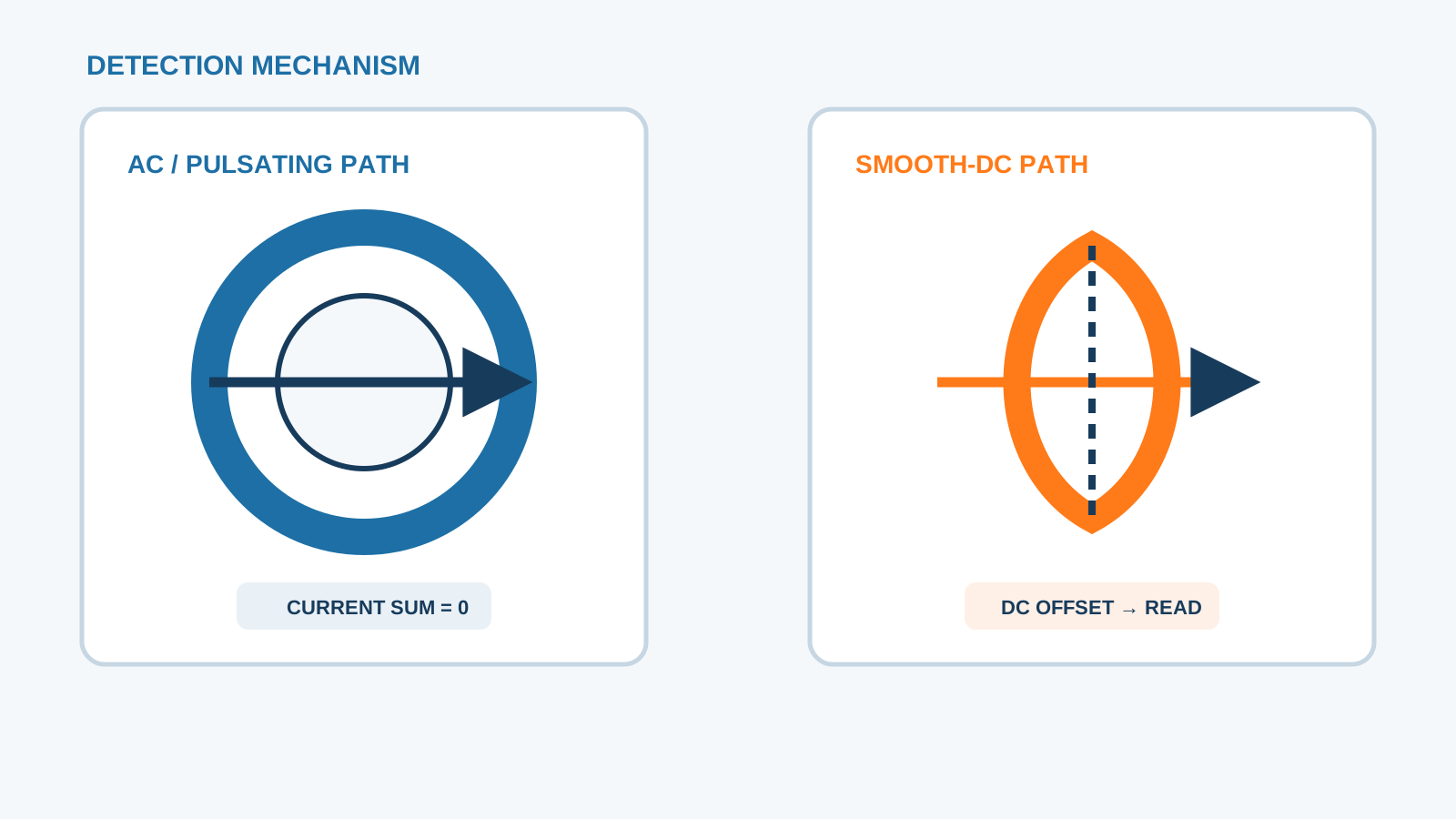
Technical diagram shown at a readable responsive scale.
2 How they reach the RCBO
The harmonic currents flow through the PV AC board on their way to the grid connection. A small portion appears as a differential component that passes through the RCBO's residual-current toroid.
While normal harmonics are balanced, asymmetric distortion or common-mode leakage can create a net residual that the RCBO senses.
3 Why some RCBOs false-trip
An RCBO's sensing electronics have a bandwidth and a detection threshold. Units with marginal residual modules can misinterpret high-frequency residual content as a genuine earth fault, especially when the residual sits near the trip threshold.
The result is an intermittent nuisance trip that disappears when the inverter output is low.
4 Type B immunity
Type B RCBOs are all-current-sensitive and their detection is specified across a wide frequency band, including smooth DC and high-frequency components, with defined immunity to expected harmonic content. This makes them less prone to misinterpreting inverter harmonics as faults.
Where nuisance trips correlate with inverter output, a Type B device often resolves the pattern.
5 Filtering and wiring
Good practice reduces the residual harmonic that reaches the RCBO: keep AC and DC cables separated, use shielded inverter output cabling where specified, and ensure the board earthing is single-point so no stray loop adds common-mode current.
Proper wiring often removes the trip without changing the device.
6 Measuring residual harmonics
To confirm the cause, measure the residual current with a current probe and a harmonic analyzer while the inverter is at full output. A residual spectrum dominated by switching-frequency components, with no genuine low-frequency earth-fault signature, points to harmonics rather than a real fault.
Record the load level at which the trip appears.
7 Fix without disabling
Do not disable the RCBO to stop the trips. Instead, improve wiring and earthing, confirm the device type, and where needed replace a marginal unit with a Type B RCBO specified for PV.
Protection must remain intact while the cause is removed.
8 Commissioning check
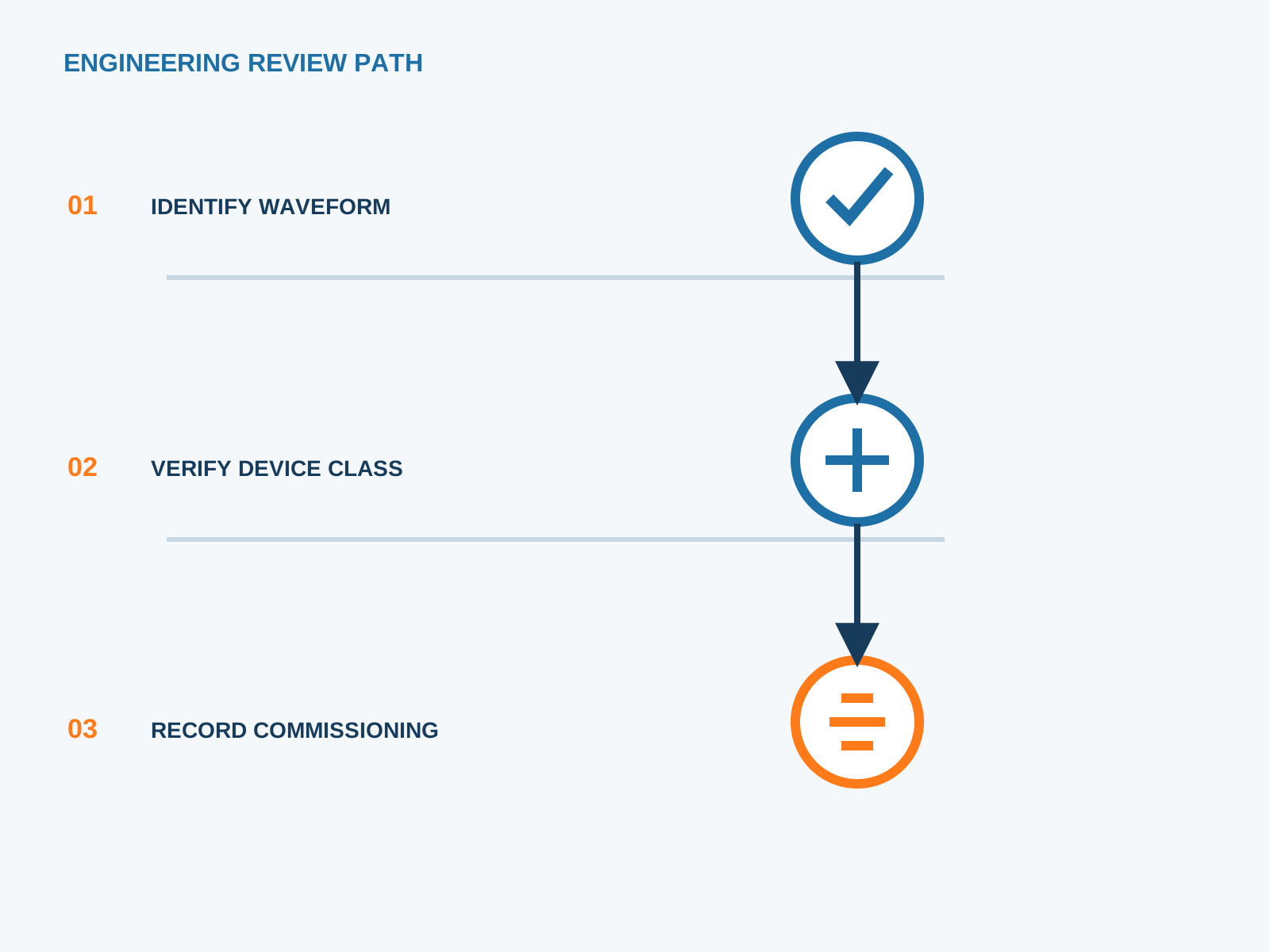
During commissioning, run the inverter at rated output and watch the RCBO for spurious operation while performing the standard test-button check. Document any trip and its load level so the pattern is visible before handover.
This step separates a real earth fault from a harmonic-induced spurious trip.
This is general application guidance. Confirm final ratings, trip settings, standards, inverter instructions and local installation requirements against approved project documentation and a qualified engineer's review.
Frequently asked questions
Can PV harmonics trip an RCBO?
Yes. Asymmetric or common-mode harmonic residual current can be misinterpreted by a marginal RCBO as an earth fault, causing intermittent trips that track inverter output.
Why does Type B help?
Type B RCBOs are specified with wide-band detection and defined immunity to expected harmonic and smooth-DC content, so they are less likely to misread inverter harmonics as faults.
How to measure the cause?
Use a current probe with a harmonic analyzer on the residual path at full inverter output. A spectrum of switching-frequency components without a genuine earth-fault signature confirms harmonics.
Should I disable the RCBO?
No. Keep protection intact. Improve wiring and earthing, confirm device type, and replace a marginal unit with a Type B RCBO rather than disabling protection.
Bring the protection inputs to the first review.
This step separates a real earth fault from a harmonic-induced spurious trip.
Discuss a project requirementContinue learning
Explore related technical guidance in Electrical Protection.

Published from the approved period 10 source package; technical claims and source wording are retained for review.