
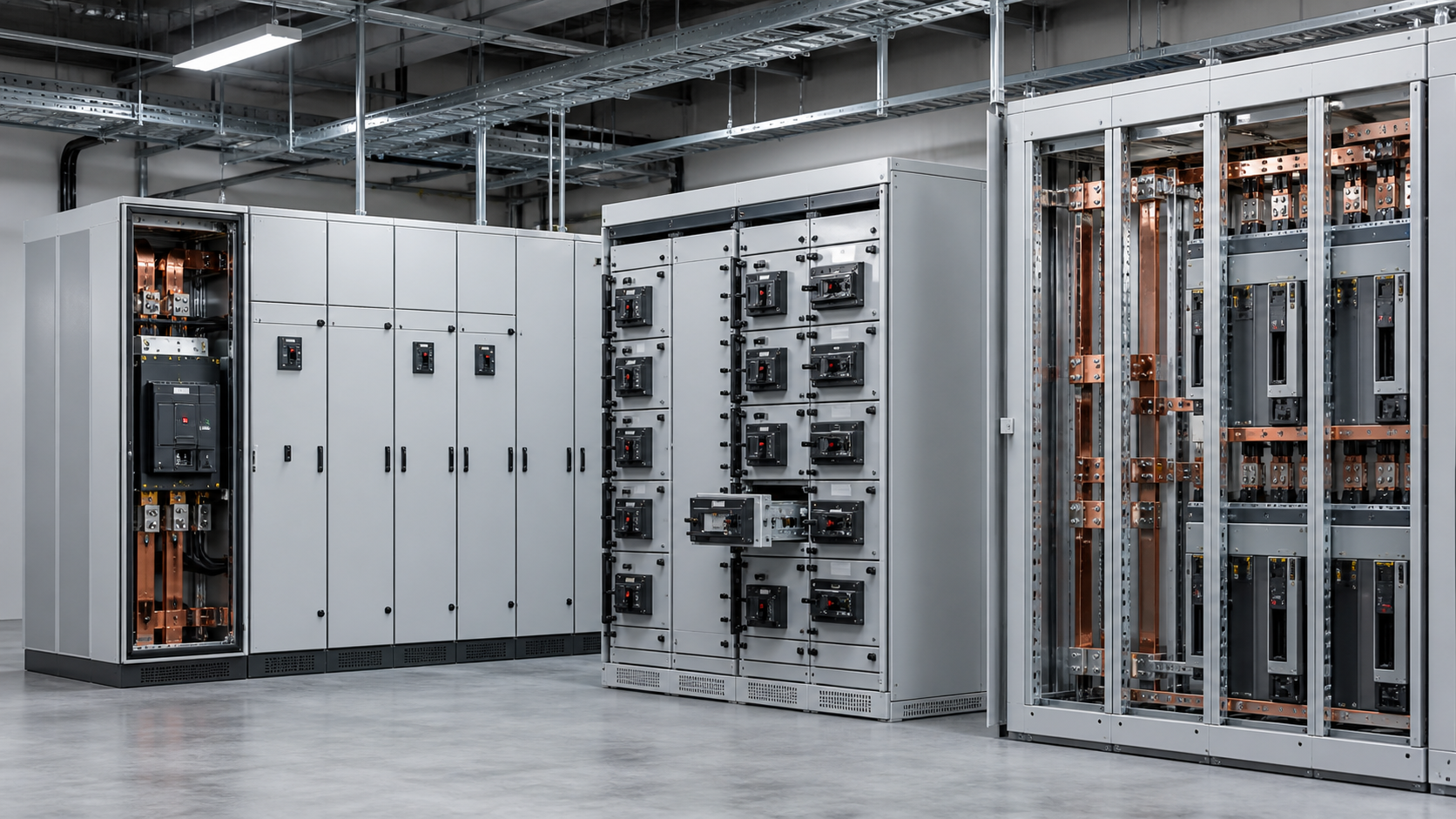
Two Families of Low-Voltage Switchgear
The source guide groups these designations into fixed assemblies and withdrawable or modular assemblies. Fixed designs can be economical and straightforward where the load schedule is stable. Withdrawable patterns support feeder isolation, replacement and maintenance with less disruption when the project requires that operating model.
XL-21: Power Distribution Cabinets for Simple Feeders
XL-21 is presented as a fixed cabinet type for terminal and sub-distribution boards, with a source example of ratings up to 600 A and 15 kA for one-second short-time withstand. Verify the actual assembly rating and configuration rather than treating the designation as a universal specification.
GGD: Fixed Low-Voltage Switchgear for Main Distribution
GGD is described as a fixed, bolted-frame pattern for main low-voltage distribution where the load schedule is stable and planned shutdowns are acceptable. The source table gives typical current examples of 1000, 1600 and 3150 A and Icw examples of 15–50 kA for one second.
GCK and GCS: Withdrawable Drawer Switchgear
Both GCK and GCS are withdrawable assemblies. The source differentiates GCS by finer drawer-height increments and a more compact frame, allowing more outgoing ways in a column; GCK is commonly considered when matching an existing installation. Source examples place GCK up to 3150 A and GCS up to 4000 A, subject to the supplied configuration.
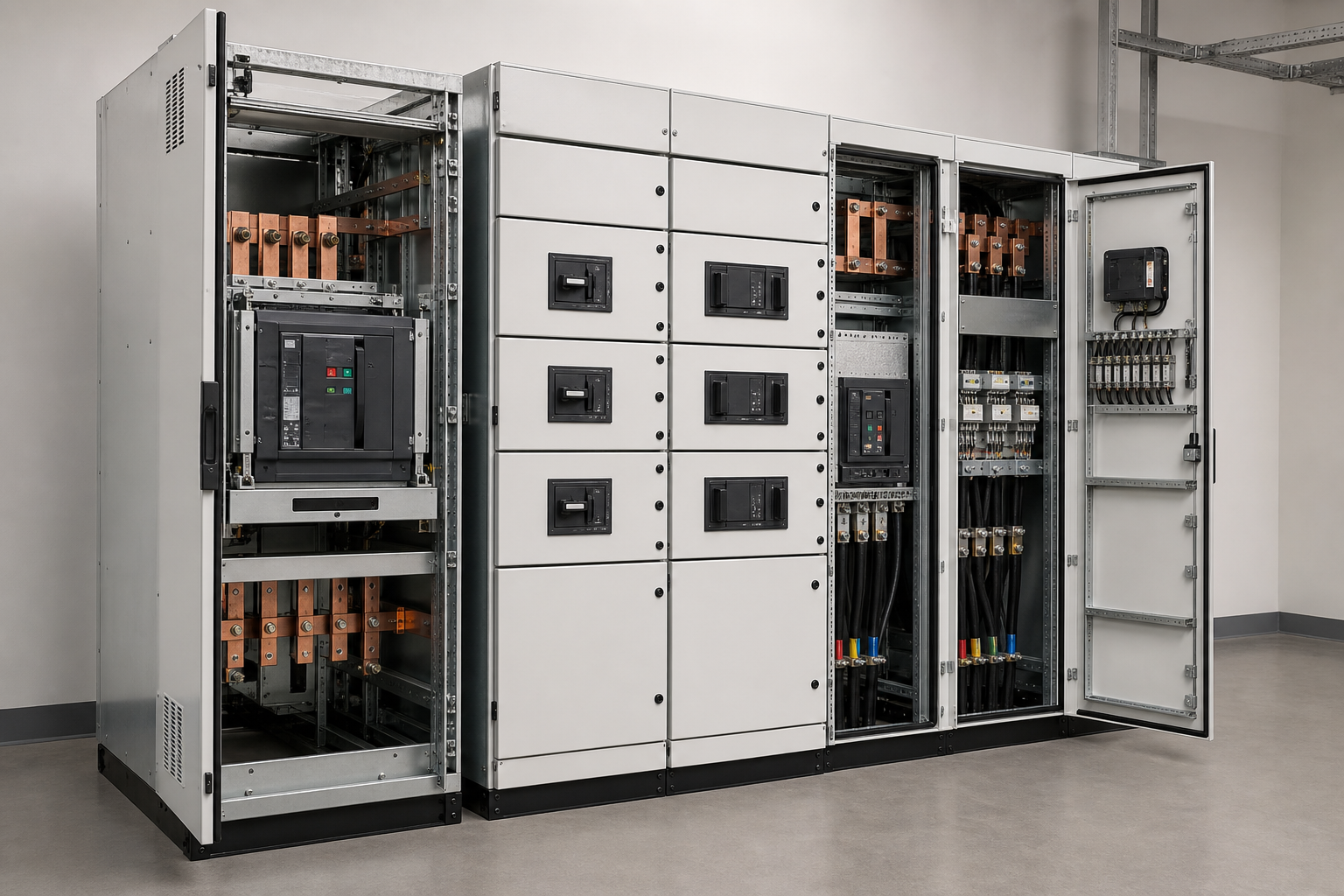
MNS: Modular Assemblies and the E Module
MNS uses a modular bolted frame and a 25 mm E structural grid. Drawer and compartment heights are expressed as multiples of E, which helps re-plan outgoing schedules when loads change. The source table gives a typical current example up to 6300 A and Icw examples of 50–100 kA for one second.
Side-by-Side Comparison and Selection Rules
Compare construction, rated current, short-time withstand, internal separation, maintenance access, footprint, documentation and relative cost. Form 2b separates the busbars from functional units; Form 3b additionally separates functional units; Form 4b also separates each unit's terminals. The required form follows the operating and maintenance risk, not just the cabinet label.
| Designation | Construction | Typical source example | Best fit |
|---|---|---|---|
| XL-21 | Fixed cabinet | Up to 600 A; 15 kA / 1 s Icw | Terminal and sub-distribution |
| GGD | Fixed bolted frame | Up to 3150 A; 15–50 kA / 1 s Icw | Main LV distribution |
| GCK | Withdrawable coarse modules | Up to 3150 A; 50 kA / 1 s Icw | Refurbishment or matching |
| GCS | Withdrawable compact modules | Up to 4000 A; 50–80 kA / 1 s Icw | MCCs and continuous process |
| MNS | Modular 25 mm E frame | Up to 6300 A; 50–100 kA / 1 s Icw | High-density, reconfigurable systems |
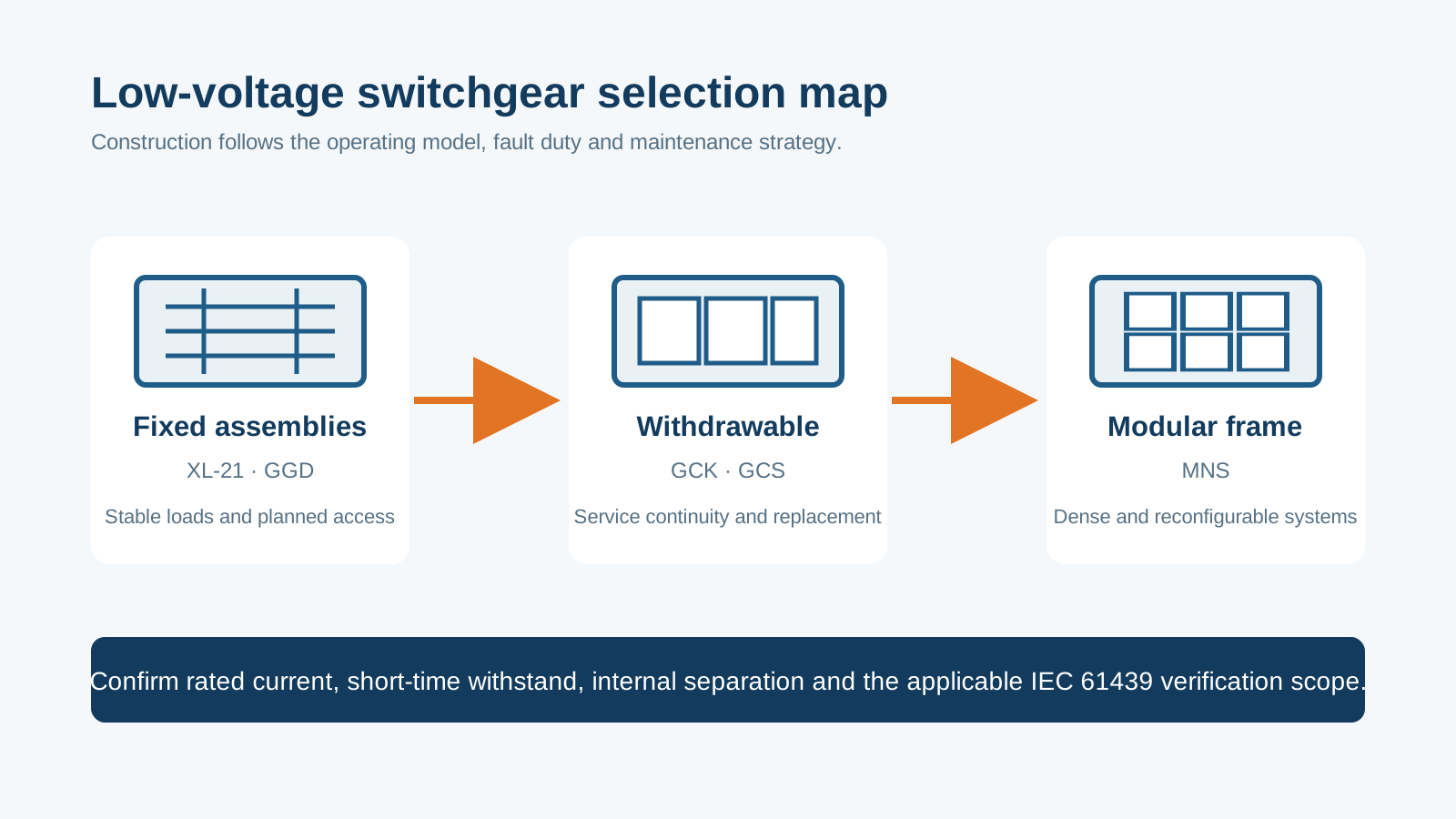
Technical diagram shown at a readable responsive scale.
Standards and Verification
The source identifies IEC 61439-1 for general rules and IEC 61439-2 for power switchgear and controlgear assemblies, with GB/T 7251 as the Chinese equivalent. Verification should cover temperature rise, short-circuit withstand, dielectric properties, clearances and protection against electric shock for the actual assembly supplied.
Designation-level comparisons are not a substitute for the assembly's rated data, IEC 61439 verification, internal-separation specification, local code or approved project drawings.
Frequently asked questions
What is the difference between GCK and GCS switchgear?
Both are withdrawable patterns; the source guide describes GCS as using finer drawer increments and a more compact frame, while GCK is often selected to match an existing installation.
Is GGD switchgear still a good choice?
It can suit stable load schedules and planned shutdowns. Choose a withdrawable pattern when a failed feeder must be isolated or replaced with less disruption.
What does the E module mean in MNS switchgear?
E is the basic 25 mm modular dimension used to express drawer and compartment heights and support re-planning.
Which standard applies to these assemblies?
IEC 61439-1 and IEC 61439-2 are the primary references named in the source guide; GB/T 7251 is the Chinese equivalent family.
What form of internal separation should I specify?
Form 2b, 3b or 4b should be selected according to access, maintenance and operational requirements; higher forms provide more separation between units and terminals.
Decode the Designation, Then Confirm the Assembly
Send the single-line diagram, fault level, load schedule, maintenance strategy and internal-separation requirement so the appropriate LV switchgear arrangement can be evaluated.
Request a quoteContinue learning
Explore related technical guidance in Power Distribution.

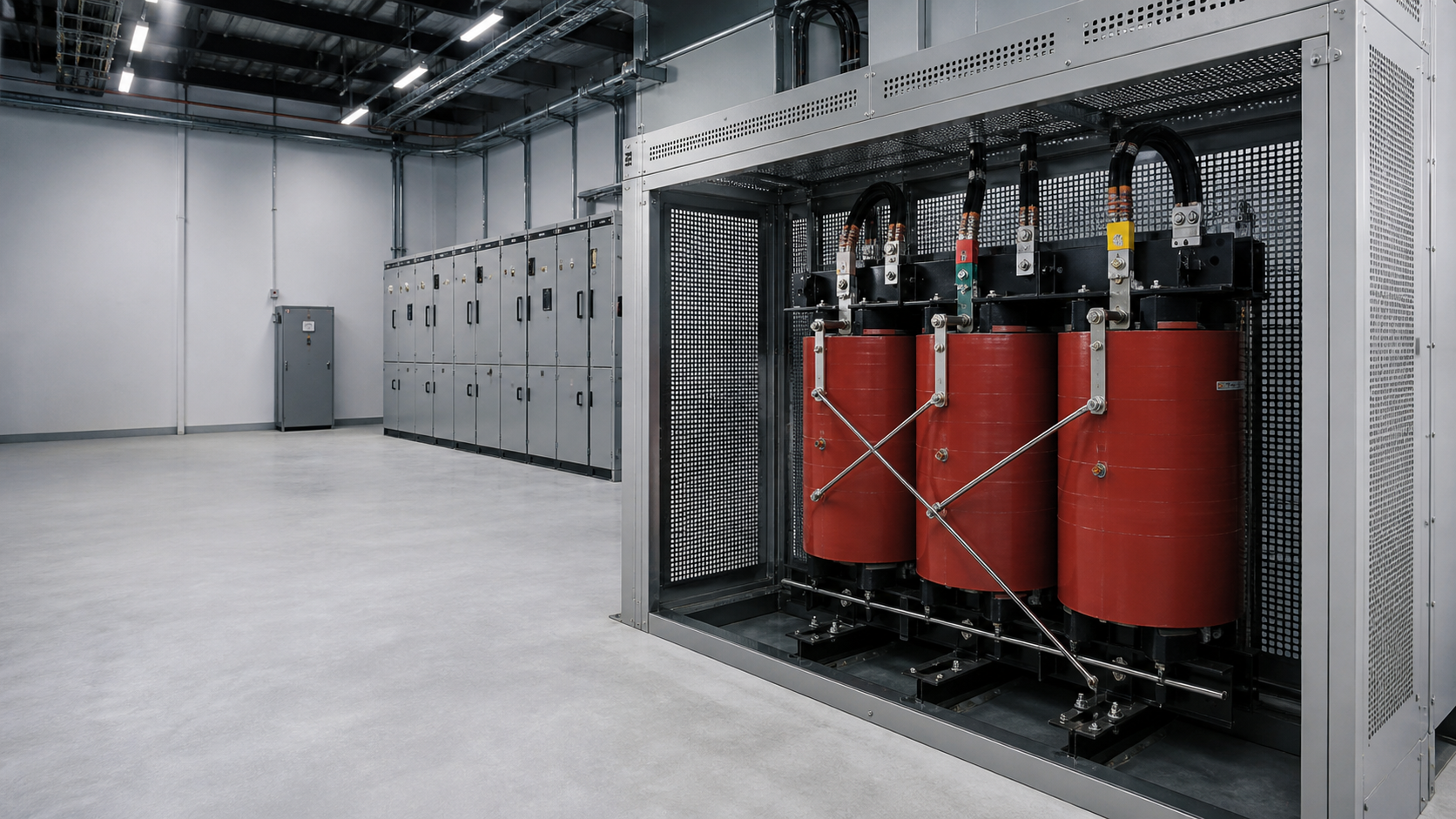
Adapted from the supplied DOCX. Current, Icw and cost figures are source examples and must be verified against the exact assembly and applicable standard edition.