
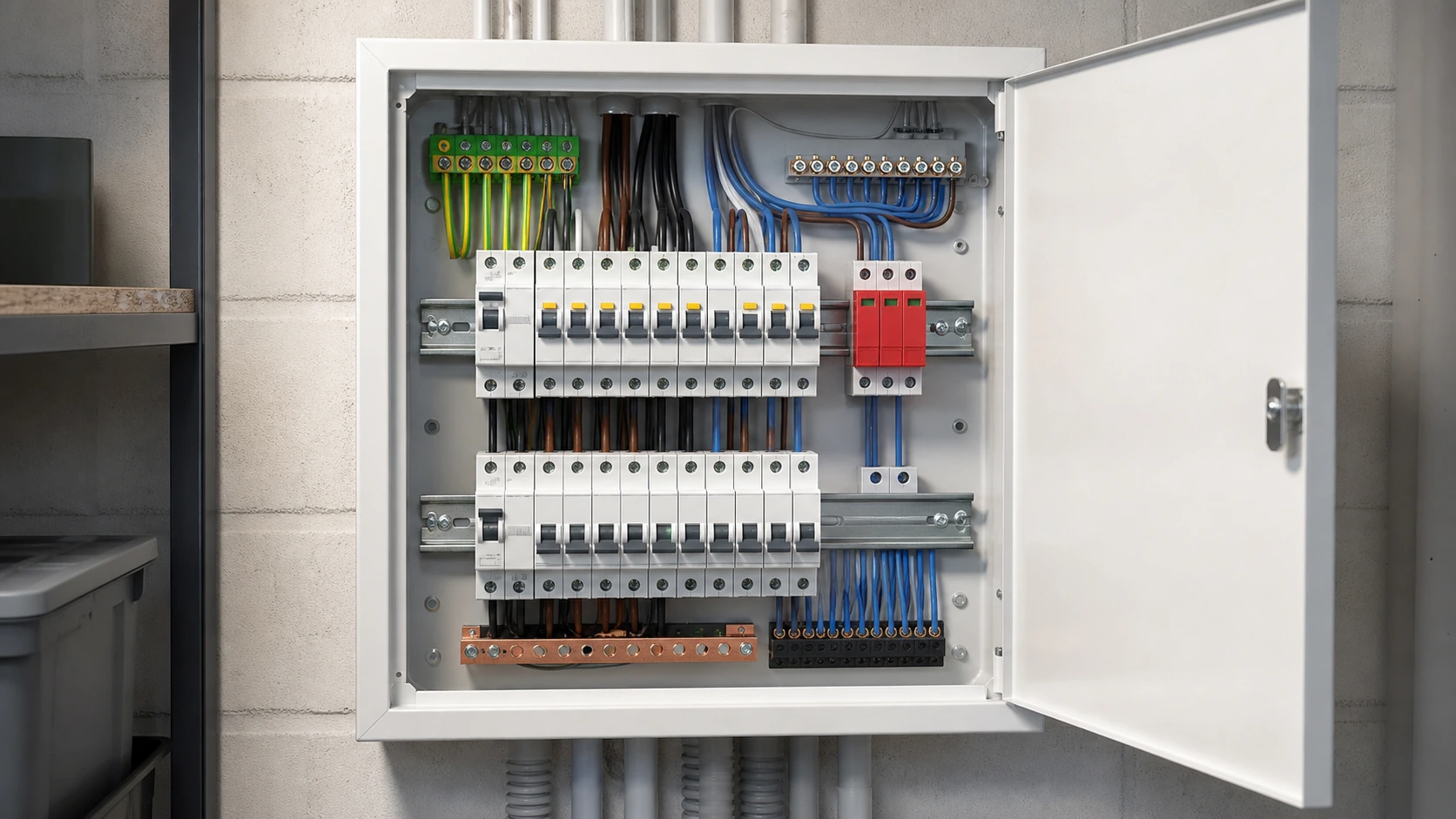
What a Home Distribution Box Has to Do
The board distributes the incoming supply to final circuits while providing isolation, overcurrent protection, residual-current protection and, where required, surge protection. The enclosure also has to support safe cable entry, heat dissipation, maintenance access and the protection level required by its location.
Board Types: Which Configuration Do You Need?
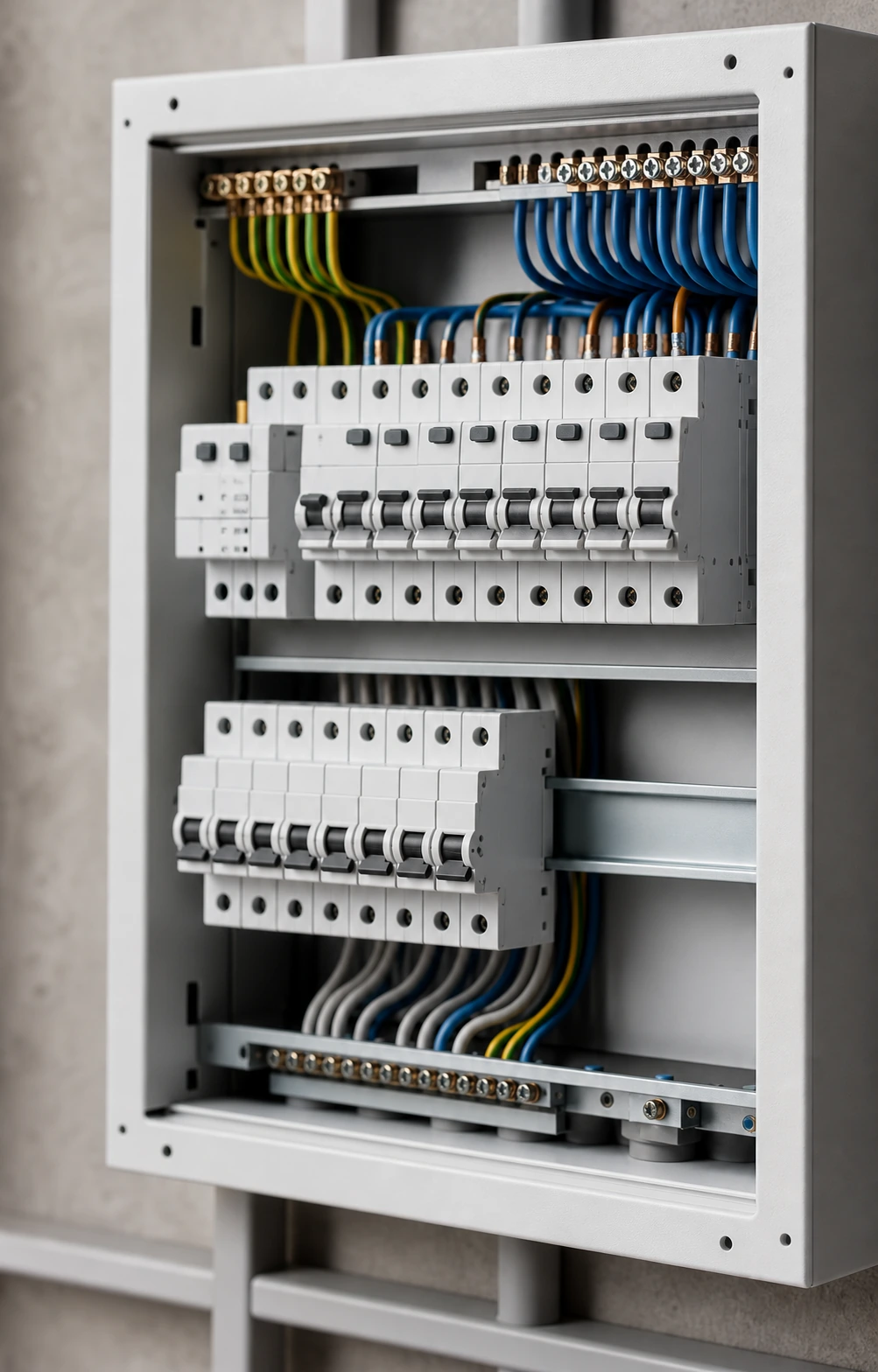
A dual-RCD board groups final circuits behind shared residual-current devices and can reduce device cost. A full-RCBO board assigns residual-current and overcurrent protection to each circuit, so a fault normally disconnects only the affected way. Choose the configuration based on selectivity, critical loads, installation rules and budget.
- Use individual RCBO protection where refrigeration, heating controls, communications, security or EV charging must remain independent.
- Confirm whether the destination market requires a non-combustible or metal enclosure.
How Many Ways and How Many Amps?
Count final circuits, account for devices that occupy more than one module and add at least 25% spare capacity. The source guide gives typical planning ranges from 10–12 ways for a studio or small apartment to 30–36 ways for a large home or small workshop. Match the main switch to incoming service capacity and the upstream fuse, not the arithmetic sum of outgoing breaker ratings.
| Home profile | Typical circuits | Recommended ways | Main switch |
|---|---|---|---|
| Studio / small apartment | 5–7 | 10–12 | 40–63 A |
| 2–3 bedroom apartment | 8–10 | 14–16 | 63 A |
| 3–4 bedroom house | 10–14 | 18–24 | 63–100 A |
| House with EV charger and PV | 14–18 | 24–30 | 80–100 A |
| Large house / small workshop | 18–24 | 30–36 | 100–125 A |
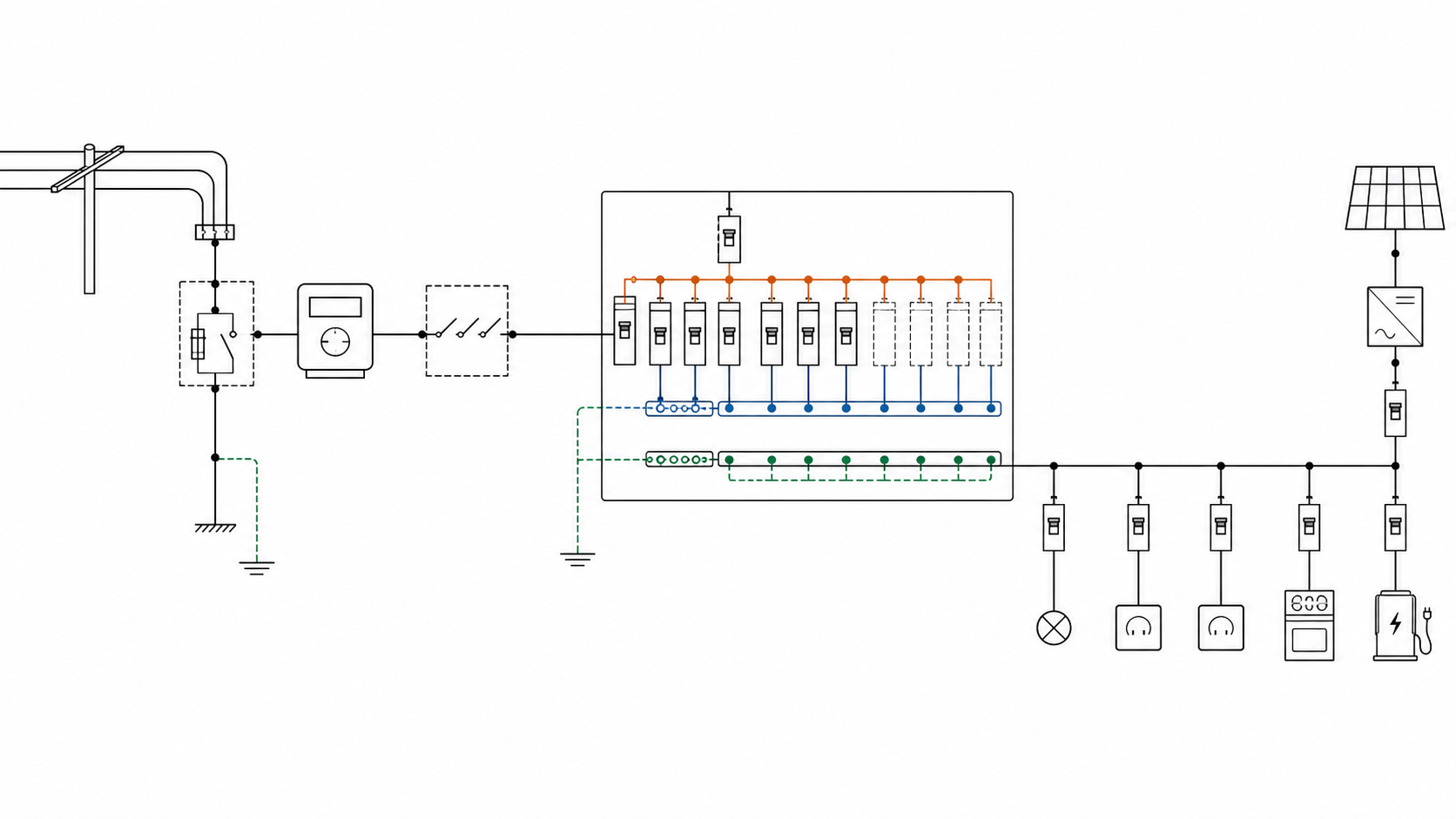
Technical diagram shown at a readable responsive scale.
Plan for EV Chargers, Solar and Heat Pumps
Future loads add both circuits and module width. EV charging, rooftop PV, electric heating and heat pumps can affect the service capacity, diversity calculation, board space, surge protection and enclosure thermal design. Reserve ways and confirm the intended protection and isolation arrangement before ordering the enclosure.
MCB, RCD, RCBO and SPD in Plain Terms
An MCB protects against overcurrent. An RCD or RCCB detects residual current but does not replace overcurrent protection. An RCBO combines both functions for an individual circuit. A Type 2 SPD is commonly specified for homes with significant electronic loads, rooftop PV or overhead supplies; Type 1 may be required where an external lightning-protection system is present. Confirm the local requirement and system arrangement.
Enclosure: Metal or Plastic, and Which IP Class
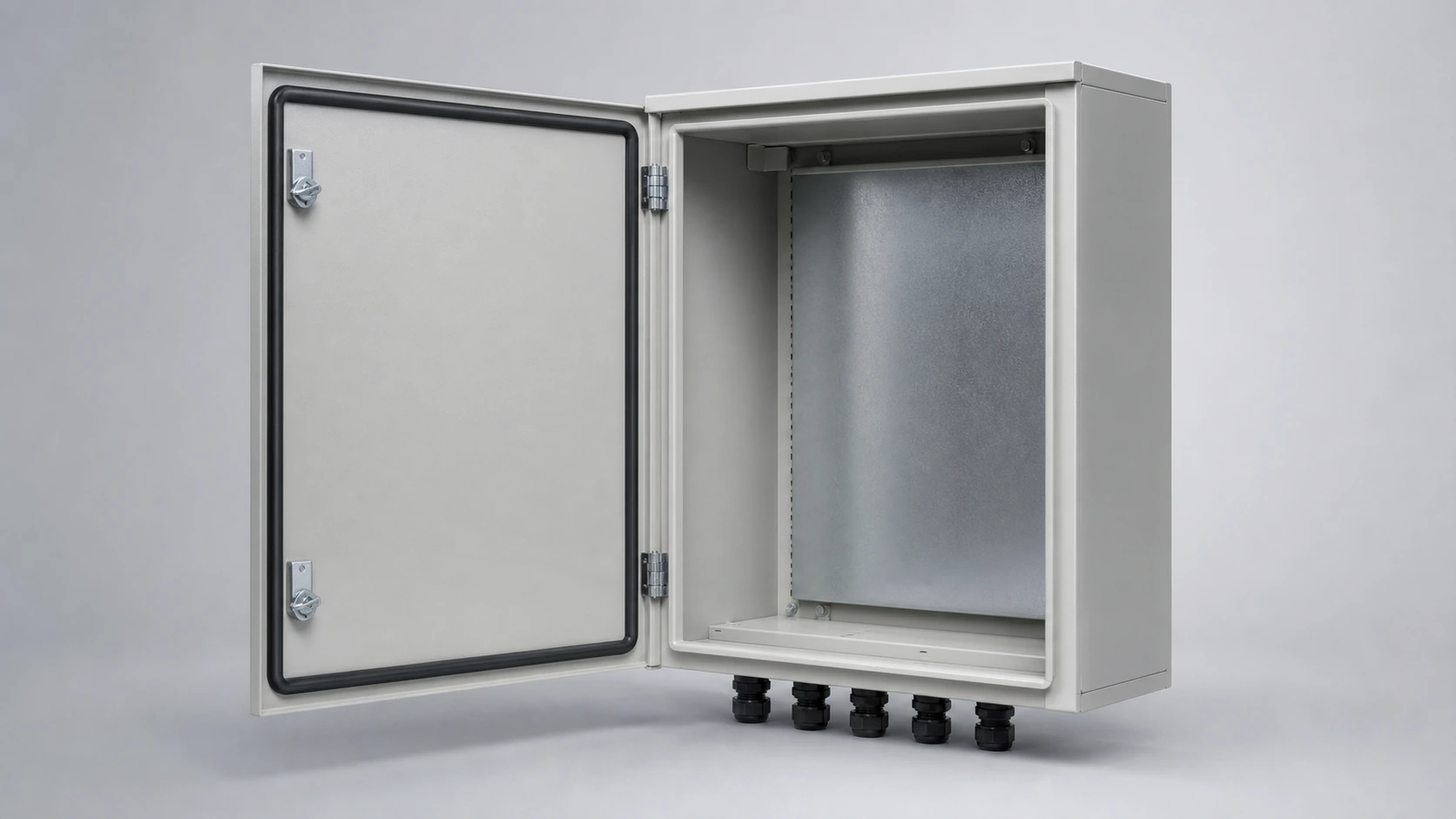
Steel can contain an internal fault and resist impact, while moulded insulating enclosures may be acceptable in other markets. The source guide uses IP30/IP40 for dry indoor locations, IP54 for garages or sheltered external positions and IP65 for exposed or washdown locations. The claimed IP rating depends on correct glands, blanking of unused knockouts and the complete installed assembly.
Buying Checklist for Installers and Distributors
- Final-circuit schedule and calculated service capacity.
- Total module count plus at least 25% spare where practical.
- Main-switch rating matched to the incoming service and upstream protection.
- RCD grouping or RCBO-per-circuit strategy.
- SPD type and system voltage.
- Enclosure material, mounting method, cable-entry space and IP rating.
- Neutral and earth terminal capacity, labels, drawings and test documentation.
Residential board selection is jurisdiction-specific. Confirm local wiring rules, service limits, device coordination and installation requirements with a qualified electrical professional.
Frequently asked questions
How many ways should a home distribution board have?
Count final circuits and module widths, then add at least 25% spare. The source guide gives about 18–24 ways for a typical three- to four-bedroom house and more where EV charging or PV is planned.
Should I choose RCBOs or a dual-RCD board?
RCBOs isolate one faulty circuit; a dual-RCD board costs less but can disconnect a group. Use RCBOs for circuits whose continuity matters.
Do I need an SPD in a home distribution box?
The source guide recommends reviewing a Type 2 SPD for significant electronic load, rooftop PV or overhead supply, and Type 1 where external lightning protection applies.
Is a metal enclosure better than plastic?
Metal can contain an internal fault and resist impact, but the acceptable material depends on the destination market and installation rules.
What IP rating does a home distribution box need?
Use the location and local requirements as the basis: dry indoor, sheltered utility and exposed/washdown positions may require progressively higher IP protection.
Plan the Board Around the Whole Home
Share the circuit schedule, service capacity, future EV/PV plans and mounting location so the enclosure and protection arrangement can be reviewed before purchase.
Request a quoteContinue learning
Explore related technical guidance in Power Distribution.
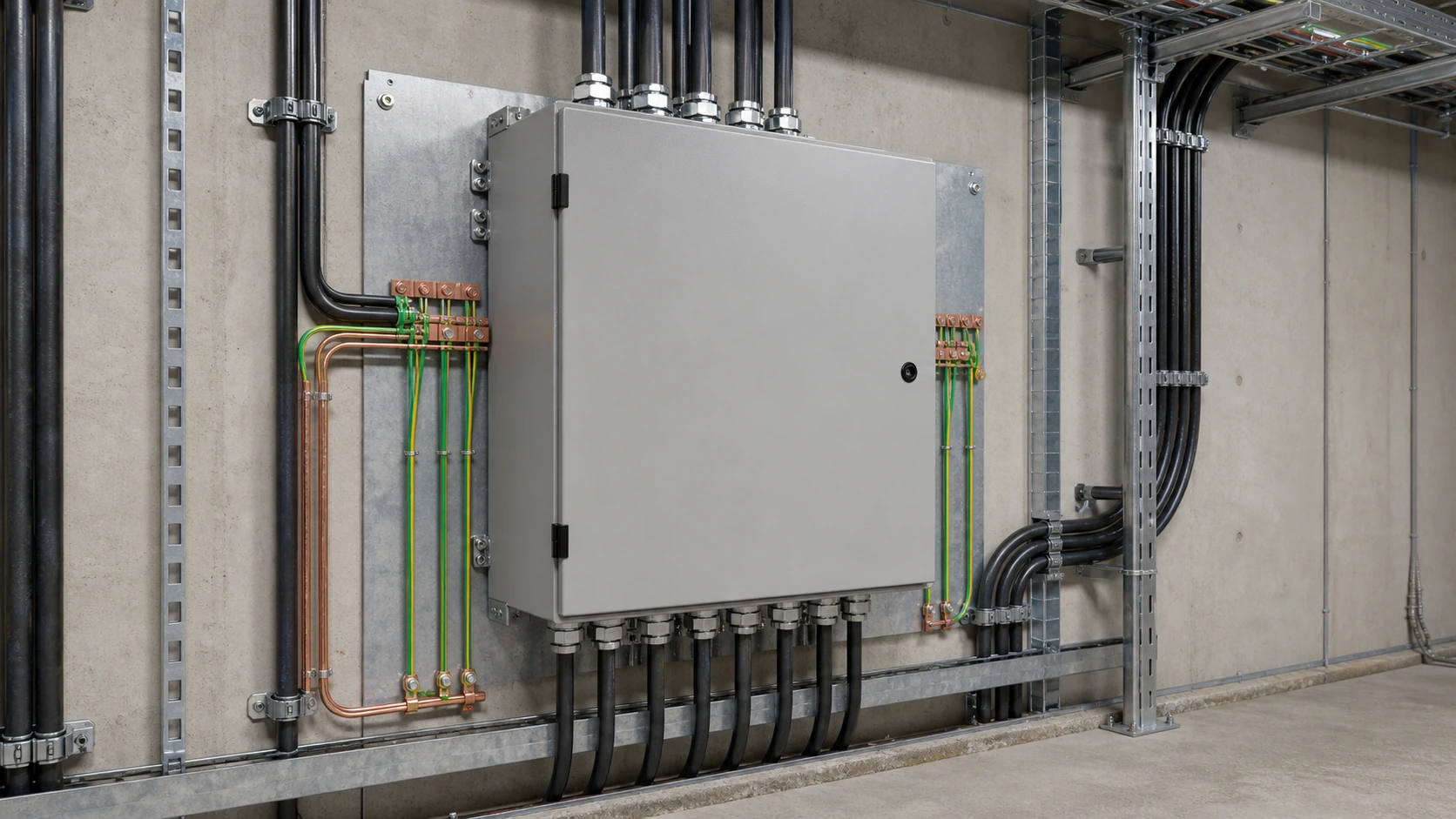
Adapted from the supplied DOCX. Ratings and device arrangements are planning examples; final selection must follow local requirements and the approved installation design.