
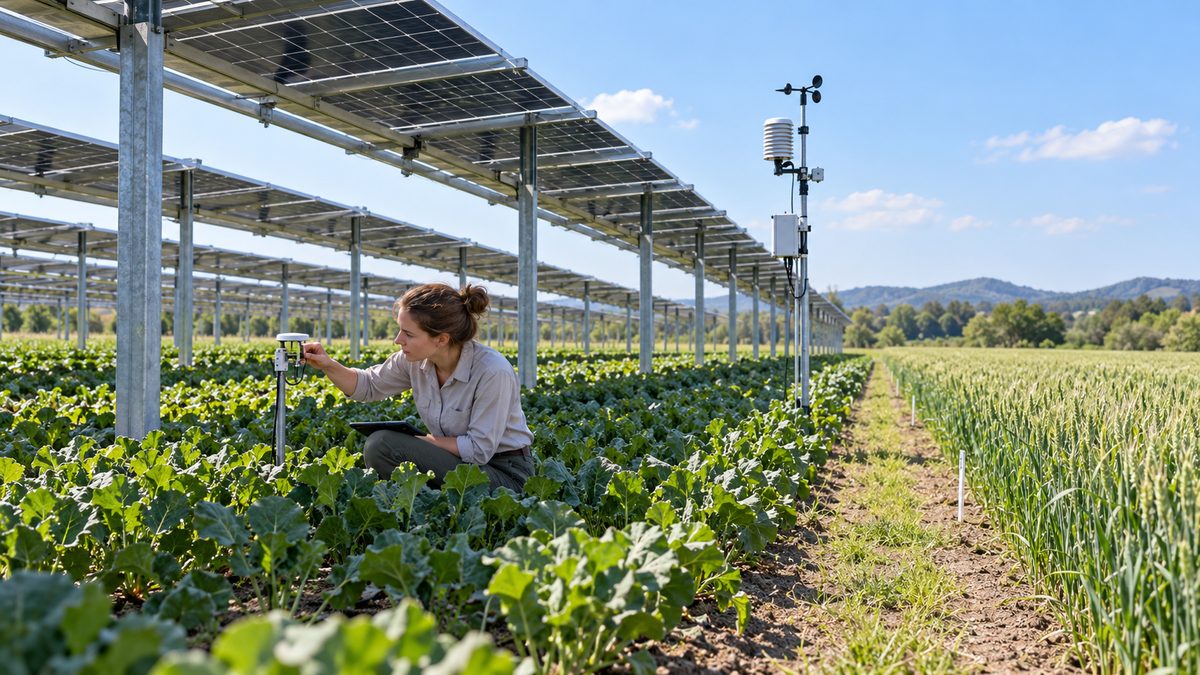
A monitoring question within a dual-use project
Fraunhofer ISE published its English agrivoltaics guideline in February 2024. The guidance discusses combining agricultural production and electricity generation, implementation options and the German regulatory setting. It provides context for reviewing monitoring requirements in 2026.
The operational question is more specific than whether a farm can host PV. Project teams need to determine which measurements distinguish a crop response from an electrical operating change during the same season.
Measure light where the crop experiences it
Define the crop-level light measurement and its position relative to the canopy and array. Photosynthetically active radiation and the irradiance used for PV performance assessment describe different measurement purposes; one should not be substituted for the other without justification.
Record how sensor positions relate to moving shadows, crop growth and row geometry. A reading at one convenient point cannot establish the exposure of an entire growing area throughout the season.
Follow the agricultural variables independently
Document crop variety, planting and harvest dates, irrigation and relevant microclimate measurements. Compare the treatment with an appropriate reference using consistent farming practices. A weather difference can otherwise be mistaken for a benefit caused by the array.
Temperature, moisture and light may change together. Report the observed conditions before attributing a crop outcome to any one mechanism, and avoid treating reduced sunlight as beneficial for every crop.
Interpret voltage at the electrical boundary
Inverter voltage, current, power and operating state help diagnose PV behaviour. They do not directly measure crop light or biological response. Keep electrical alarms and curtailment records separate from agricultural indicators even when they share a monitoring dashboard.
If tracker settings or another controllable feature are changed, record the command, time and actual position. Geometry can alter shading; an electrical voltage change alone should not be presented as a demonstrated crop-yield intervention.
Compare the two datasets on a shared timeline
Synchronize timestamps and preserve a record of maintenance and farming interventions. Assess crop outcomes over the appropriate growing period while evaluating electrical energy at its stated meter boundary. The two indicators do not need to move in the same direction.
A useful operating report connects observations to a defined reference and layout. It can inform later control decisions without promising one mounting height, coverage ratio or voltage setting for every agricultural site.
Frequently asked questions
Does inverter voltage measure the light available to crops?
No. Crop-light and electrical channels measure different quantities.
Is one sensor position representative of the whole field?
Not automatically. Review row geometry, shade movement and crop growth.
Does PV shading guarantee a crop-yield increase?
No. The result depends on crop needs, climate and farming practice.
Use the news as a project input, then verify the scope.
This News item is editorial context. Confirm the final datasheet, applicable standard, project conditions and acceptance evidence before changing a design or purchase decision.
Discuss a project implication