
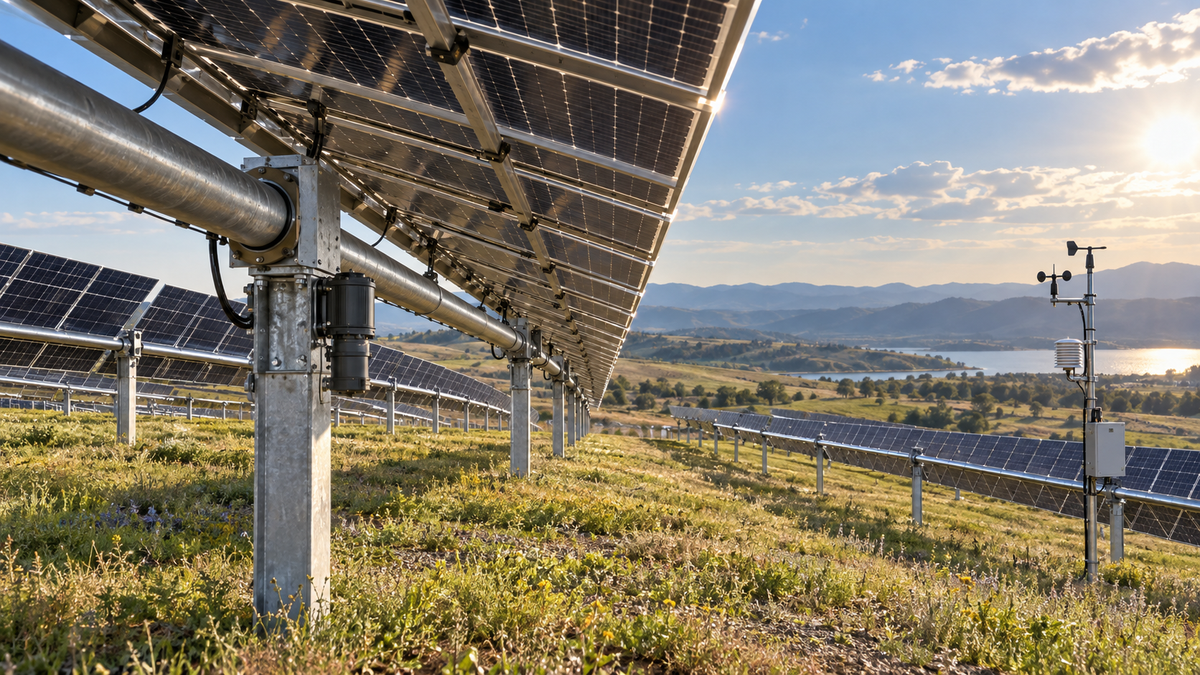
The report puts algorithm evidence in focus
IEA PVPS best-practice guidance for bifacial tracking identifies control transparency, extreme-weather response and yield-model validation as important engineering issues. A vendor algorithm description is therefore a starting point for evaluation, not a complete performance result.
The guidance is being reviewed for 2026 procurement. It does not establish a universal angle correction or an assured percentage gain from adding an AI label to an existing tracker system.
Model both faces in the real layout
Rear irradiance depends on ground conditions, row geometry, shading and the height and position of the modules. Include the reflectance assumptions and their seasonal variation in the energy model. A single favourable ground measurement may not represent the full plant.
Backtracking changes row angles to manage shading, but the preferred strategy can depend on terrain and other layout constraints. Compare candidate settings with the same weather and module inputs rather than applying a generic bifacial offset.
Define what the controller is being compared with
Record the reference control strategy, enabled features and measurement interval. Compare energy at the same electrical boundary, accounting for equipment availability and curtailment. An algorithm can appear beneficial if its comparison period simply had better conditions.
Where operating data permit, use a documented reference group or a controlled comparison. State the uncertainty and exceptions. A proprietary method should still provide enough test information for the buyer to judge its claimed value.
Treat weather response as a separate acceptance duty
Stow logic, communications failures and recovery need their own review alongside energy optimization. Test the agreed operating cases and identify who authorizes changes to control settings. A yield study cannot substitute for structural or site-load verification.
Coordinate any cleaning robot with tracker movement and emergency states. A disabled communications link should have a defined response rather than leaving two independent control systems to issue conflicting commands.
Ask for a reproducible operating update
A useful field report identifies the module and tracker construction, terrain, control version and observed weather. It records downtime and abnormal events as well as energy. This helps distinguish a software effect from an installation or maintenance difference.
For a tender, turn those details into acceptance tests and change-control obligations. The result is a reviewable performance proposition rather than a universal gain inferred from the presence of bifacial modules and tracking.
Frequently asked questions
Is one tracker angle correction best for every bifacial array?
No. Ground conditions, geometry, terrain and weather affect the comparison.
Does a yield gain establish safe weather response?
No. Weather operation and structural requirements need separate acceptance evidence.
Can a proprietary algorithm be evaluated?
Yes, through a defined reference, operating conditions, measurement method and documented exceptions.
Use the news as a project input, then verify the scope.
This News item is editorial context. Confirm the final datasheet, applicable standard, project conditions and acceptance evidence before changing a design or purchase decision.
Discuss a project implication