
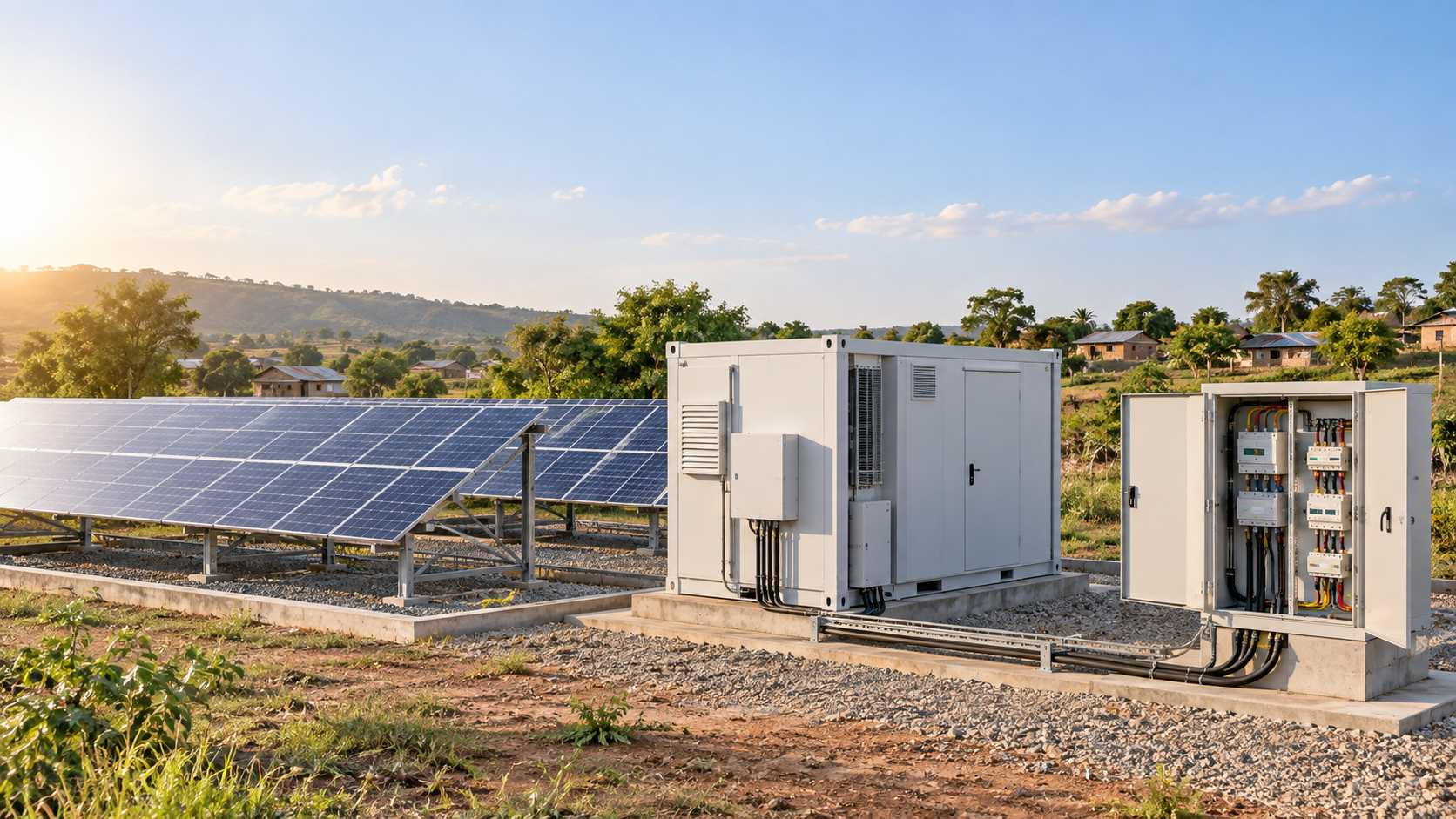
1. System topology
The typical microgrid chain is: PV array → combiner with DC isolation and fuse → charge controller / inverter (supplied by others) → AC distribution board → local loads (shops, fridges, lighting, water pump). Protection has to work on both the DC and AC sides, and the two must be coordinated so a fault on one side does not take down the other.
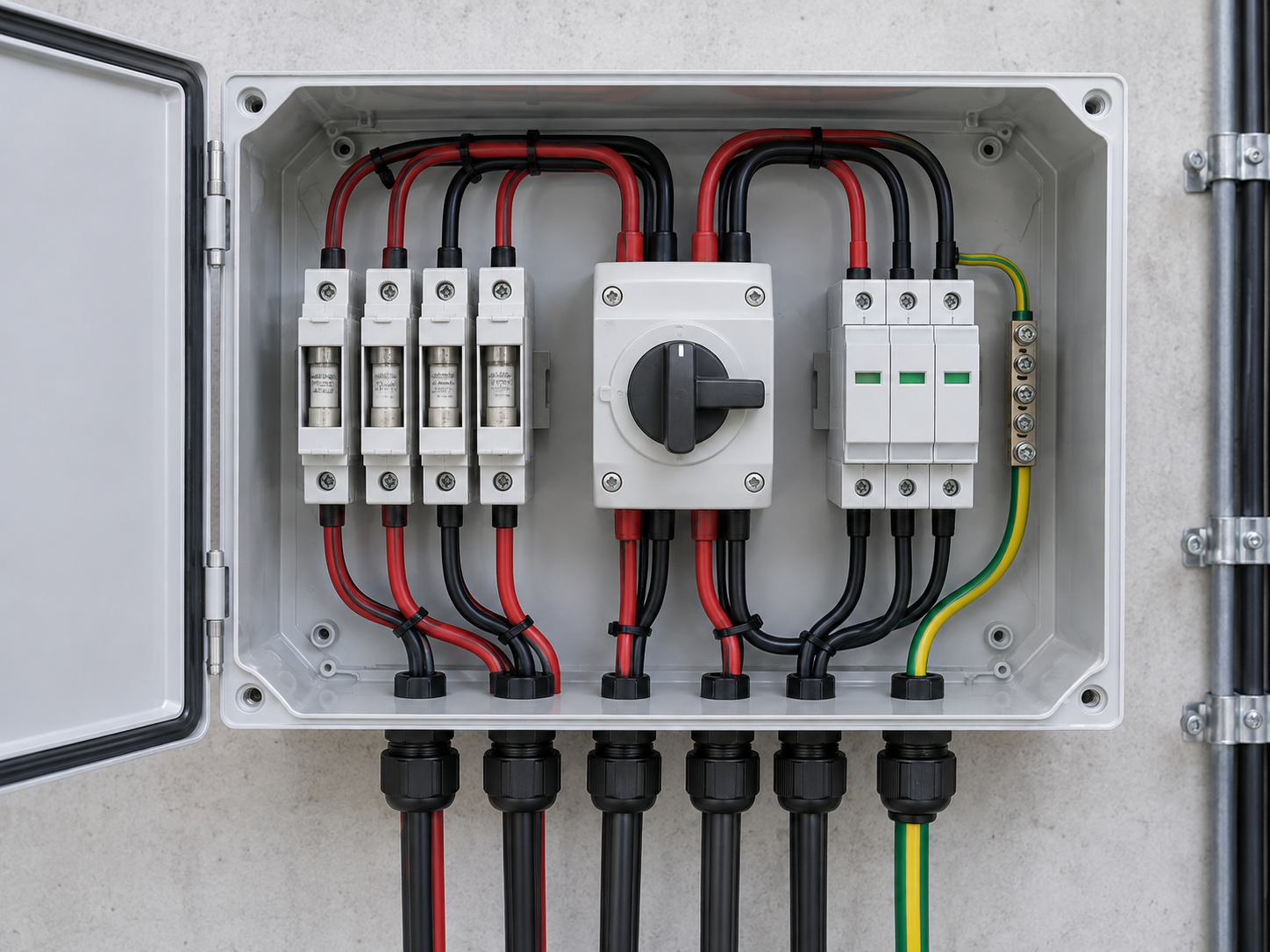
2. DC side protection
Because the array can sit idle and then energise with smooth DC from the inverter's transformerless stage, the DC protection must be rated for the actual DC envelope, not assumed from an AC breaker.
- A DC isolation switch at the array combiner for safe isolation during maintenance.
- gPV fuses protecting each string against short circuit and reverse current.
- A DC-rated surge protective device where lightning exposure is significant.
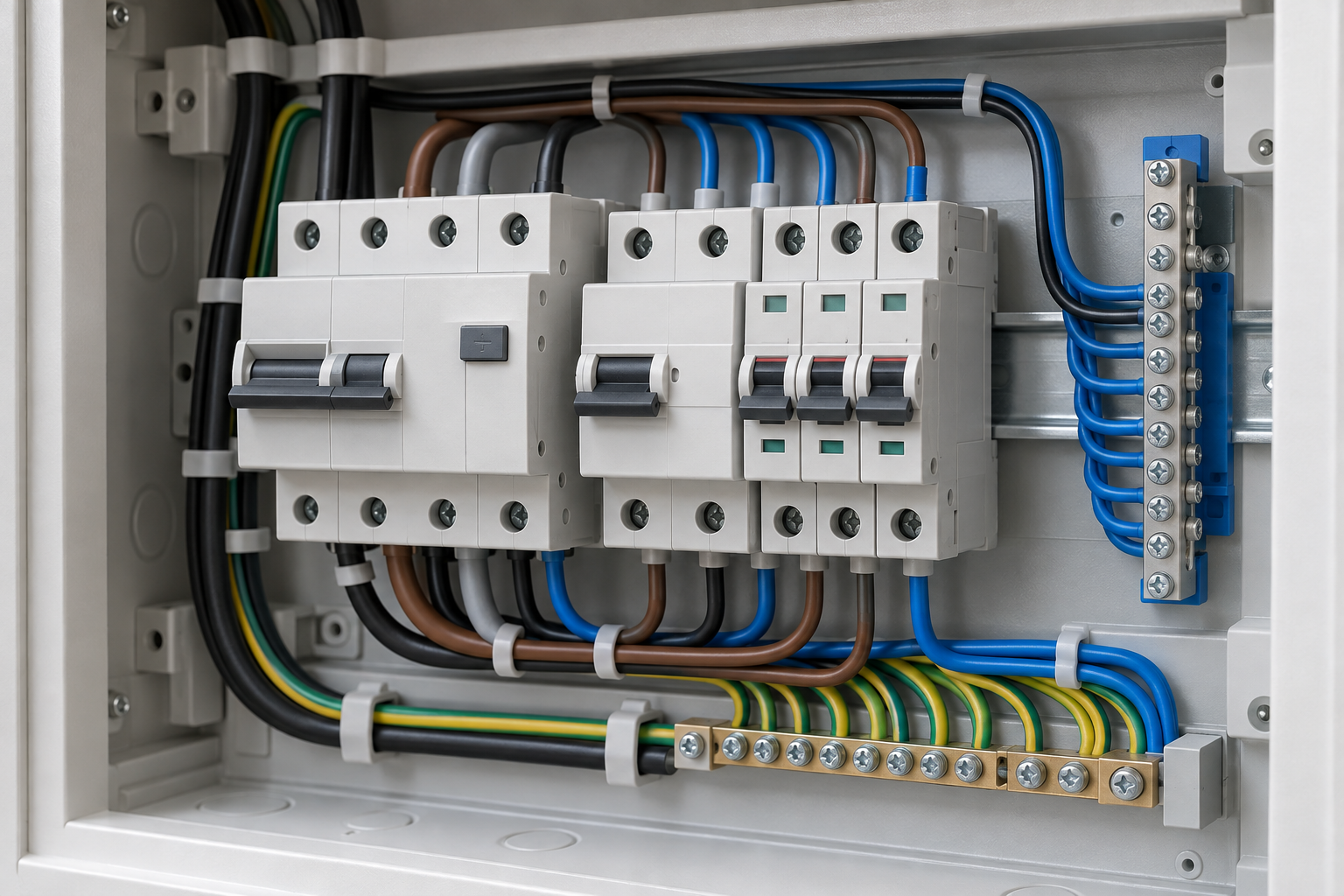
3. AC distribution board: Type B RCBO / RCCB
On the AC side the distribution board feeds mixed residential and commercial loads. A residual-current device is required for shock protection, and for PV-connected boards a Type B RCBO is specified because modern inverters can present smooth DC components that blind a Type A device. NEUTRON supplied Type B RCBO units combining residual-current protection with overcurrent protection in one module.
4. Nuisance trip avoidance
Rural microgrids see humid mornings and parasitic capacitance from long array cabling, both of which can push a marginal RCBO into nuisance tripping. The design response was to size the Type B threshold correctly, keep the array earthing clean, and avoid mixed neutral-earth loops in the AC board — steps that removed the recurring trips reported on earlier AC-only boards.
5. NEUTRON product mapping
- DC isolator and gPV fuse combiner — DC control & protection range.
- Type B RCBO / RCCB — electrical protection range.
- Coordinated DC SPD — surge protection range.
- Small low-voltage distribution assembly — low-voltage switchgear range.
6. Training and maintenance
Local operators were trained to isolate the DC side before any board work, read the RCBO test button, and recognise a genuine fault versus a nuisance trip. Simple, labelled boards with NEUTRON devices made this training practical for non-specialist community technicians.
7. Impact summary
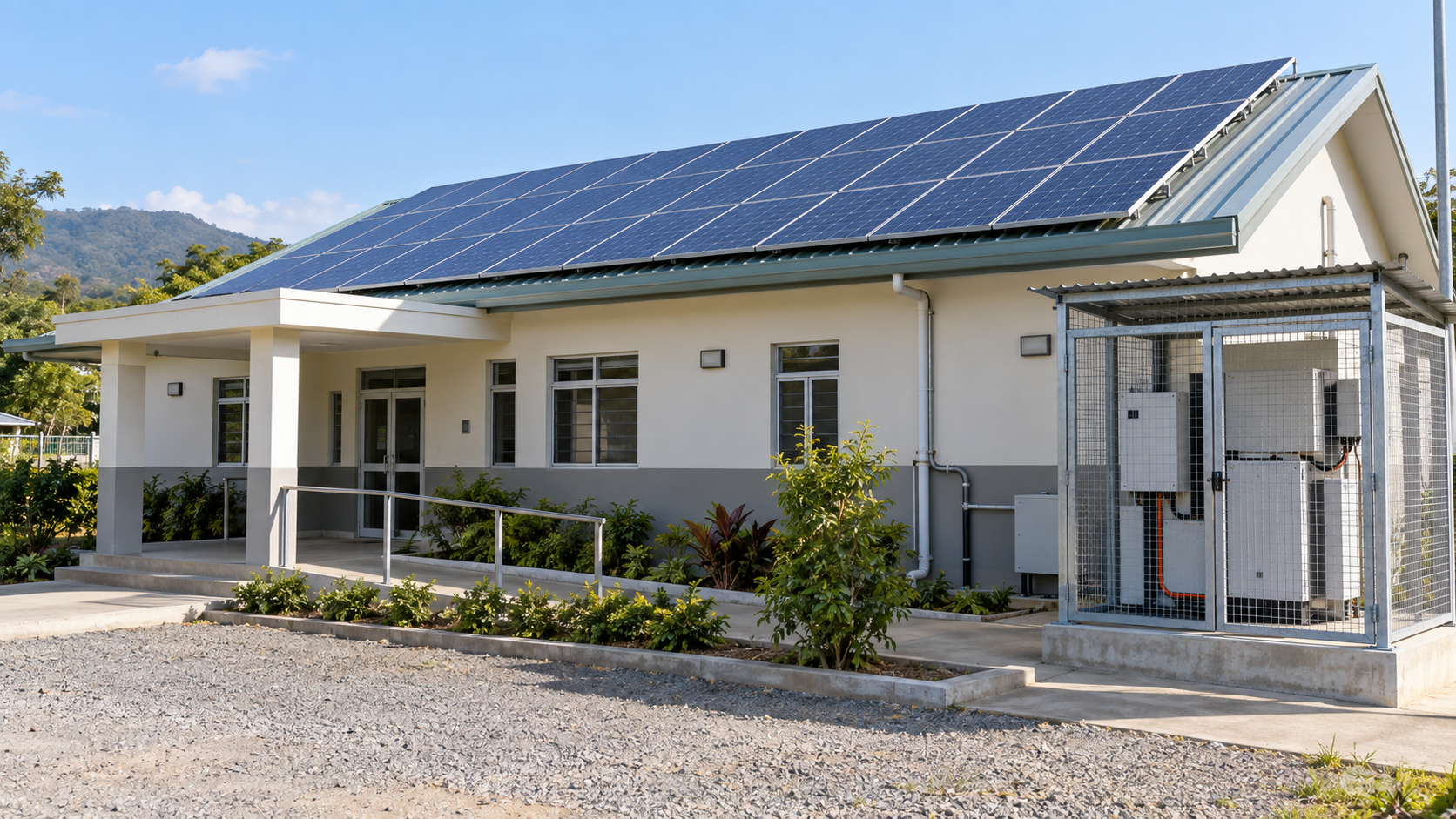
Across the microgrid deployments the DC-plus-AC protection approach cut protection-related downtime and removed the shock-risk gap left by AC-only boards. The arrays now run through humid and dusty seasons with stable residual-current protection, supporting shops, fridges, lighting and water pumping for the community.
Final ratings, protection coordination, installation and applicable local requirements must be verified against current standards, manufacturer documentation and the approved project design.
Frequently asked questions
Why Type B RCD for solar microgrids?
Transformerless inverters can inject smooth DC that a Type A RCD cannot detect. A Type B device senses AC, pulsating DC and smooth DC, closing that protection gap on PV-connected boards.
What causes microgrid RCBO nuisance trips?
Humid mornings, array parasitic capacitance and mixed neutral-earth loops are the usual causes; correct Type B sizing, clean earthing and loop avoidance resolve most of them.
What can one microgrid serve?
Depending on array and storage size, a community microgrid can power local shops, refrigeration, lighting and a water pump for a village cluster, with the exact load set by the operator's design.
Which NEUTRON products fit microgrids?
DC isolator + gPV fuse combiners, Type B RCBO/RCCB, coordinated DC SPD and a compact low-voltage distribution assembly.
Bring the system inputs to the first review.
Share the array configuration, inverter interface, earthing approach and local load priorities so the DC and AC protection layers can be reviewed together.
Discuss a microgrid requirementContinue learning
Explore related technical guidance in Electrical Protection.

Published from the approved Period 12 source package; project, technical and standards statements are retained from the supplied publication content.