
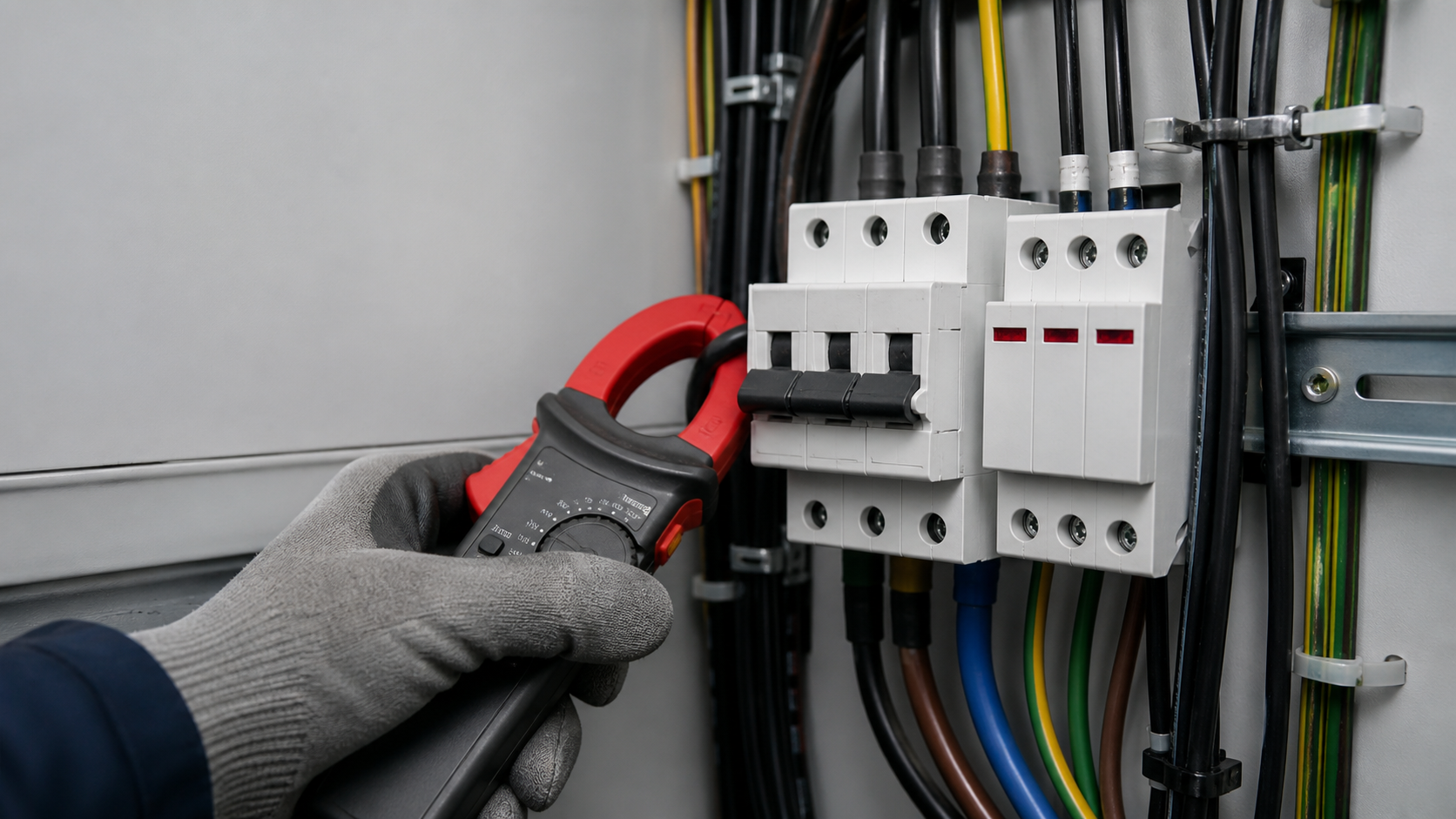
Fast Diagnosis: What the Trip Is Telling You
First identify which protective device operated: the SPD's own backup breaker, an upstream MCB or an RCD. Inspect the status indicator, isolate safely, review recent supply events and compare the actual system voltage with the installed SPD's Uc. Do not repeatedly re-energise a module that shows end-of-life status or signs of damage.
Cause 1: End-of-Life Thermal Runaway
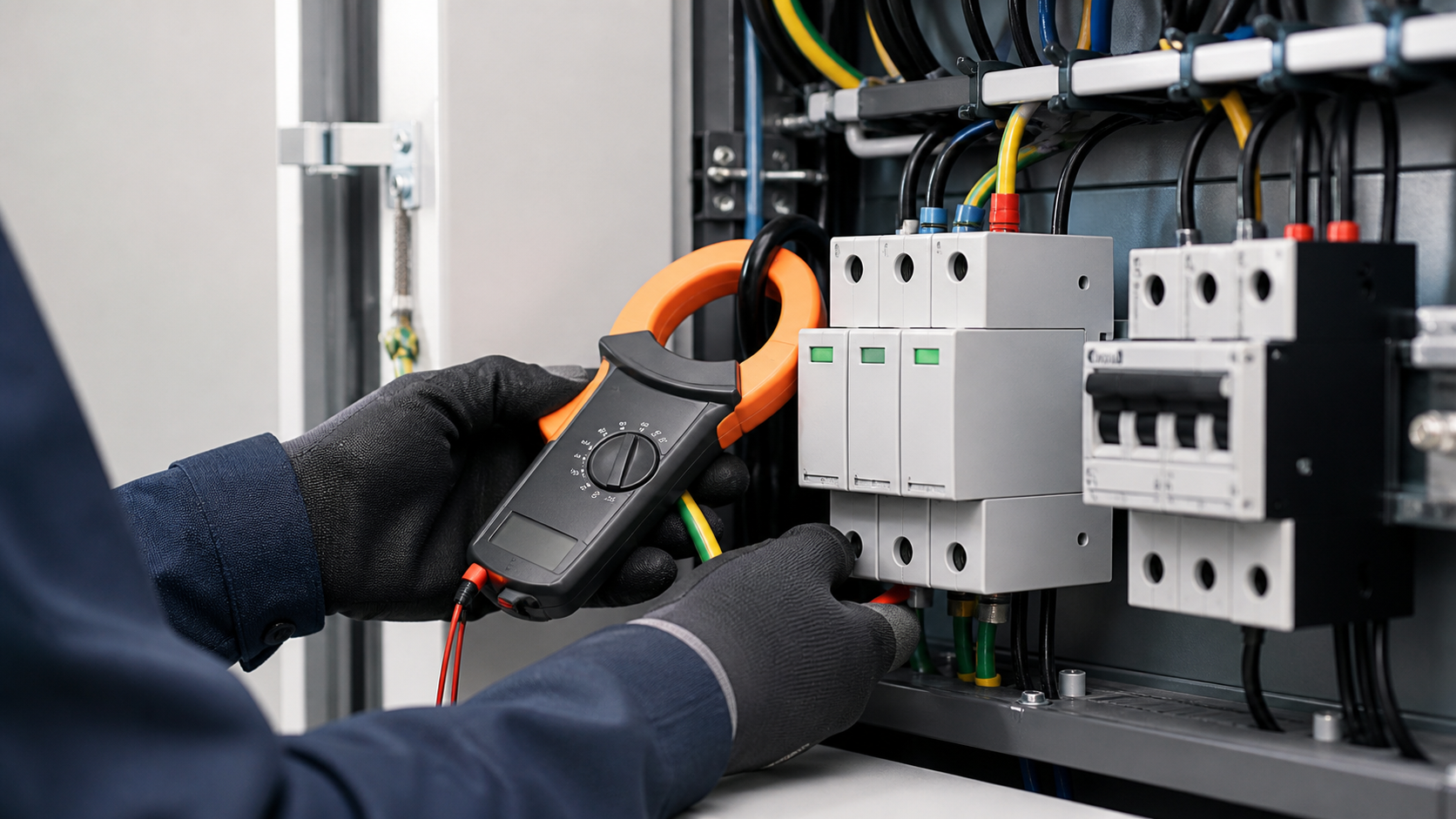
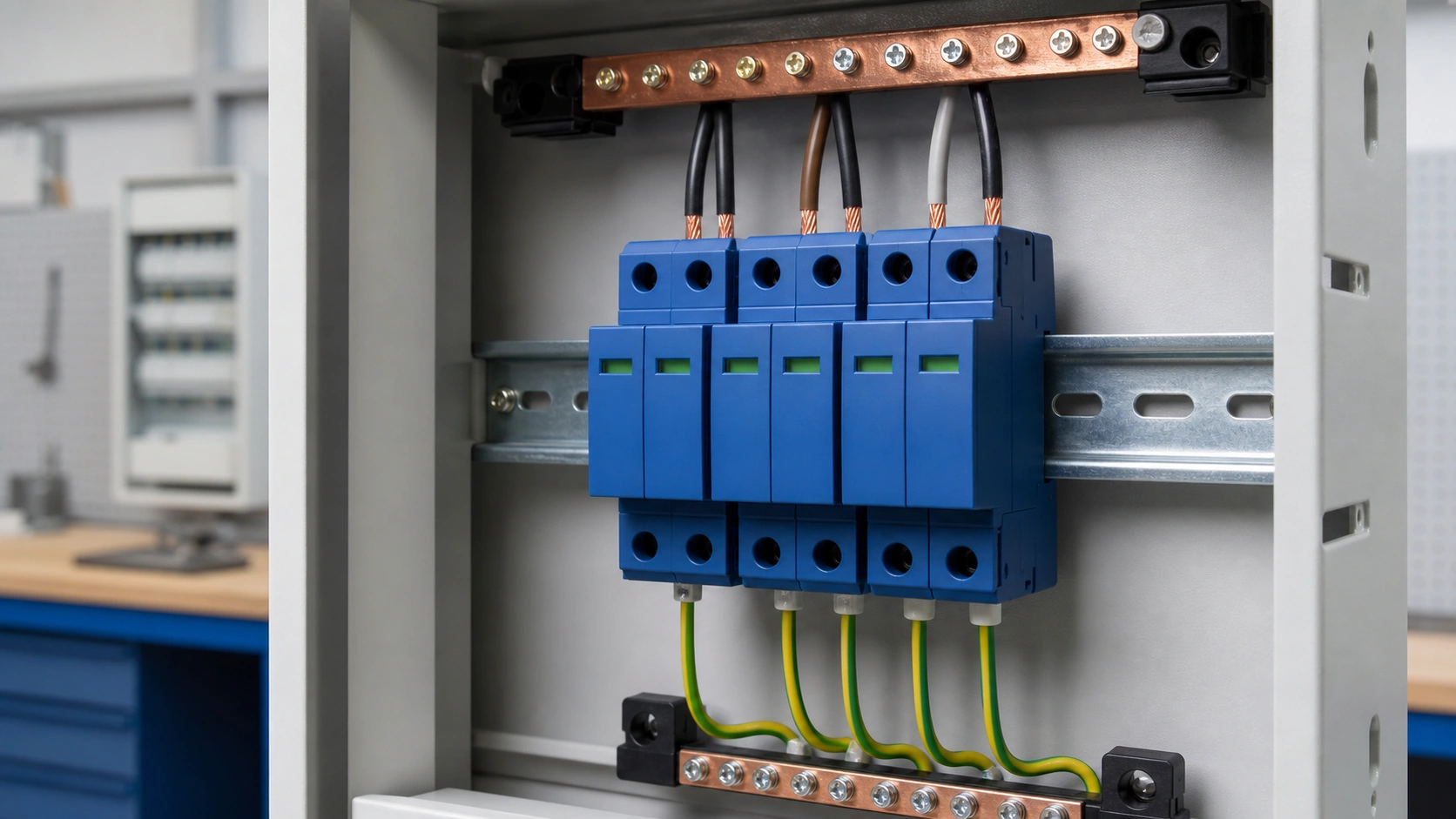
A varistor degrades as it diverts surge energy. Leakage rises, internal heating accelerates and the module can fail as a short circuit. The thermal disconnector should isolate the failed cartridge; a red status window normally indicates that the module has disconnected and must be replaced according to the product instructions.
Cause 2: Leakage Current Tripping an RCD
A degrading line-to-earth varistor can pass continuous leakage. Added to the standing leakage of drives, filters and IT equipment, the total can cross the operating threshold of a 30 mA RCD. Measure leakage with an appropriate clamp meter and assess the complete installation rather than assuming the RCD or SPD alone is defective.
Cause 3: Backup Protection Is Wrongly Sized
The SPD backup fuse or breaker must clear the short circuit created by an end-of-life varistor while riding through the microsecond impulse of a genuine surge. Use the type and rating stated in the SPD datasheet and do not exceed the declared maximum backup rating. The source notes that a curve C or curve D MCB can tolerate the impulse better than a curve B device, but the product documentation controls.
Cause 4: Uc Is Too Low for the System
Uc must exceed the worst-case continuous voltage, including regulation excursions. The source guide treats 275 V as a practical minimum for 230/400 V line-to-neutral systems, 320 V as safer where regulation is poor, 385 V or above for some TT line-to-earth measurements and full line-to-line voltage for IT systems. Confirm the actual earthing arrangement before applying any value.
Cause 5: Wiring and Lead-Length Faults
Incorrect conductor routing, poor terminations, inadequate grounding or excessive lead length can increase let-through voltage and create heating or nuisance operation. Keep phase and earth connections as short as practicable; the source uses 0.5 m as a widely used target and recommends the conductor cross-sections in the datasheet.
Selecting an SPD That Will Not Nuisance Trip
- Confirm SPD type, system voltage and earthing arrangement.
- Select Uc above the worst-case continuous voltage.
- Compare Up with the equipment impulse withstand.
- Coordinate In, Imax and the declared backup fuse or breaker.
- Keep connections short and correctly sized.
- Provide visible status indication and remote signalling where monitoring is required.
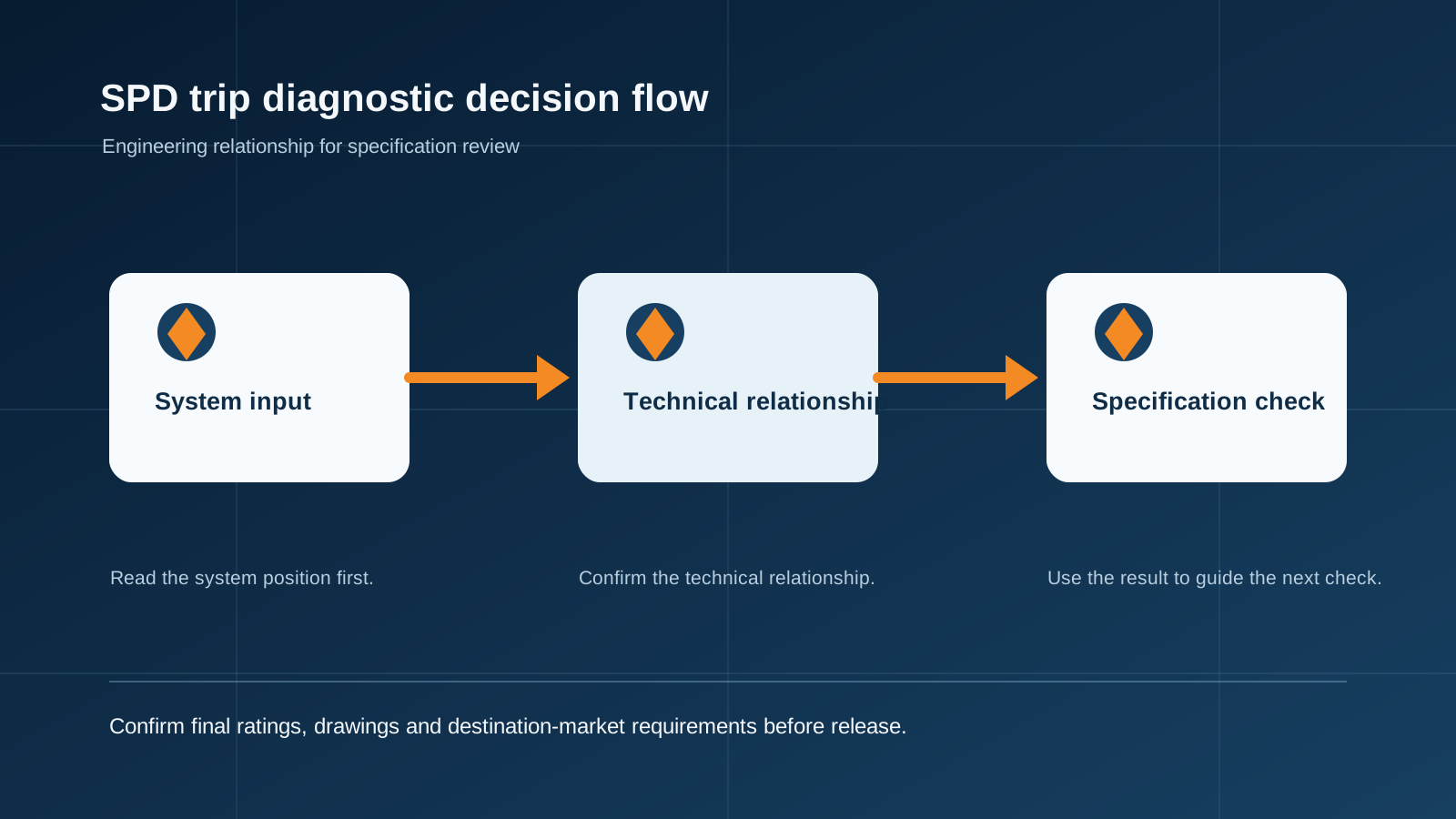
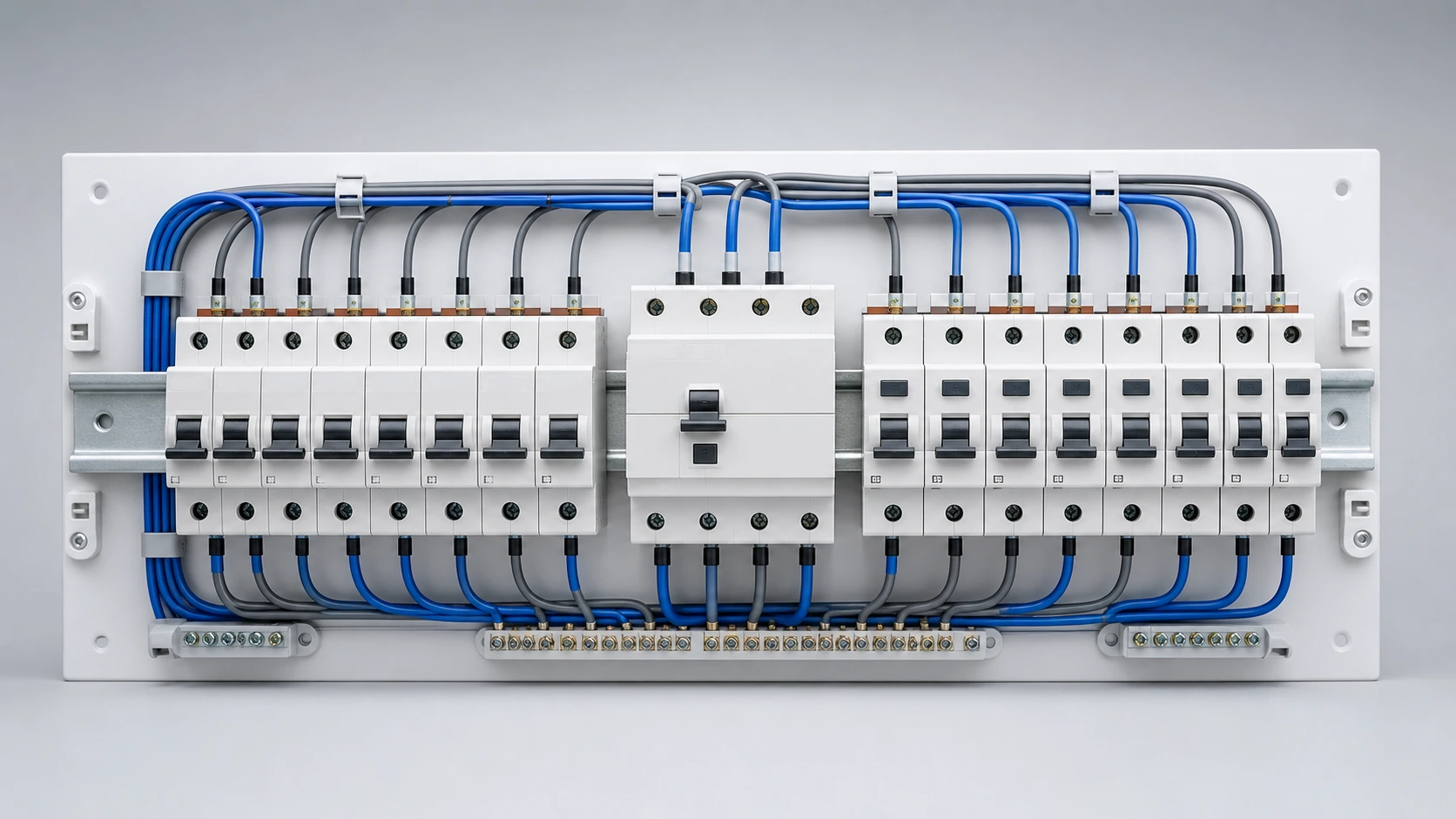
Technical diagram shown at a readable responsive scale.
Field Diagnostic Procedure
Use a safe isolation procedure and qualified personnel. Record the tripped device, inspect the status window, verify supply voltage and earthing arrangement, check the backup device against the datasheet, measure relevant leakage, inspect terminals and conductor length, then replace only the module or protection device supported by the diagnosis. Re-test and document the result before returning the circuit to service.
Electrical fault diagnosis and replacement must be performed by qualified personnel under safe isolation. The source values are selection guidance, not a substitute for the installed product datasheet or local code.
Frequently asked questions
Why does my surge protector trip the breaker with no storm?
A common cause is an end-of-life varistor that has failed short. Also check status indication, leakage and whether Uc is high enough for the actual supply voltage.
Can an SPD trip an RCD instead of an MCB?
Yes. Degrading varistor leakage can add to standing leakage from other equipment and cross the RCD operating threshold.
What backup protection does an SPD need?
Use the fuse or breaker type and rating stated in the SPD datasheet and never exceed its maximum declared backup rating.
How do I choose Uc?
Choose Uc above the worst-case continuous voltage for the actual system and earthing arrangement, not nominal voltage alone.
Does lead length matter for SPD performance?
Yes. Inductive voltage drop in long connecting conductors adds to the voltage reaching the protected equipment. Keep phase and earth leads short and follow the datasheet cross-sections.
Diagnose Before Replacing
Share the system voltage, earthing arrangement, installed SPD model, protective-device rating and observed status indication so the replacement and coordination questions can be reviewed together.
Request a quoteContinue learning
Explore related technical guidance in Electrical Protection.
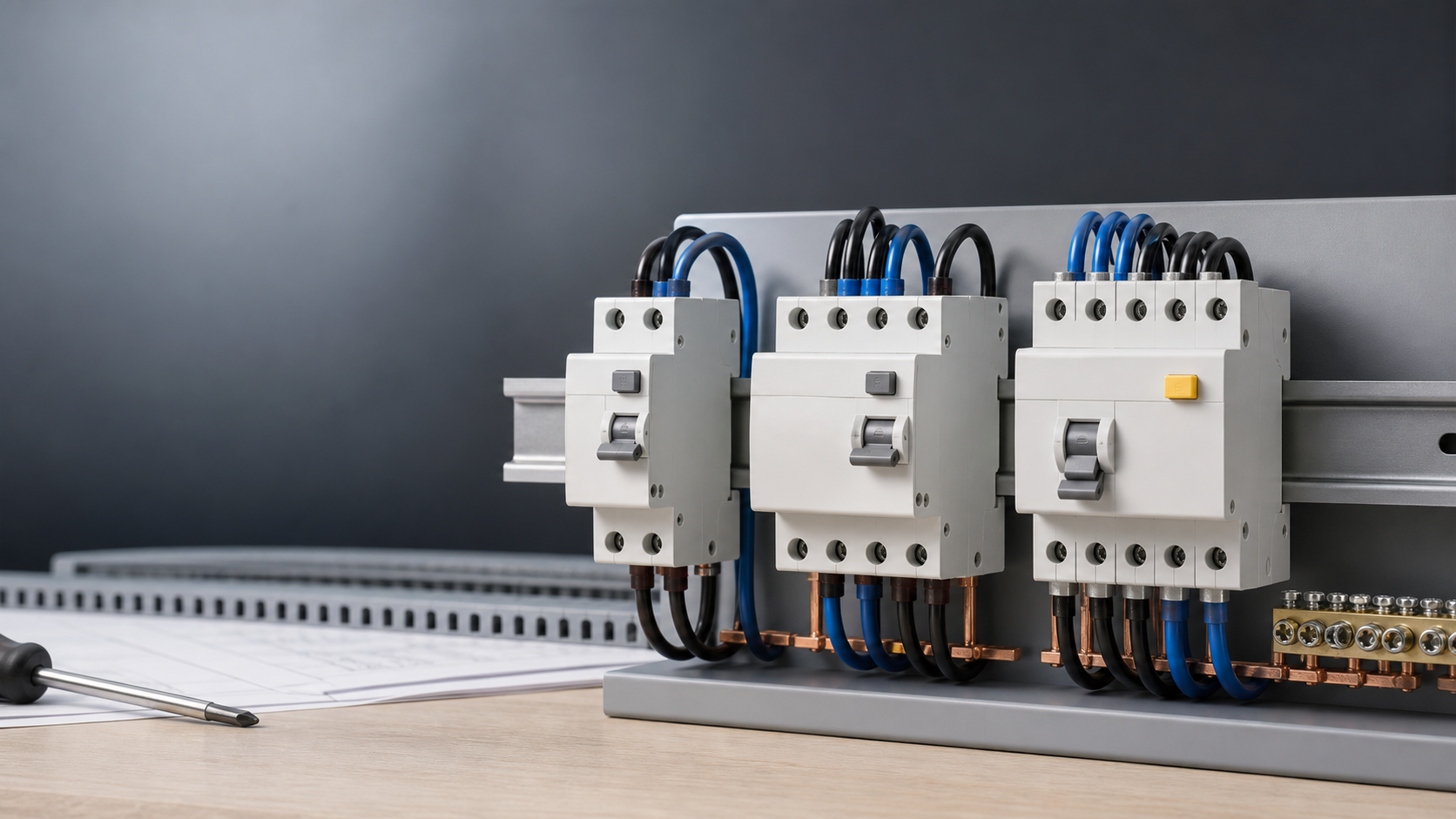
Adapted from the supplied DOCX. Troubleshooting requires safe isolation, qualified personnel and confirmation against the installed SPD datasheet and local requirements.