
2. What each acronym actually means
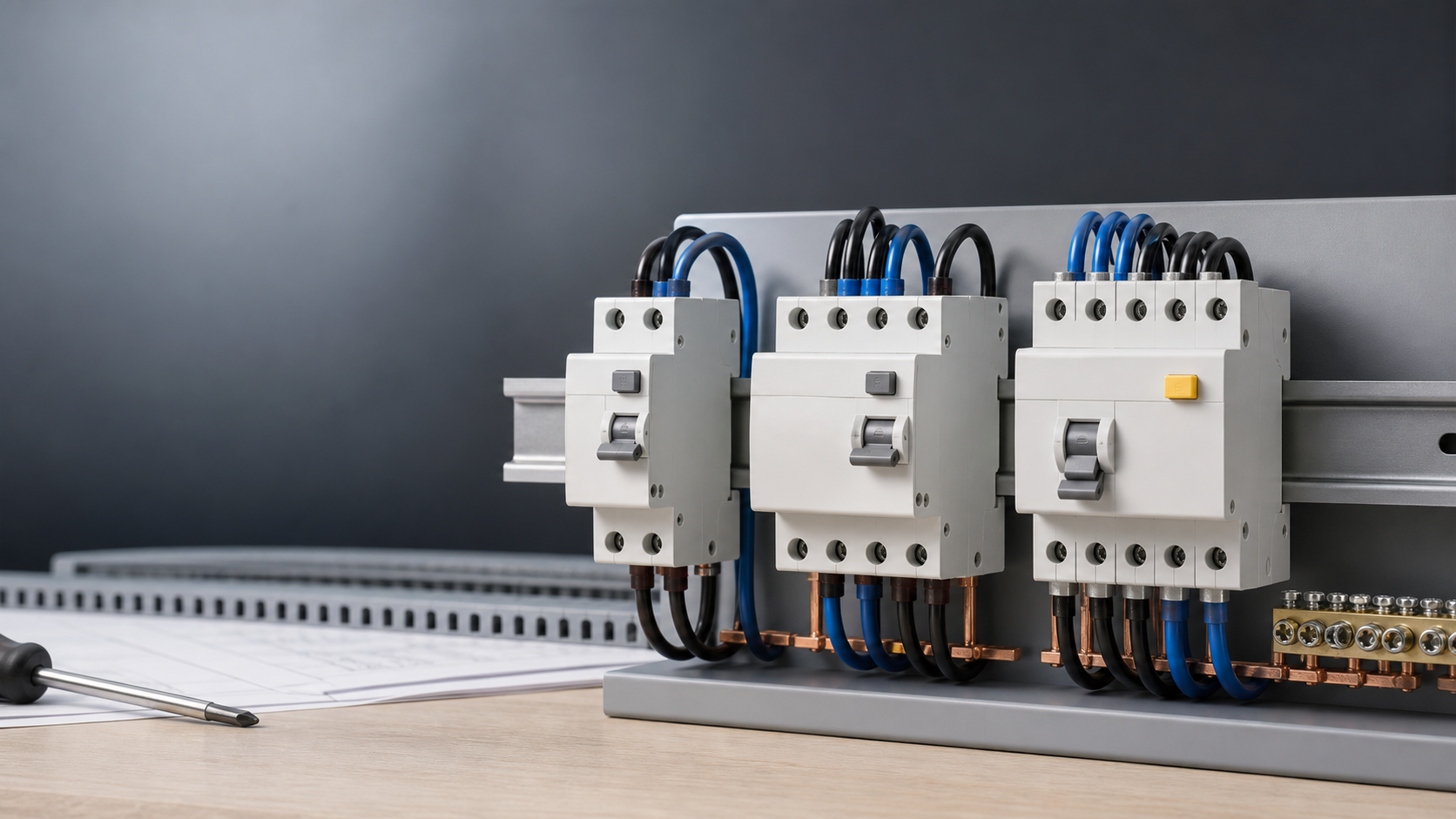
An RCD is any device whose sole job is to disconnect a circuit when the residual current exceeds its rated value. RCCB and RCBO are the two product forms that do this job, and they are defined by separate IEC product standards.
- RCCB (IEC 61008-1) — senses earth leakage and trips. It has no thermal or magnetic element, so a separate miniature or moulded case circuit breaker must protect the cables against overload and short circuit. Common in a main distribution board where one device guards several outgoing circuits.
- RCBO (IEC 61009-1) — houses the same residual current trip plus a thermal-magnetic overcurrent trip in one moulding. One device fully protects one circuit. Common where fault isolation per circuit matters, such as commercial and rental installations.
- The marking on the device tells you which you have: an RCCB is labelled with its rated residual current and type only, while an RCBO also shows a rated current and a trip curve B, C or D.
7. The NEUTRON residual current range
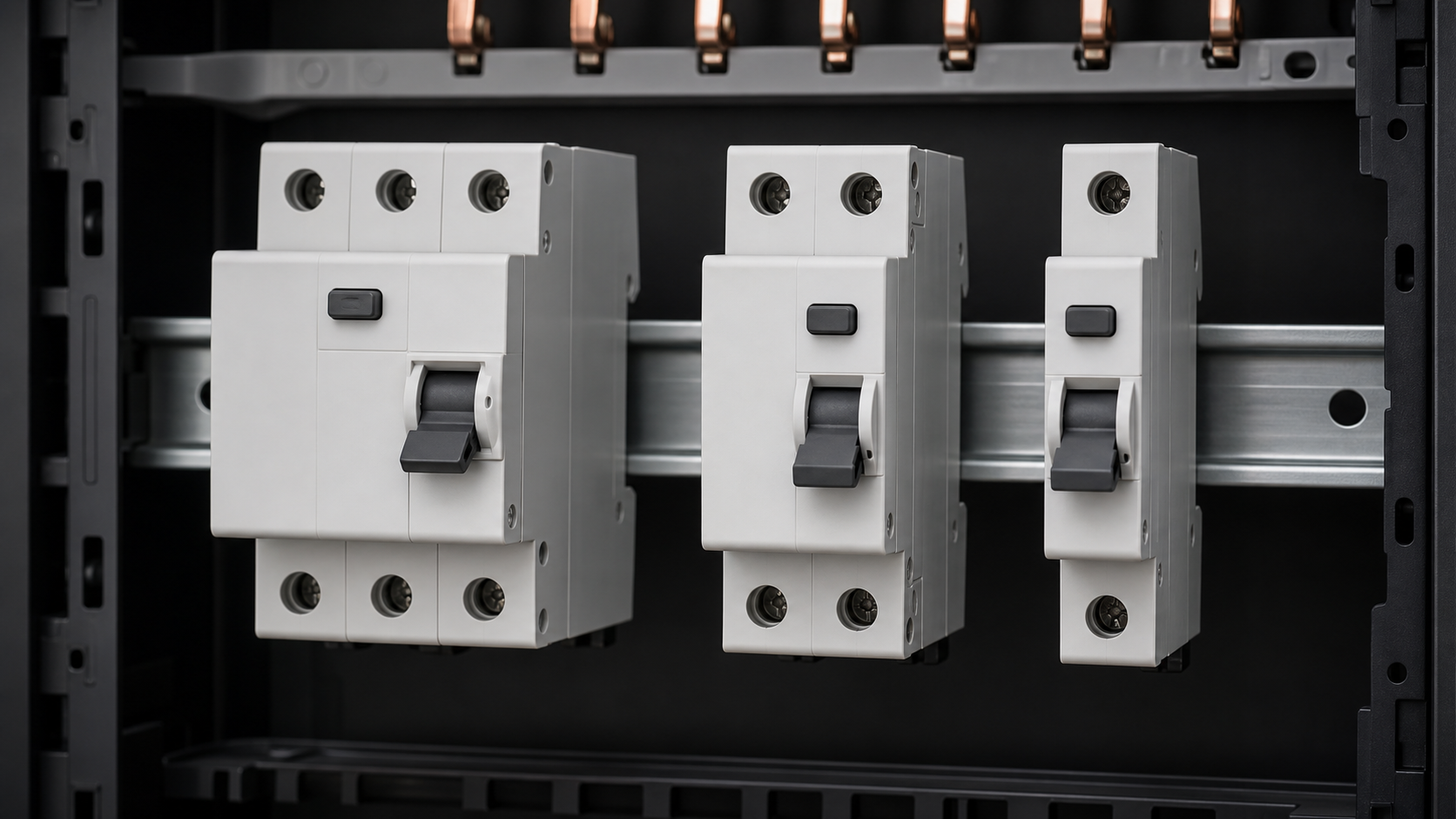
NEUTRON manufactures both product families, from modular DIN-rail devices to moulded case residual current breakers, all built to the relevant IEC standards and supplied loose or factory-fitted in NEUTRON assemblies.
- WSB7L-63 RCBO — 1P+N, 6 A to 63 A, 30 mA / 100 mA / 300 mA, breaking capacity 6000 A, to IEC 61009-1, with published trip times of 0.1 s at IΔn.
- WSB2L-32 line-plus-neutral leakage breaker — 6 A to 32 A, 30 mA Type AC, C curve, 36 mm width, both line and neutral interrupted, to IEC 61009 and GB 16917.1.
- DZ47LE-63 residual current circuit breaker — 40 A and 63 A frames, 1P to 4P, to IEC 61009-1 and GB 16917.1.
- WCM30L moulded case RCCB — 100 A to 800 A frames, adjustable residual current 30 mA to 500 mA, 35 kA to 50 kA breaking capacity, to IEC 60947-2.
- WCM7EL electronic RCD — three-phase four-wire, residual settings 100 mA to 800 mA, 0.06 s delay type, configurable auto-reclosing, with an LCD of voltage, current and leakage.
- All devices are available loose on 35 mm DIN rail or integrated into NEUTRON GGD, GCS, XL-21 and metering cabinets built to IEC 61439-1 and IEC 61439-2.
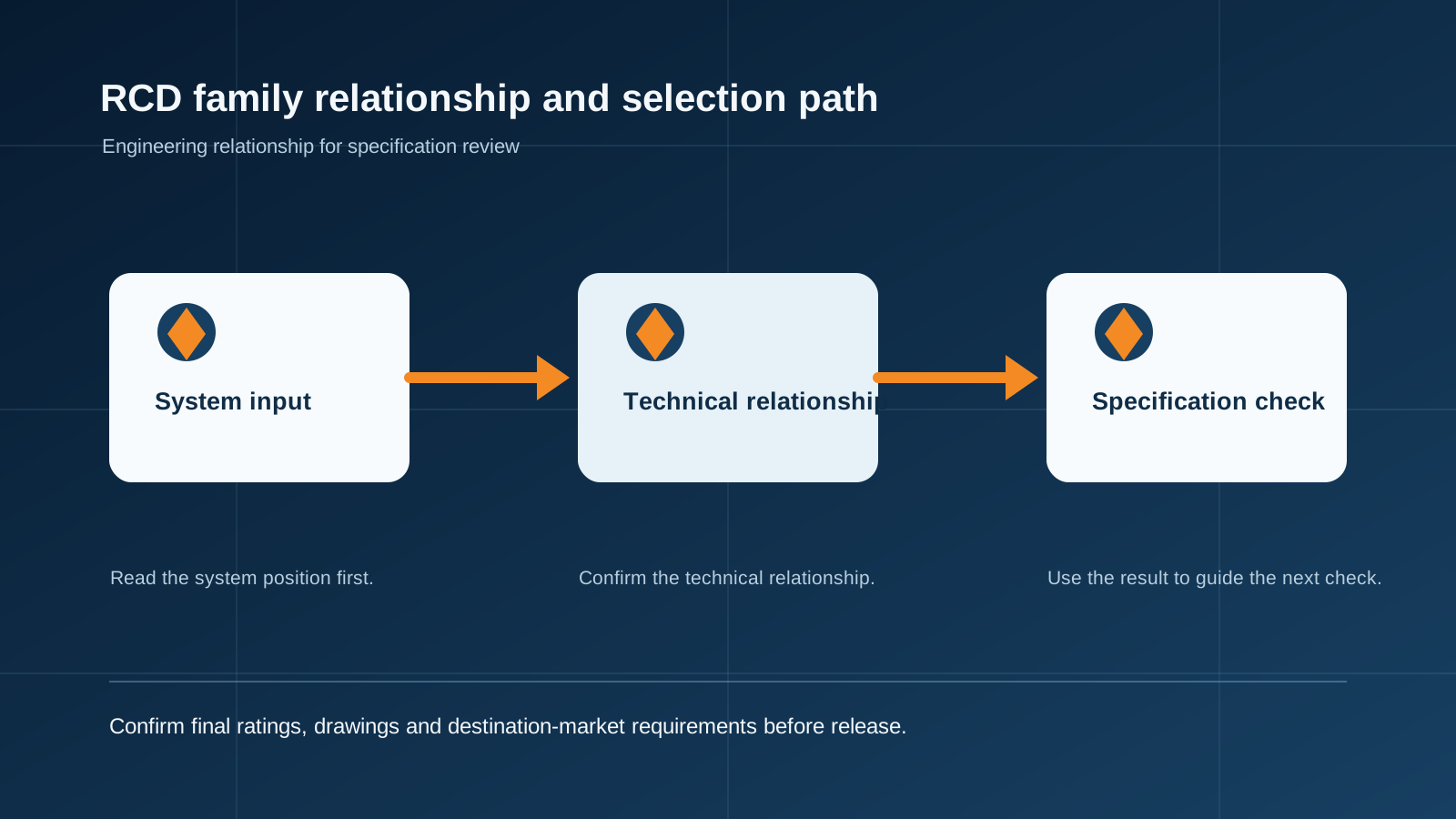
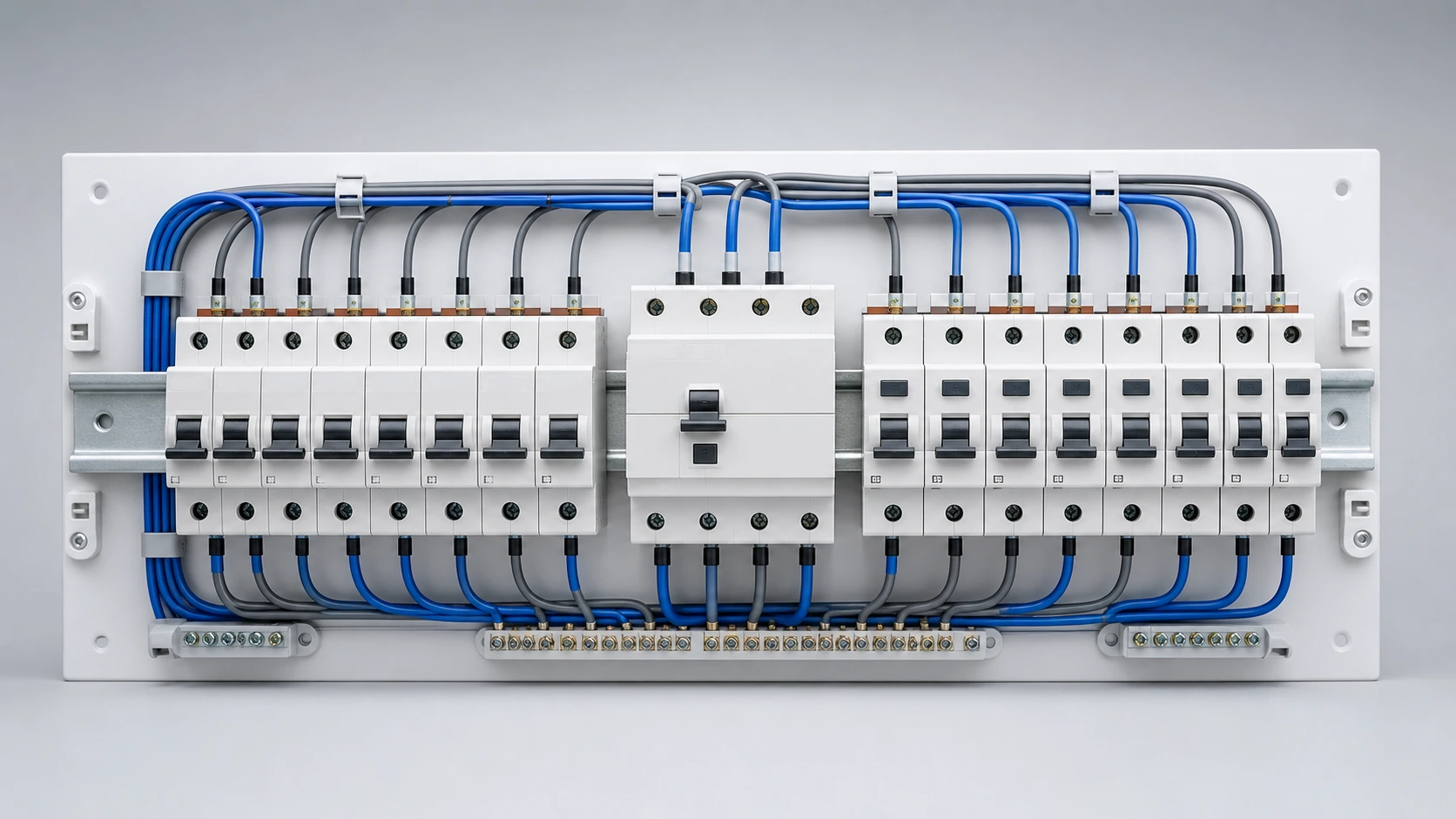
Technical diagram shown at a readable responsive scale.
1. One-minute answer: RCD is the family, RCCB and RCBO are members
The three terms are constantly confused because they share letters and overlapping functions. The cleanest way to hold them in mind is that RCD is the umbrella and the other two are specific products under it.
Every residual current device measures the current leaving a circuit on the line conductors and returning on the neutral. If the two differ by more than a set threshold, current is escaping to earth, and the device opens the circuit. What separates the products is whether they also protect against overload and short circuit, and which residual current waveforms they can see.
- RCD — Residual Current Device. A functional description, not a single product.
- RCCB — Residual Current Circuit Breaker. Residual current protection, no overcurrent protection.
- RCBO — Residual Current Breaker with Overcurrent protection. Both functions in one device.
3. RCCB versus RCBO: the core difference and when to use each
The difference is fault isolation, not safety level. Both disconnect on earth leakage; an RCBO simply adds cable protection so you need one fewer device per circuit.
- Use an RCCB where several circuits share one protective device on the incomer or a sub-board. It is economical and, with selective ratings, it can protect whole groups of circuits against fire.
- Use an RCBO where a single faulty circuit must trip without disturbing its neighbours. A 1P+N RCBO in an 18 mm module delivers full Type A protection without widening the board.
- Do not pair an RCCB and an MCB of different brands and assume selectivity. Either choose coordinated devices or move to per-circuit RCBOs.
- A pure RCCB must never stand alone. Without an upstream overcurrent device a short circuit will destroy it.
4. The two specifications that actually decide the choice
Once the family is chosen, two parameters decide whether the device will protect people, property and equipment. The type sets which leakage waveforms it can see; the rated residual current sets what it is protecting against.
- Type AC — sinusoidal AC residual current only. Restricted by many modern codes because almost every load today contains power electronics.
- Type A — adds pulsating DC residual current. The sensible default for socket outlets, electronic lighting and general final circuits.
- Type F — adds composite residual currents up to 1 kHz and tolerates smooth DC up to 10 mA. For single-phase drives: heat pumps, inverter air conditioners.
- Type B — adds smooth DC detection to 1 kHz (Type B+ to 20 kHz). Required where smooth DC leakage is possible: EV charging, three-phase inverters, photovoltaics.
- 30 mA — additional protection of people on final circuits.
- 100 mA and 300 mA — fire protection and selectivity on distribution and incomer circuits.
5. Comparison tables
Table — RCD, RCCB and RCBO at a glance
Table — Residual current type coverage
6. Common mistakes that defeat the protection
- Buying on price and fitting Type AC where electronics are present, leaving smooth DC leakage undetected.
- Assuming a 30 mA device gives fire protection at distribution level. It does not; distribution needs 100 mA or 300 mA.
- Mounting an RCCB with no upstream overcurrent device, so a short circuit damages it.
- Sharing a neutral between two residual current devices, which causes immediate tripping.
- Treating the trip curve as a remedy for earth leakage nuisance tripping — the curve only governs overcurrent behaviour.
- Skipping the six-monthly test button, then discovering a seized mechanism at inspection.
This is general technical guidance, not a substitute for local electrical code, the applicable standard, product datasheets or a qualified engineer's design review. Confirm ratings and final configurations against the actual project.
Frequently asked questions
What is the main difference between an RCCB and an RCBO?
An RCCB provides residual-current protection only. An RCBO combines residual-current, overload and short-circuit protection for an individual circuit.
Is RCD a device type or a general term?
RCD is the general term for residual-current protection. RCCBs and RCBOs are common device types within that wider category.
Can an RCBO replace an RCCB and MCB combination?
It can where the circuit ratings, fault level, pole arrangement, neutral arrangement and applicable rules are satisfied. Confirm the complete circuit design before selection.
Bring the project inputs to the first review.
NEUTRON can review the application context, electrical envelope, enclosure conditions and document requirements related to rccb vs rcbo vs rcd: the ultimate guide to electrical safety before quotation.
Discuss a technical requirementContinue learning
Explore related technical guidance in Electrical Protection.

Technical note: source article content is retained for educational use. Applicable standards, ratings, protection coordination and final configurations must be confirmed for the actual project and destination market.