
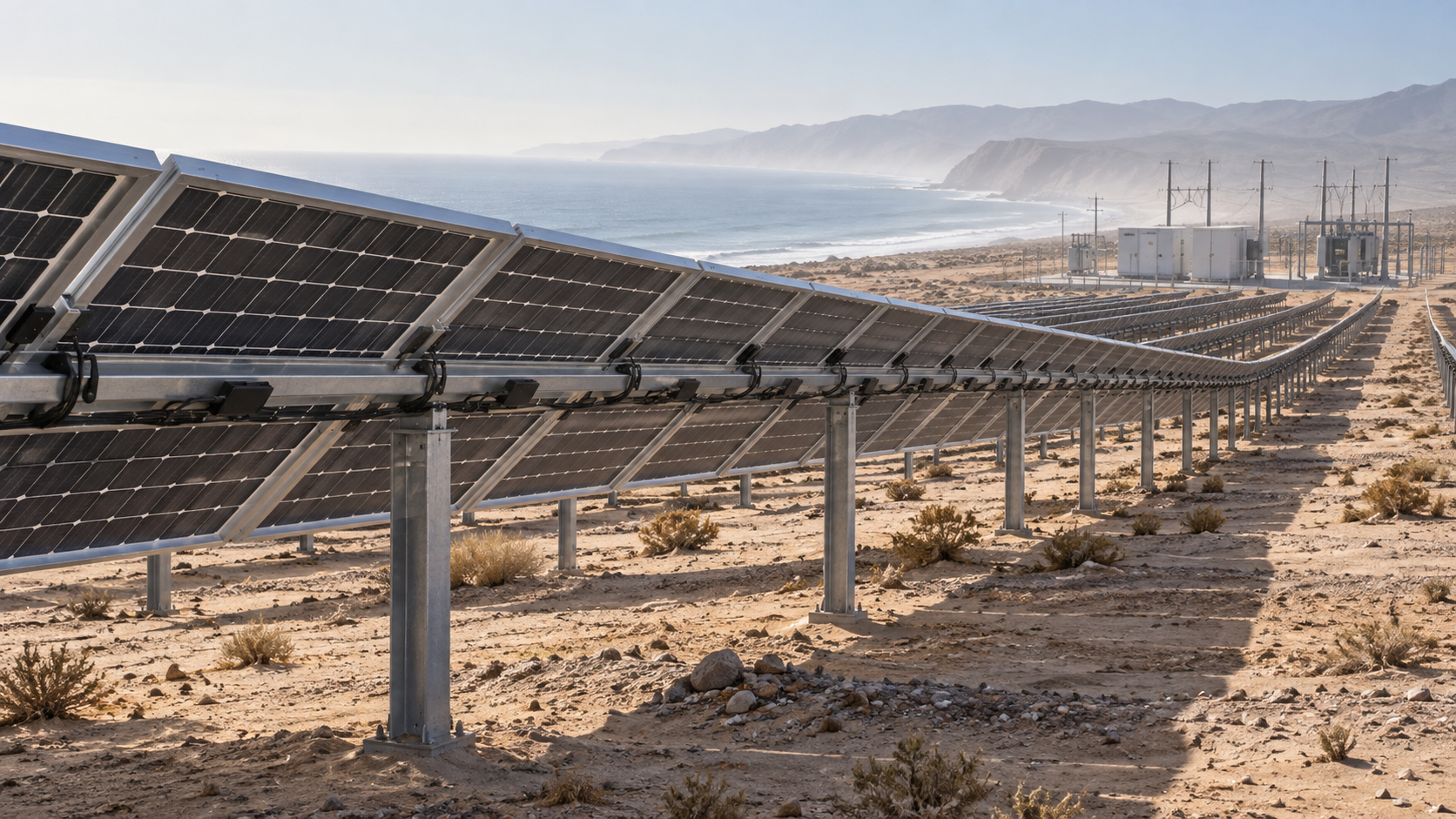
1. Bifacial strings and coastal air
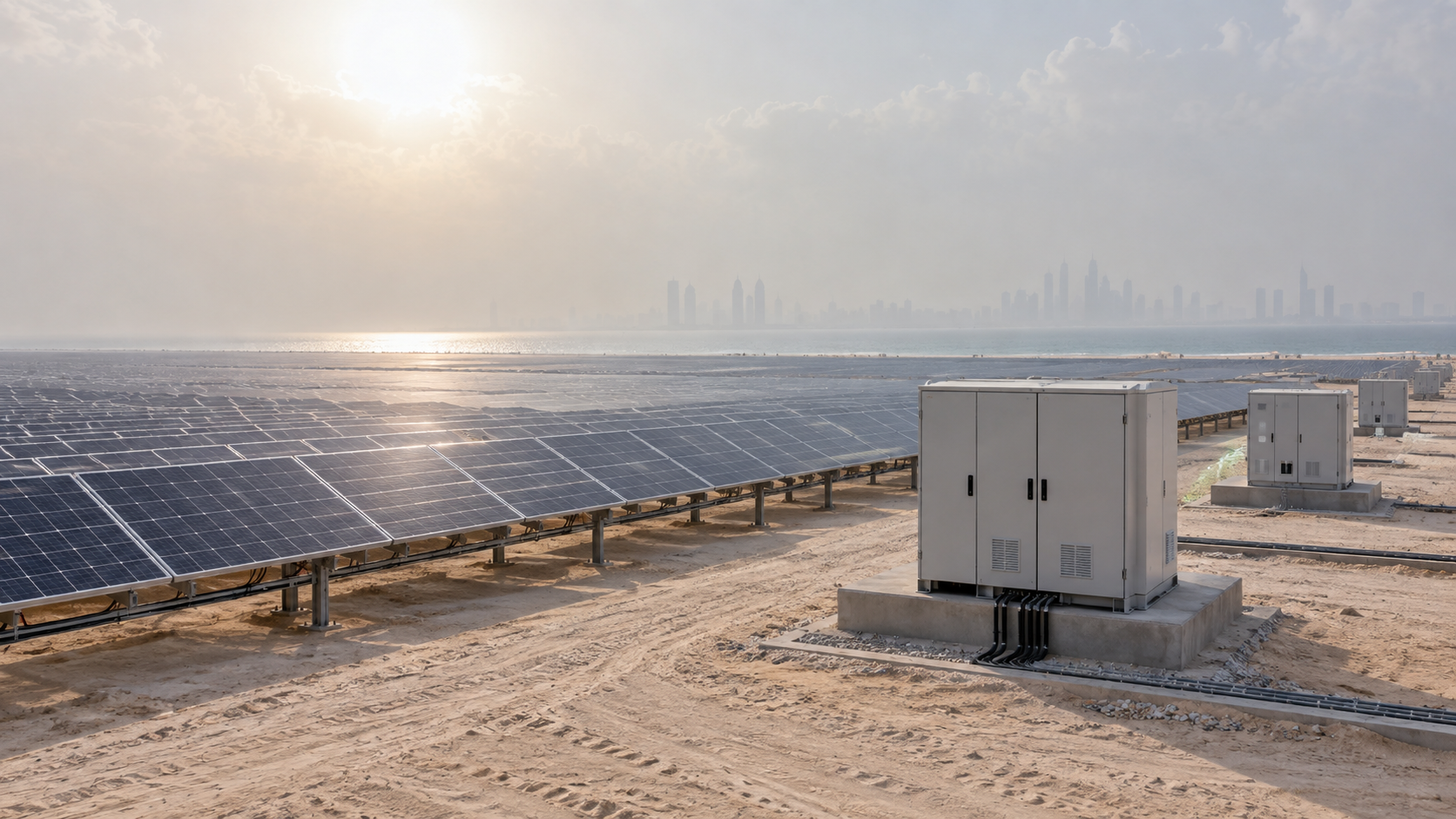
The Al Dhafra solar plant near Abu Dhabi reaches about 2 GW and uses a very large count of bifacial panels. A coastal Emirati site adds humidity and salt mist to the protection problem. Bifacial modules raise the rear-side gain, so string short-circuit current is higher than a mono-facial assumption. At the same time the coast adds salt mist and humidity that attack enclosures and change leakage behaviour.
2. Combiner and DC protection
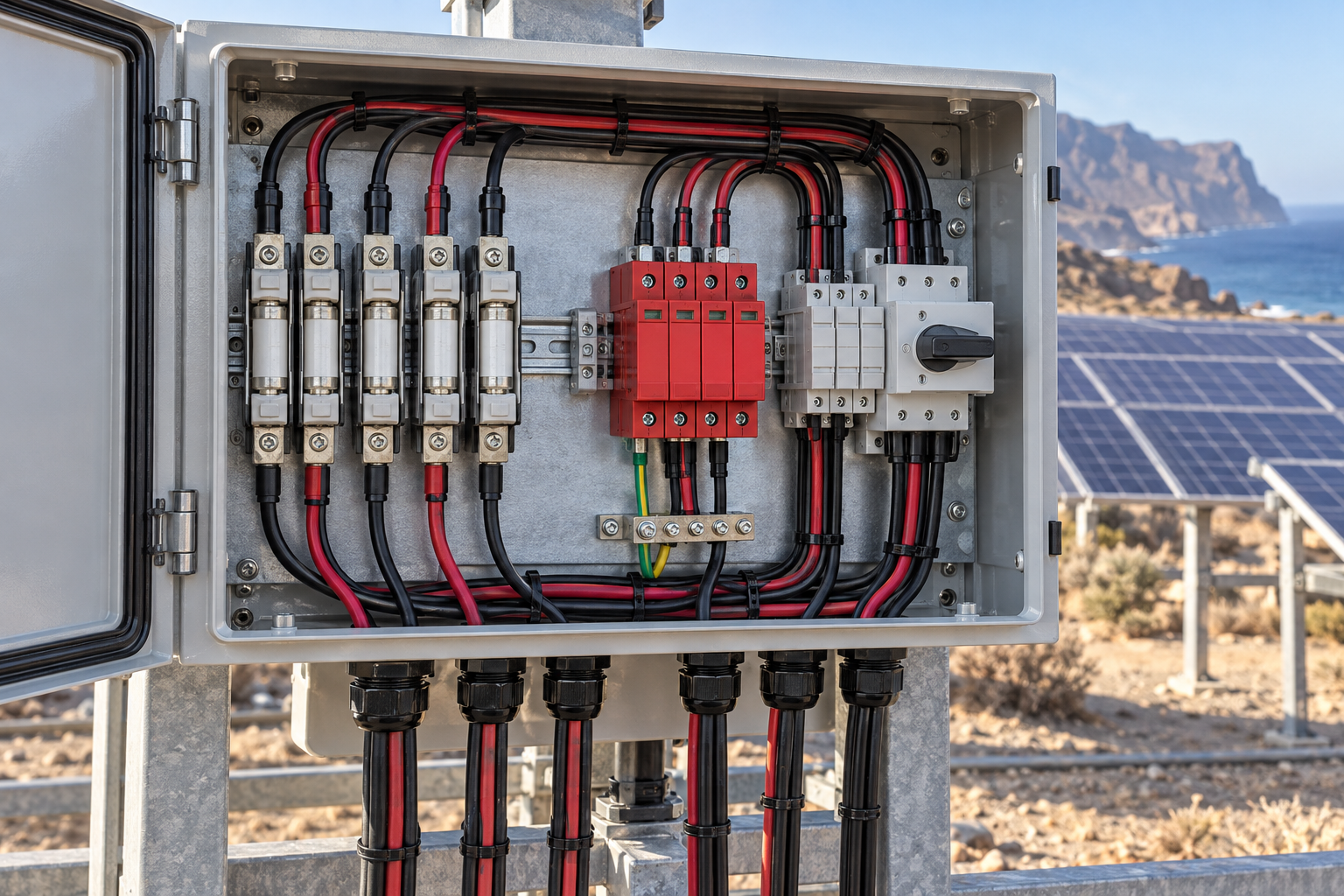
- PV combiner boxes rated to 1500 V DC with gPV fuses sized to 1.25x the short-circuit current including rear-side gain.
- DC disconnect switches for safe isolation.
- Type 2 DC SPDs staged to the 1500 V envelope.
3. Corrosion-class enclosures
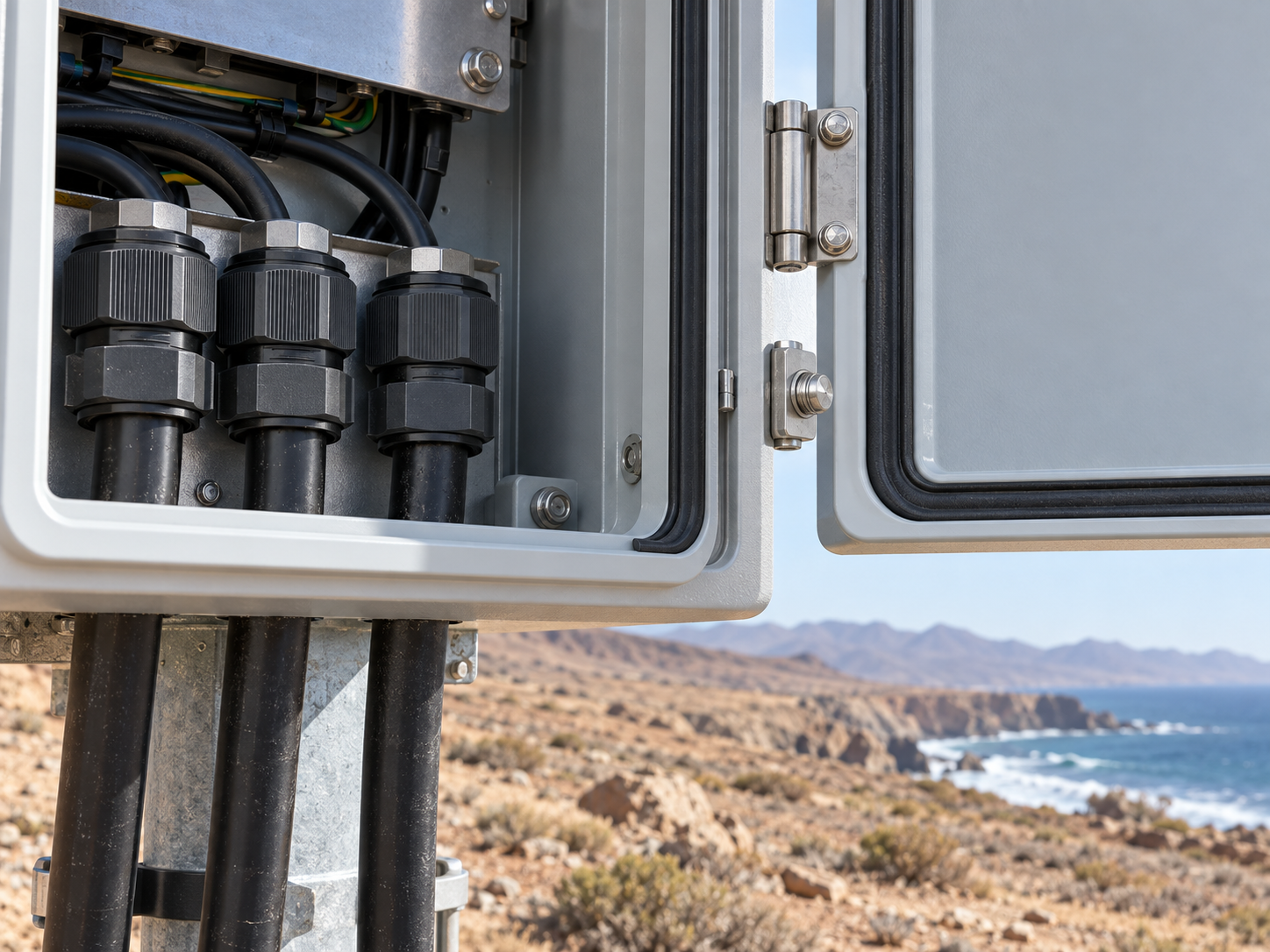
- Enclosures specified to a corrosion class for salt mist.
- Coated parts and sealed gaskets.
- Humidity-sealed cable entries.
4. Staged surge protection
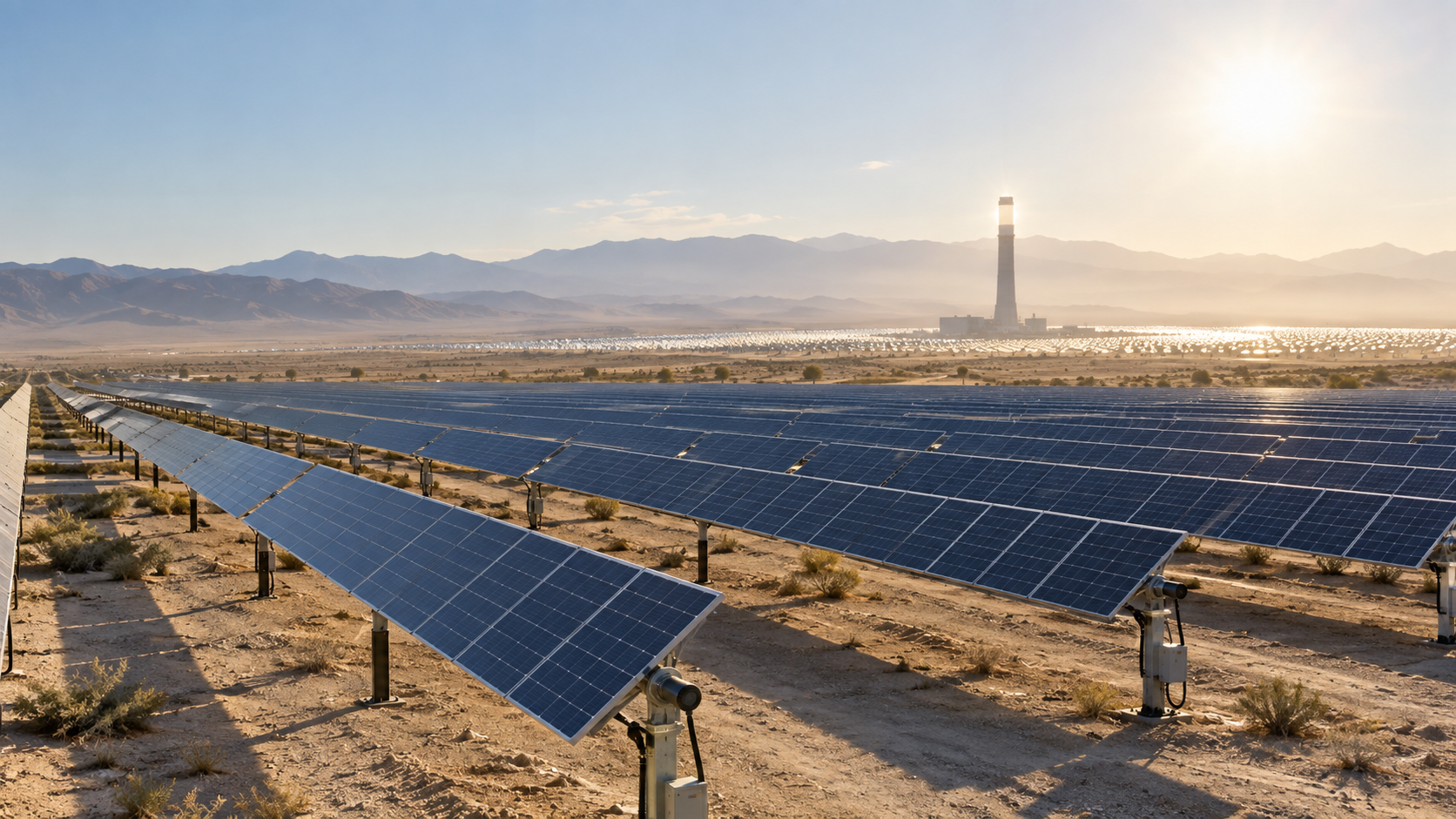
NEUTRON applied a staged SPD scheme with a Type 2 DC SPD in each combiner and coordinated protection at the plant interface, reviewed against local lightning density and soil conditions.
5. Outcome
The coastal-rated, bifacial-aware protection scope gave the plant a durable foundation. The lesson is that rear-side gain must enter the fuse sizing and the coast must enter the enclosure choice.
Final ratings, coordination, installation and applicable local requirements must be verified against current standards, manufacturer documentation and the approved project design.
Frequently asked questions
How does bifacial change protection?
Rear-side gain raises string short-circuit current, so gPV fuses must be sized to 1.25x the current including that gain.
Why corrosion-class enclosures at Al Dhafra?
Coastal salt mist accelerates corrosion and humidity changes DC leakage, so enclosures need a marine-adjacent rating.
Which standards apply?
IEC 60269-6, IEC 61643-31, IEC 62916, IEC 60947-2 and IEC 61439.
What is staged DC SPD?
A coordinated layout where each combiner carries a Type 2 DC SPD and the plant interface adds coordinated protection.
Review current gain and environmental exposure together.
Share the module data, string layout and coastal exposure for a coordinated protection review.
Discuss a projectContinue learning
Explore related technical guidance in Solar PV.
Published from the approved Period 12 source package; project, technical and standards statements are retained from the supplied publication content.