

Define the Box Before You Shortlist Anyone
Write the rated voltage and current, short-circuit withstand, form of internal separation, ingress protection, busbar material and rating, diversity factor, environmental conditions, mounting arrangement, monitoring scope and required documents before comparing suppliers. Different quotations often describe different assemblies.
Criteria 1–3: Standards, Verification and Certification Evidence
Request evidence for the actual assembly family: design verification under the applicable IEC 61439 parts, routine verification records and certificates that identify the responsible production site where relevant. A component certificate for a breaker is not the same as verification of the complete enclosure, busbar system, thermal behaviour and protective circuit.
- Design verification route and report.
- Blank and completed routine-test protocol.
- Applicable CE, CB, quality-system or market-access evidence for the quoted product.
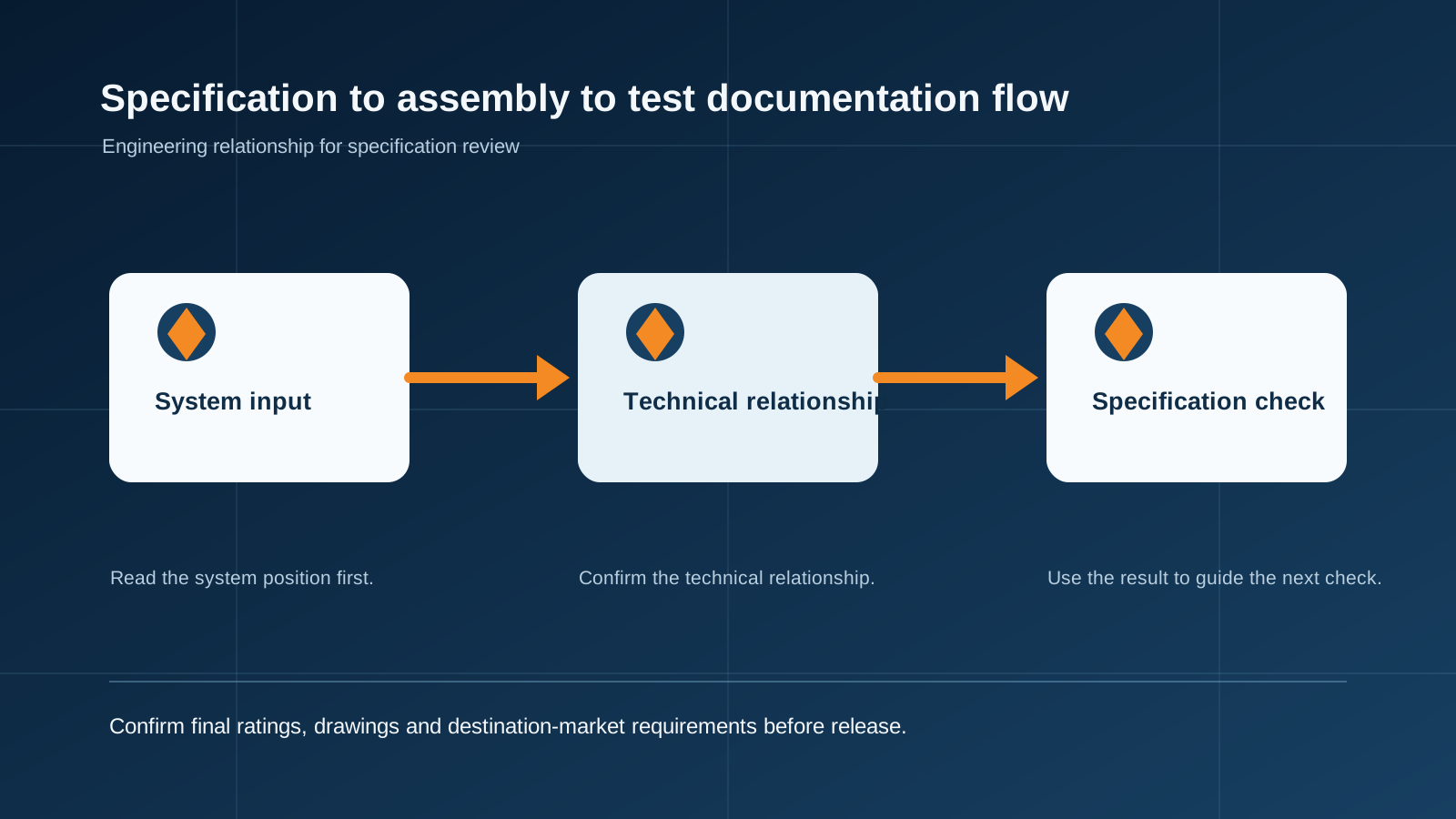
Technical diagram shown at a readable responsive scale.
Criteria 4–6: Enclosure Engineering and Materials
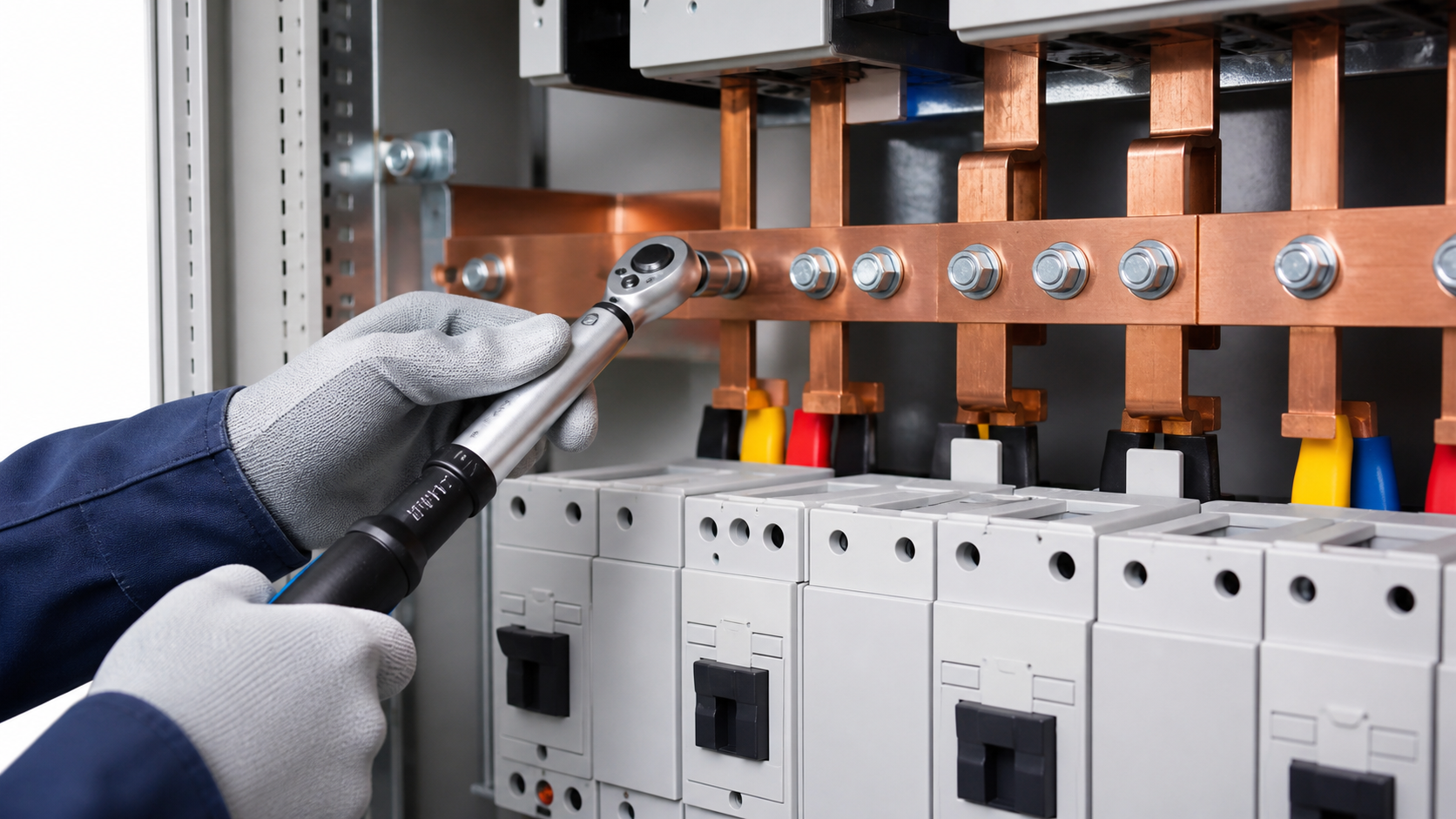
Assess coating or surface treatment, weld quality, corrosion expectations, enclosure IP rating, busbar cross-section and support spacing, terminal torque practice, temperature-rise evidence and site-ambient derating. These are assembly design questions, not simply sheet-metal questions.
Criteria 7–8: Customisation and Engineering Support
Ask whether the manufacturer can build to the approved single-line diagram and device schedule, and evaluate the quality and response time of the drawing pack. Useful submittals include a dimensioned general arrangement, device schedule, wiring schedule, cable-entry positions and the proposed test scope.
Criteria 9–10: Delivery, Documentation and After-Sales
Separate manufacturing lead time from approval time, confirm export packing and request a sample handover pack. The source checklist includes as-built single-line diagrams, wiring schedules, device datasheets, routine verification certificates, operation and maintenance information, spare-parts policy and warranty terms.
Supplier Scoring Table
Use a weighted score so a low price cannot hide a missing verification document or an under-specified busbar system.
| Criterion | Evidence to request | Suggested weight |
|---|---|---|
| Design verification | IEC 61439-1/-2 report and route | High |
| Routine verification | Test protocol and sample certificate | High |
| Certification | Site-named applicable certificates | High |
| Enclosure build | Coating, corrosion and weld evidence | Medium |
| Busbar system | Cross-section, supports and torque procedure | High |
| Thermal design | Temperature-rise and ambient derating | Medium |
| Customisation | Engineered-to-drawing evidence | Medium |
| Engineering support | Drawing-pack quality and response time | High |
| Capacity and lead time | Lead-time split and packing method | Medium |
| Documentation and after-sales | Handover pack, warranty and spares | Medium |
Where NEUTRON Fits
The supplied source positions NEUTRON as a manufacturer of LV distribution and switchgear assemblies, including GGD, GCS, XL-21 and related cabinet types, with project-specific engineering. Treat that as a starting point for an enquiry: request the actual verification, ratings, drawings and document scope for the quoted assembly.
Procurement Mistakes Worth Avoiding
- Comparing a component certificate with a complete assembly verification.
- Ignoring form of internal separation and short-circuit withstand.
- Accepting a busbar rating without cross-section, support and thermal evidence.
- Treating a generic enclosure IP rating as proof of the installed configuration.
- Leaving language, document format, spares and warranty terms until delivery.
This is a supplier-evaluation framework, not an independent ranking of manufacturers or a guarantee that any certificate, rating or delivery promise applies to an unverified quotation.
Frequently asked questions
What certification should a power distribution box manufacturer hold?
Request the applicable assembly design and routine verification evidence, plus market-access or quality documentation required by the project. Certificates should be checked against the actual manufacturer and quoted assembly.
Is a component certificate the same as assembly verification?
No. A component certificate covers an individual device; assembly verification addresses the finished enclosure, busbar system, thermal behaviour and protective circuit as a whole.
How do I compare quotations that look different?
Normalise form of separation, short-circuit withstand, IP rating, busbar rating, diversity factor and document scope before comparing price.
Can a manufacturer build to my drawing?
Ask for evidence that the supplier can engineer to the approved single-line diagram, device schedule, environmental data and client standard, then review the resulting drawing pack.
What documentation should arrive with the assembly?
Agree the as-built single-line diagram, wiring schedules, device datasheets, routine verification certificate, operation and maintenance information and spares list before order.
Shortlist on Evidence
Send the single-line diagram, device schedule, fault level, environmental data and destination-market standards so the assembly scope and documentation package can be evaluated consistently.
Request a quoteContinue learning
Explore related technical guidance in Power Distribution.
Adapted from the supplied DOCX. This article provides selection criteria; it does not independently rank or verify manufacturers.