
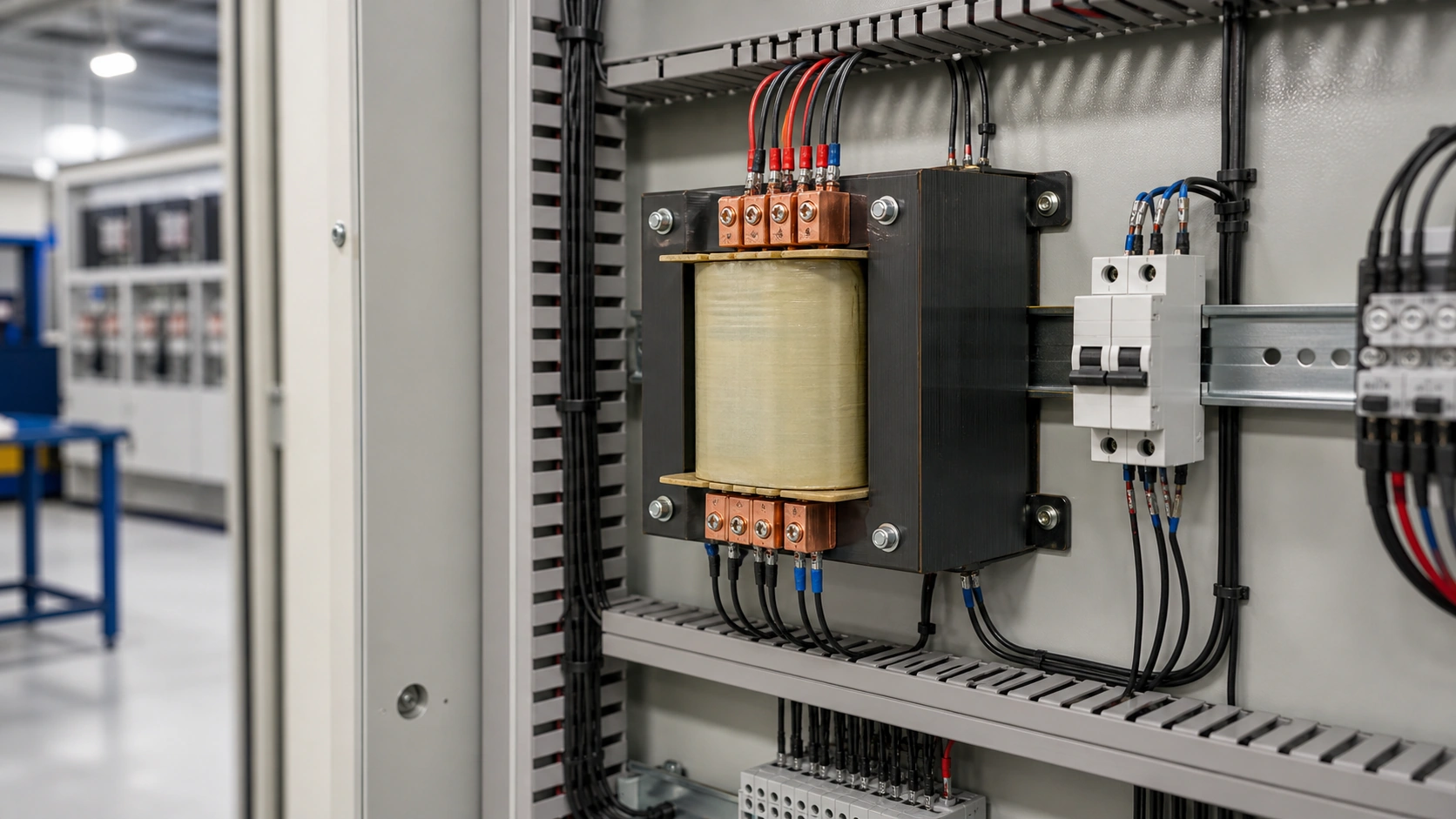
What ‘Standard Control Transformer’ Means
The purpose is narrow and specific: provide control power that remains within tolerance while the panel's switching and automation logic changes state. The transformer supplies the control circuit rather than the main power path.
A correct selection is based on the control voltage, frequency, isolation requirement, sealed VA, inrush VA, protective coordination and the actual panel environment.
Inrush VA Versus Sealed VA
Sealed VA is the steady demand while a contactor coil is held. Inrush VA is the momentary demand when the coil picks up. A suitable transformer must supply both without the secondary voltage collapsing enough to cause chatter or failed pickup.
Use a repeatable sizing sequence: identify the worst-case inrush event, take the inrush VA from the coil data, combine the sealed VA of the control load, maintain the secondary above the design threshold and add margin before rounding to the next standard rating.
The source illustration uses four 45 VA contactors, 40 VA of relays and a largest-contactor inrush of 420 VA to show why inrush capability matters as much as the nominal transformer VA.
- Identify the largest simultaneous pick-up event.
- Use the coil manufacturer's inrush and sealed VA data.
- Coordinate primary fusing and secondary protection with the control conductors.
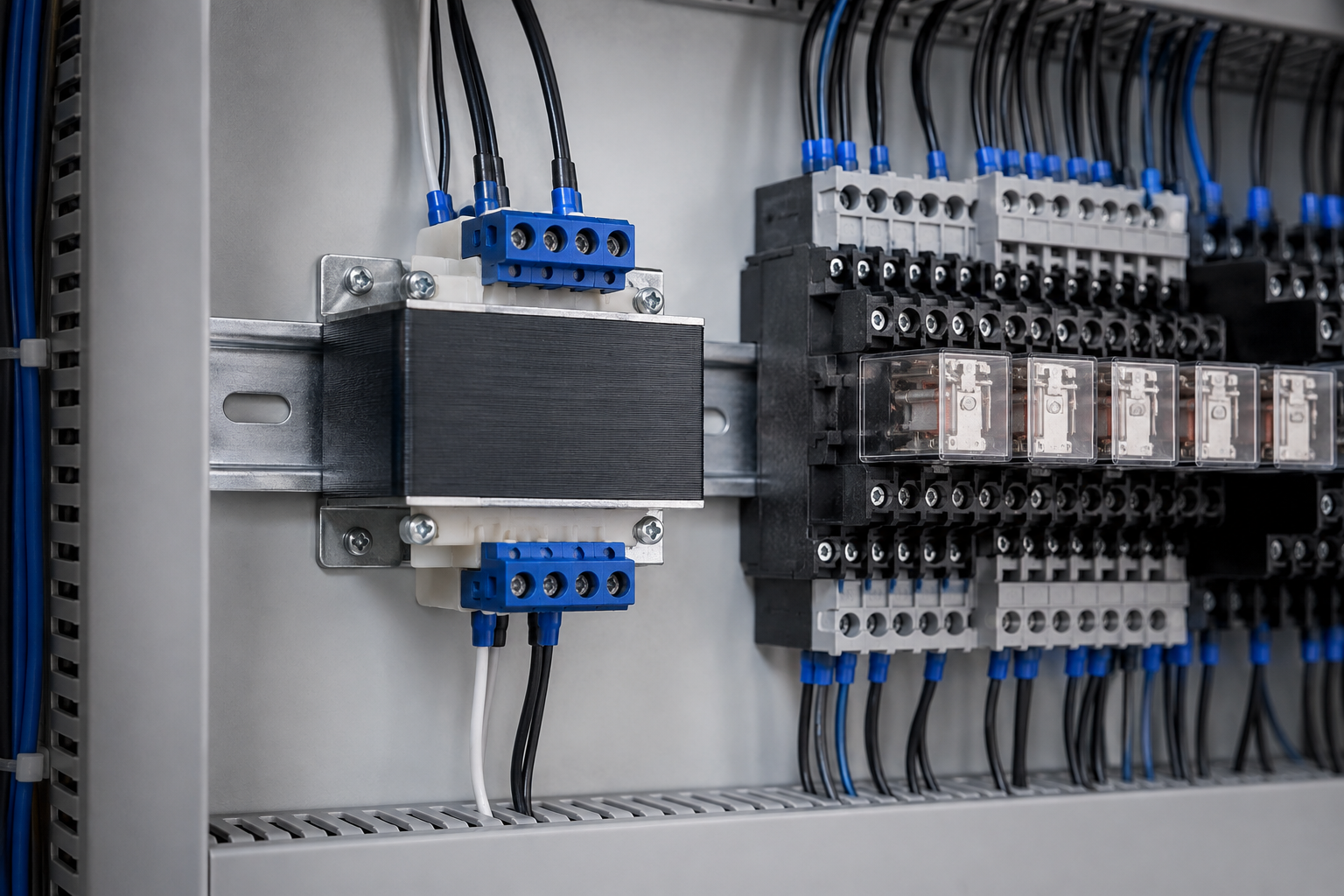
Where Control Transformers Sit in Low-Voltage Assemblies
Control power is used wherever switching or automation logic must remain operable. The source brief lists control cabinets and motor-control centres, GCS withdrawable and GGD fixed-pattern switchgear, ATS cabinets, capacitor and reactive-power cabinets, PV grid cabinets and energy-storage cabinets.
Typical control loads include closing and tripping circuits, interlocks, metering, transfer logic, protection relays and RS485 / Modbus communication equipment.
Common Mistakes, Standards and Limits
The classic error is sizing only on sealed VA. Other mistakes include substituting a general-purpose unit with inadequate inrush performance, using an autotransformer when galvanic isolation is required, ignoring panel temperature and mismatching frequency.
- IEC 61558-1, IEC 61558-2-2 and IEC 61558-2-6 are source references for the transformer family.
- IEC 61439-1/-2 applies to the surrounding low-voltage assembly.
- IEC 60947 applies to associated switching devices, with enclosure protection considered under IEC 60529.
- Control-voltage choice and protective coordination remain subject to destination-country wiring rules.
Engineering decision map
Use this compact sequence to review the approved guidance in order. Confirm actual ratings, interfaces, applicable standard editions and selected equipment documentation before final specification or release.
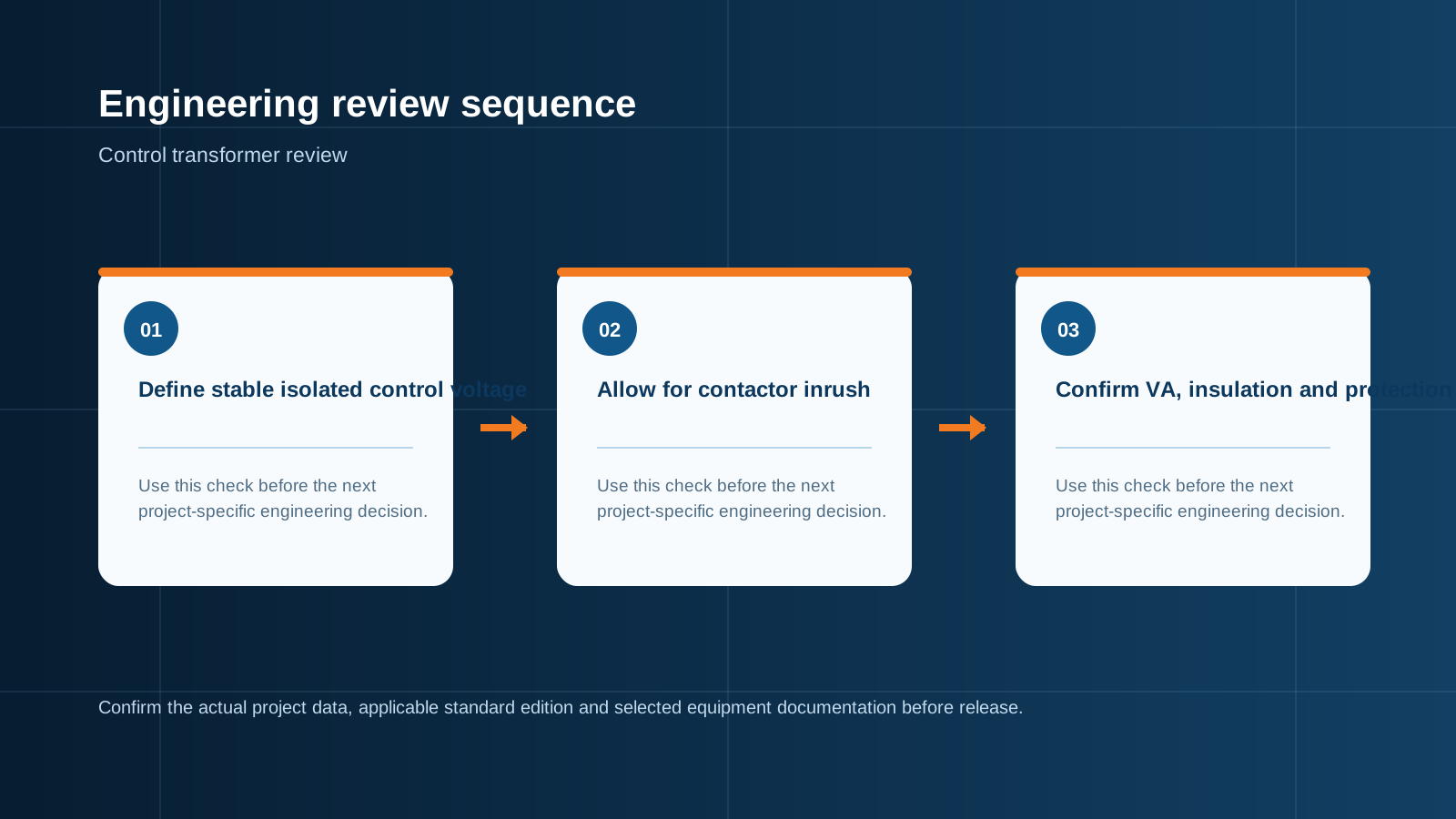
Technical diagram shown at a readable responsive scale.
The example is an engineering illustration, not a universal sizing rule. Confirm coil data, simultaneous operation, frequency, temperature, primary and secondary protection and local code with a qualified designer.
Frequently asked questions
What is the purpose of a standard control transformer?
It provides a stable, galvanically isolated control voltage for contactor and relay logic inside a low-voltage assembly, including coil inrush and supply-changeover conditions.
Inrush VA versus sealed VA — why do both matter?
Sealed VA is the steady holding demand; inrush VA is the momentary pickup demand. A correct transformer must meet both, or contactors can chatter or fail to close cleanly.
Does a control transformer need galvanic isolation?
When isolation is required, use an isolating control transformer rather than an autotransformer. The exact construction and protection must be confirmed in the quoted specification.
IEC 61558-2-2 or IEC 61439?
IEC 61558-2-2 covers the transformer family in the source brief; IEC 61439-1/-2 covers the surrounding low-voltage assembly. Both scopes can apply to a panel build.
What is the main limitation of this guide?
Control-voltage choice and protective coordination follow the destination country's wiring rules. The guide is a starting point, not a qualified design review.
Size the Control Power with the Starter Sections
Share the coil schedule, sealed and inrush VA, control voltage, frequency and assembly arrangement for a coordinated control-transformer review.
Request a quoteContinue learning
Explore related technical guidance in Power Distribution.

Converted from NEUTRON_PUBLISH_the-purpose-of-a-standard-control-transformer-is-to_v1.0.docx. The source title, inrush-versus-sealed-VA meaning and standards scope are retained.