
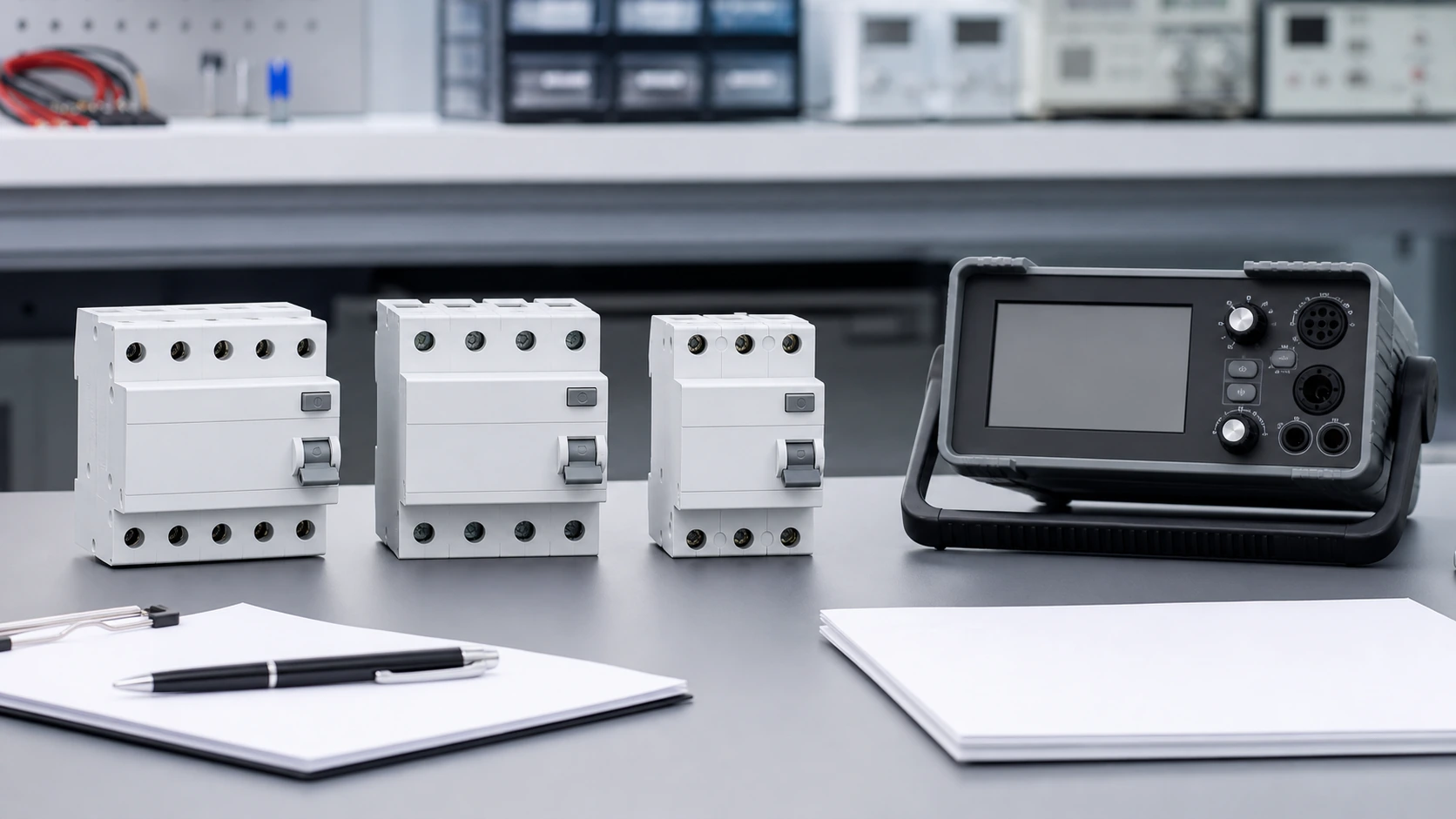
1. Why Type B demand is rising
Three load categories have changed the residual current landscape. Transformerless PV inverters can inject a smooth DC component onto the AC side. EV charge points, particularly DC-capable and three-phase units, produce residual currents that conventional devices cannot see. Battery storage systems combine both behaviours.
Smooth DC residual current is dangerous because of what it does to conventional devices. It biases the toroidal current transformer core toward saturation, and a saturated core cannot respond to the AC residual current it was installed to detect. The device passes its test button and fails to protect — a silent loss of protection sometimes described as the blinding effect.
IEC 62423 defines Type F and Type B residual current devices and the tests they must pass, including detection of smooth DC residual current. IEC 60364-7-712 covers installation requirements for PV supply systems and is the clause set most destination markets reference when they require DC-capable protection. Together they are the basis on which a Type B requirement is written into a specification.
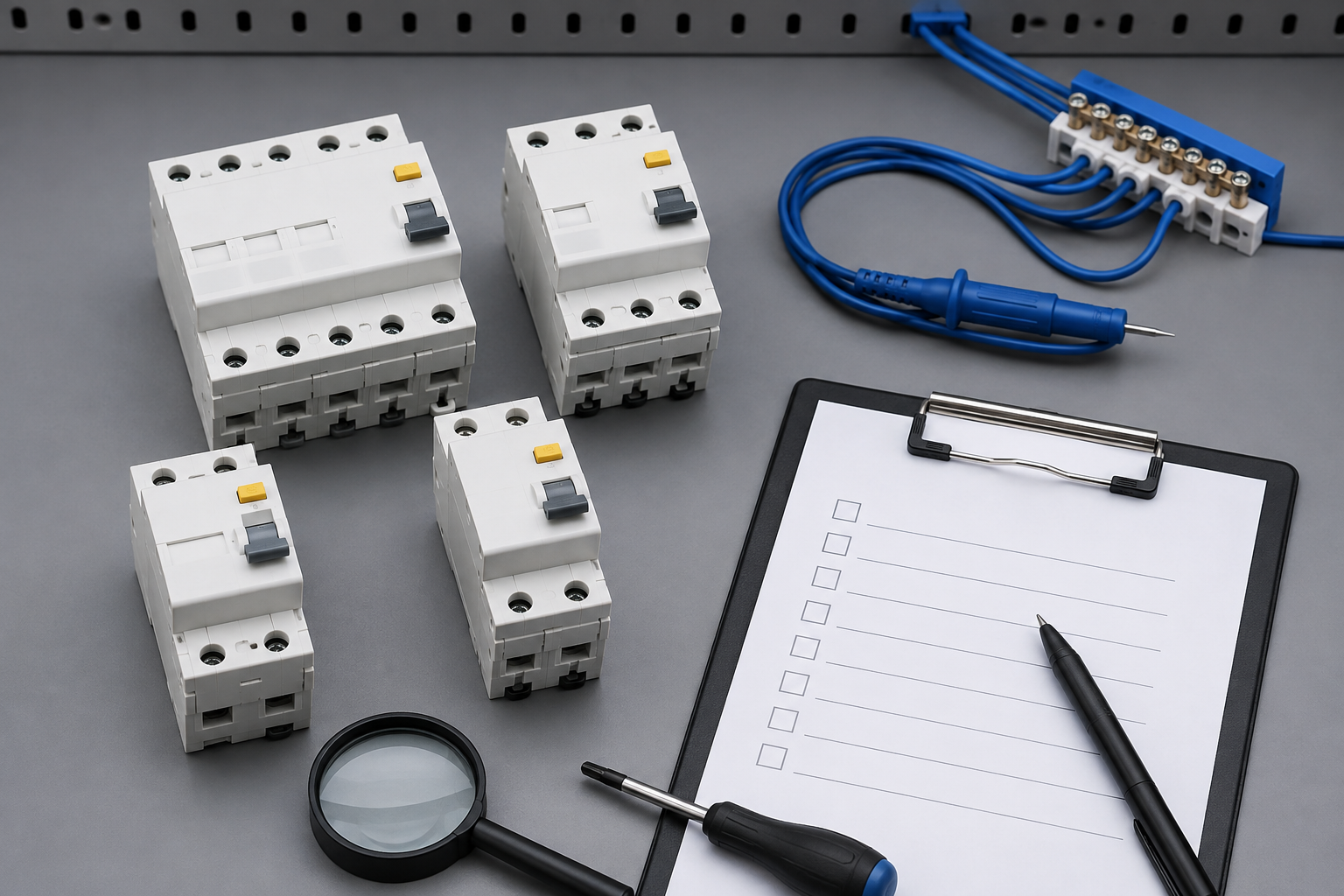
2. When Type B is genuinely required — and when it is not
Type B is expensive, so it should be specified where it is needed and not applied by reflex across a whole board. The determining factor is whether smooth DC residual current can actually appear on the circuit.
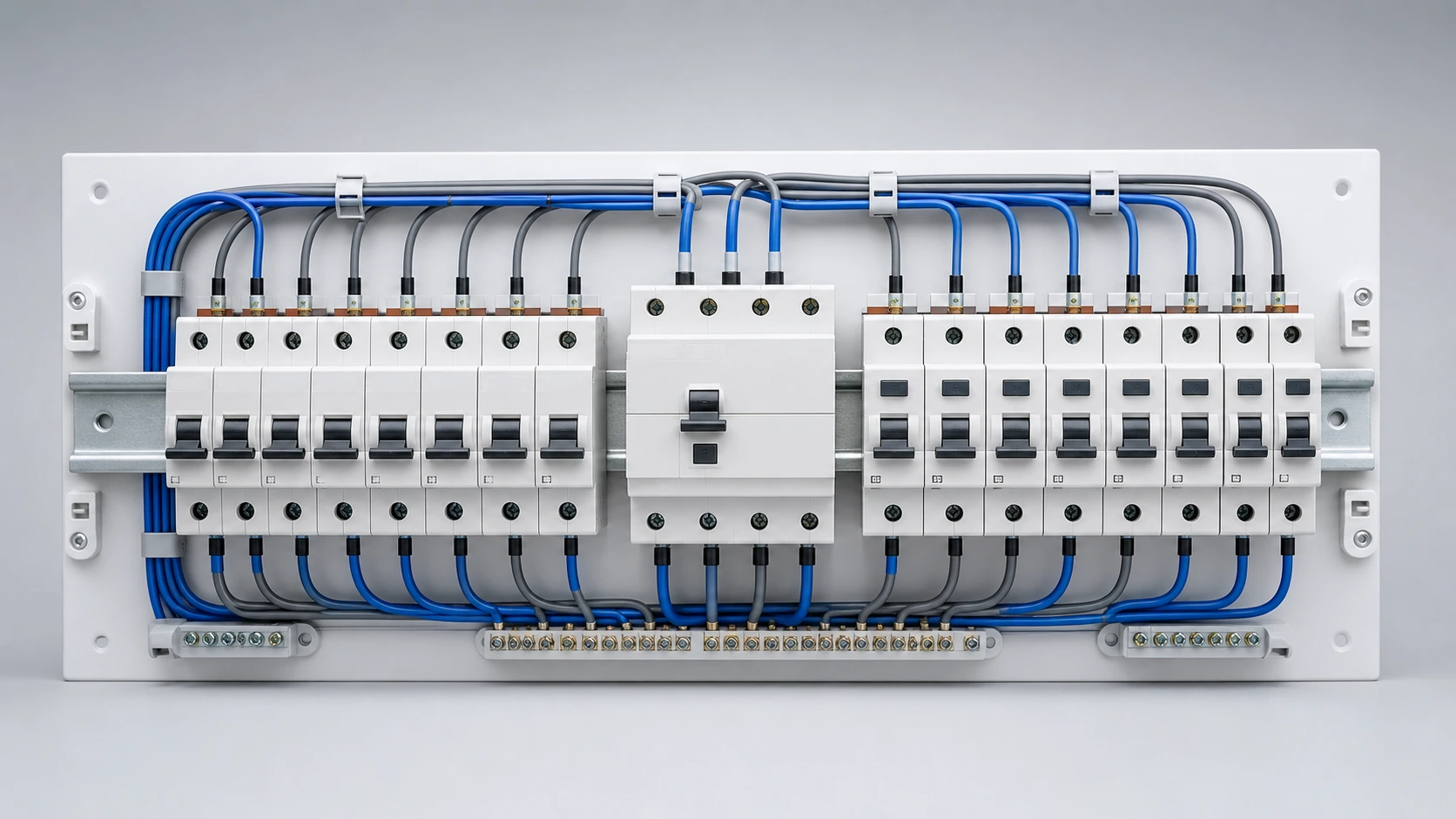
The cost-effective pattern on a mixed installation is segregation: place the PV, charging and storage circuits on their own Type B protected section, and leave general circuits on Type A. This confines the Type B spend to the circuits that need it and also improves outage confinement.
- Required — PV inverter AC connections where the inverter does not declare that DC residual current is limited to 6 mA or less.
- Required — EV charge points that do not incorporate their own DC residual current detection, and three-phase charging installations.
- Required — battery storage inverter connections and bidirectional converter circuits.
- Usually required — three-phase variable-speed drive circuits where the drive manufacturer specifies DC-capable protection.
- Not required — general lighting, socket and heating circuits, where Type A is the appropriate default.
- Not required — PV connections where the inverter declares a 6 mA DC residual current limit and the board carries no charging or storage circuits.
- Check carefully — mixed boards. If a single residual current device covers both a PV or charging circuit and general circuits, the whole group inherits the Type B requirement.
| Field | Value | Chars |
|---|---|---|
| Title tag | Sourcing Type B RCCBs: Tier 1 vs Value Suppliers | 48 |
| Meta description | Buying Type B RCCBs without overpaying or under-specifying: IEC 62423 rules, verification tests, where Type B is mandatory, and total installed cost. | 149 |
| Slug | sourcing-type-b-rccbs | |
| Primary keyword | sourcing type b rccbs | |
| Search intent | Commercial investigation — procurement or technical buyer comparing tier-1 and value suppliers for Type B residual current devices | |
| Schema type | Article + FAQPage + BreadcrumbList | |
| Canonical path | /insights/sourcing-type-b-rccbs |
3. What tier-1 global brands actually give you
Tier-1 European and Japanese manufacturers dominate the established Type B market, and the premium they command is not entirely brand. Some of it buys real engineering value.
Verified DC detection across frequency. A good Type B device detects residual current across a wide frequency range, not just at the two or three points a minimal test regime covers. Broad-spectrum detection is genuinely harder to engineer and is where cheap devices fail.
Documentation depth. Full type-test reports, declarations of conformity, ageing and endurance data, and technical support that can answer a coordination question. On a project subject to third-party inspection, that documentation has direct commercial value.
Supply chain continuity. A device family that will still be available in eight years matters on installations where a like-for-like replacement is expected.
What the premium does not buy is exemption from verification. Brand is not conformity evidence. Ask any supplier, at any price point, for the same test documentation.
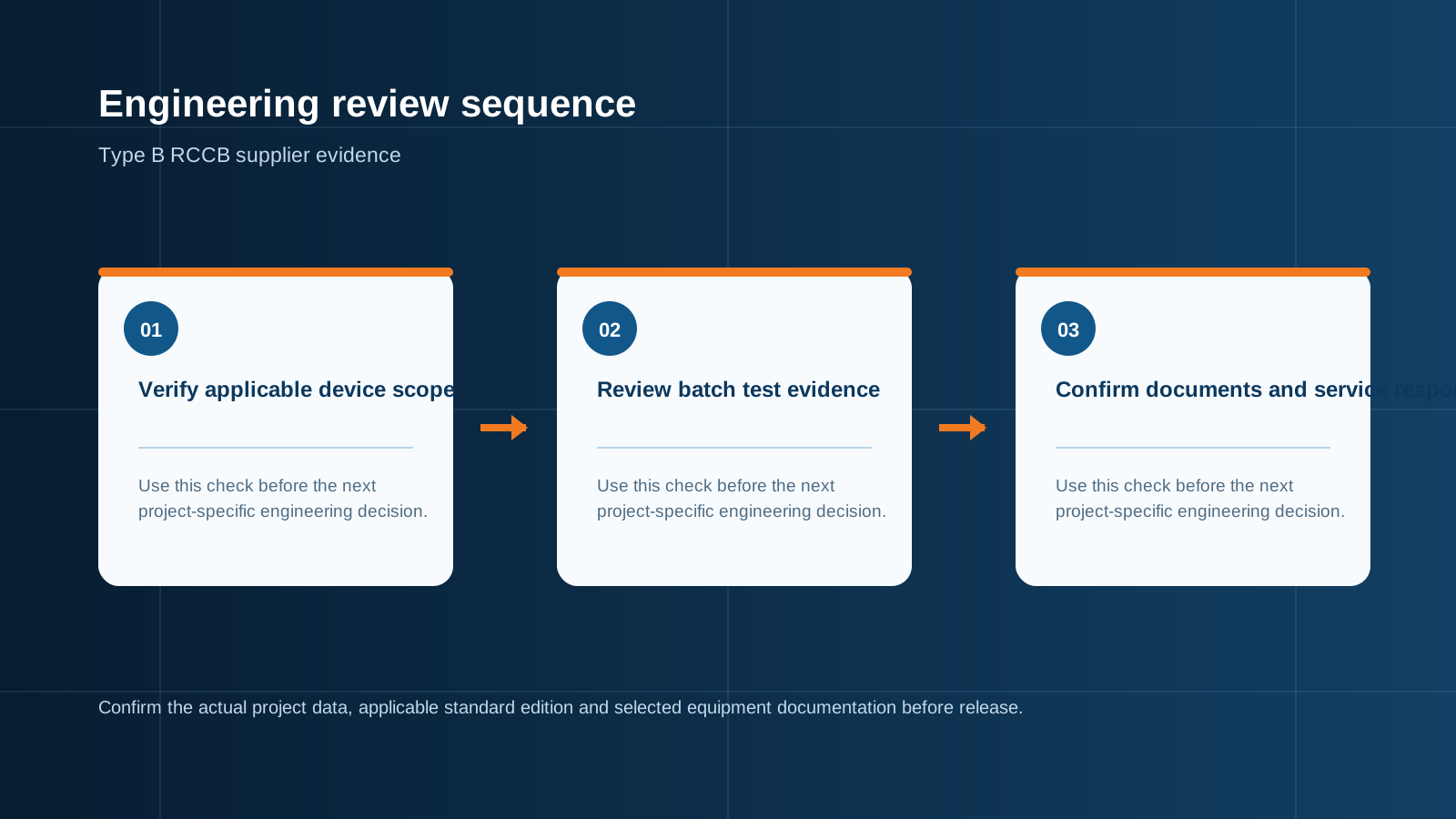
Technical diagram shown at a readable responsive scale.
4. Value alternatives — separating capable from merely cheap
Below the tier-1 tier there is a genuine value segment and a genuine danger zone, and they are not distinguishable from a product listing. The difference is verification.
The danger zone is a device marked Type B that has never been tested for smooth DC detection. It looks correct, mounts correctly, passes its test button, and provides Type A performance at best. Because the failure mode is invisible until an incident, this is a category where a low price can carry an extraordinary liability.
The value segment is manufacturers who build to IEC 62423 properly, hold current third-party certification, and will supply batch test evidence on request. They compete on manufacturing cost rather than on specification, and they are a legitimate choice for cost-sensitive projects.
Three checks separate them. First, ask for the third-party certificate number and verify it directly with the certification body, not with the supplier. Second, ask for the type-test report covering the DC detection test in IEC 62423, not a general residual current test report. Third, ask what routine testing is applied to every unit at end of line, and request the record for your batch.
5. Supplier evaluation matrix
Evaluation matrix for Type B residual current device suppliers.
6. Thinking in total installed cost
Unit price is the least useful number in this category. A Type B device typically occupies more modules on the rail than a Type A device, which affects enclosure size, and it may need a specific mounting position for accessibility. Those consequences appear in the enclosure and installation budget, not the device budget.
The larger number is the cost of what the device prevents. On a commercial PV installation, an undetected earth fault means an unplanned inverter shutdown, a lost generation day, a call-out and an investigation. On cold storage or process plant, an unnecessary outage caused by poorly coordinated protection can exceed the entire protection budget in one event.
Build the comparison properly. Include device price, module width and its effect on enclosure size, any accessory or auxiliary contact needed, commissioning test time, expected service life, spares availability, and the confinement of an outage under fault. A value supplier with verified conformity frequently wins on that basis; an unverified device never should.
7. Specification checklist for a Type B enquiry
Send this information with the enquiry and the quotations you receive will be comparable.
- Rated current (In) and required pole configuration — 2P for single-phase, 4P for three-phase supplies.
- Rated residual operating current (IDn) — 30 mA for personnel protection, 100 or 300 mA for fire protection on feeders.
- Type class — Type B, with the required detection frequency range stated explicitly.
- Rated short-circuit breaking capacity and the back-up protective device it must coordinate with.
- Standard and certification — IEC 62423, with CE and CB certification where the destination market requires it.
- Environmental envelope — ambient temperature range, altitude, pollution degree and installation category.
- Assembly requirements — enclosure protection class, whether the device is supplied loose or built into an assembly to IEC 61439.
- Documentation — type-test report covering DC detection, declaration of conformity, and routine test record for the delivered batch.
8. How NEUTRON supports Type B projects
NEUTRON manufactures residual current protection in the Type AC and Type A classes across miniature and moulded-case formats, and builds the low-voltage assemblies that house complete protection schemes. Where a project requires Type B performance, NEUTRON integrates a specified and verified Type B device into the assembly rather than substituting a lower class.
The in-house device range covers the circuits around the Type B section: the DZ47LE-63 series to IEC 61009-1 and GB 16917.1 at 230/400 V up to 63 A with 6000 A breaking capacity; the WSB7L-63 series in 1P+N with 0.03, 0.1 and 0.3 A residual settings and defined tripping times; the WSB9LE ranges to 125 A; and the WCM1L, WCM30L and WCM7EL moulded-case residual current breakers, the last offering settable residual current from 100 to 800 mA with time-delayed tripping, LCD metering and selective auto-reclose on three-phase four-wire TT systems.
Assemblies are built to IEC 61439 with devices to IEC 60947 and protection class verified to IEC 60529, across the XL-21 power distribution cabinet, GGD fixed-pattern switchgear, GCS withdrawable assemblies and PV grid-connection cabinets. This lets a buyer place the Type B device where it is genuinely required, use in-house Type A protection elsewhere, and take delivery of one coordinated, tested assembly.
9. Safety and compliance limits
Type class selection is a design decision that must be confirmed by the responsible engineer against the inverter or charger manufacturer's declared DC residual current behaviour, the earthing arrangement in use, and the wiring rules of the destination market. A Type B device does not remove the need for correct overcurrent protection, correct earthing or correct cable sizing.
Verify certification independently before award. A device marked Type B without a valid IEC 62423 certificate and a test report covering smooth DC detection should be treated as unverified regardless of its price or its markings.
Media / Assets
Placement plan for the /insights article layout:
IMAGE PROMPT — Hero:
Subject: procurement-style flat lay of three four-pole residual current circuit breakers of different build quality arranged side by side on a technical bench
Style: clean industrial B2B product photography, editorial comparison layout
Details: white and grey moulded housings, visible test buttons and toggles, a calibrated test instrument and a printed specification sheet with blank fields beside them
Background: plain light-grey studio surface
Lighting: soft even studio lighting, minimal shadow
Aspect ratio: 16:9
No text, no logos unless specified.
IMAGE PROMPT — Section 1:
Subject: single four-pole residual current circuit breaker, front three-quarter view, wider module body typical of a DC-capable device
Style: clean technical product photography
Details: crisp moulded housing, four terminal pairs, test button, DIN rail clip, shrouded terminals
Background: plain light-grey
- Hero image, 16:9, top of article
- Inline image 1, 1:1, inside Section 1 (why Type B) — four-pole Type B device detail
- Inline image 2, 16:9, inside Section 2 (when mandatory) — technical diagram of a segregated board layout
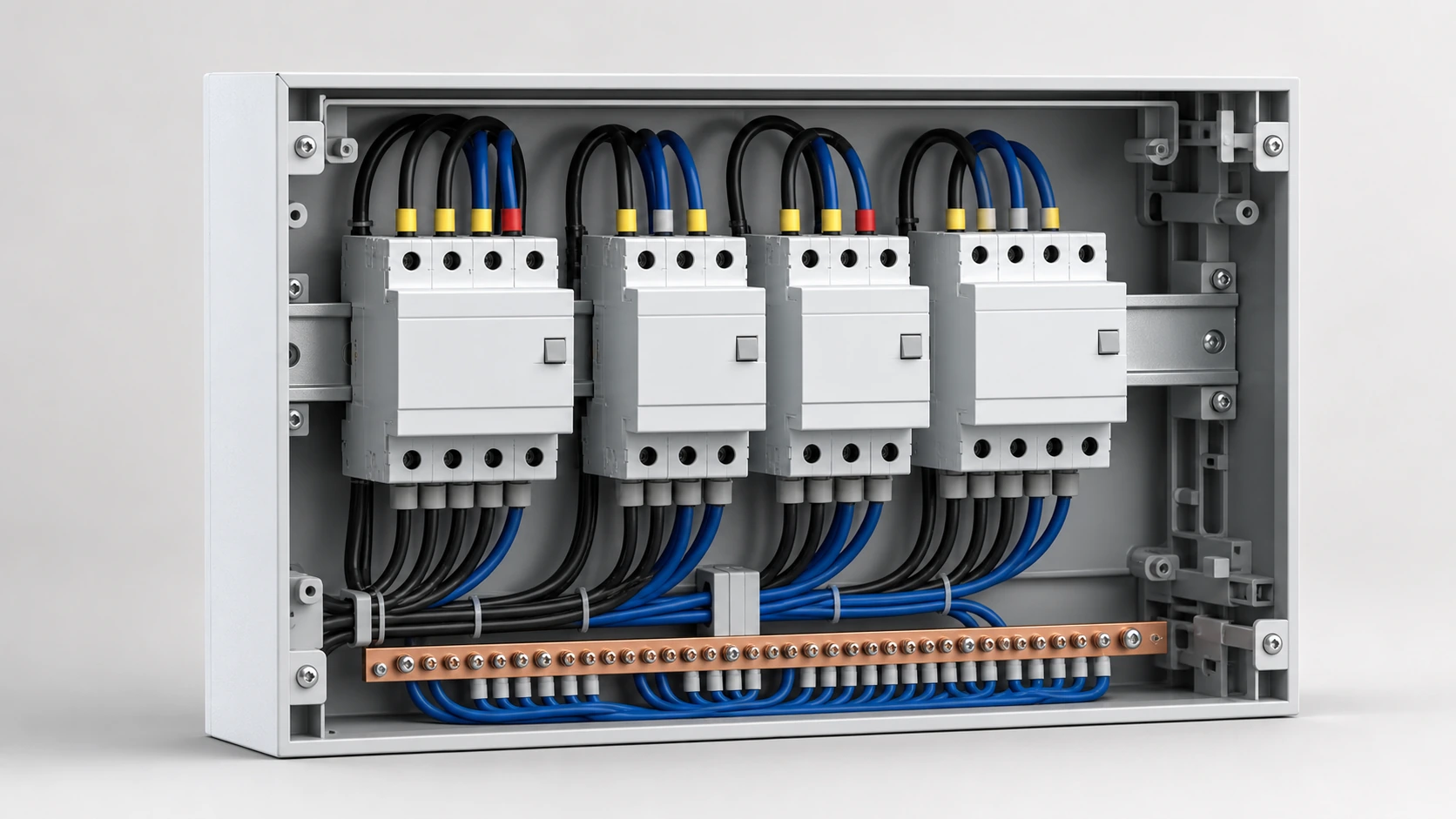
- Inline image 3, 4:5, inside Section 8 (NEUTRON) — assembled distribution board with mixed protection classes
- Evaluation matrix rendered as a 4-column responsive table in Section 5
- FAQ rendered as Q/A accordion items
- CTA block at the end of the article
FAQ
Q: When is a Type B RCCB mandatory?
A: Where smooth DC residual current can occur: PV inverter connections without a declared 6 mA DC limit, EV charge points without integral DC detection, battery storage connections, and three-phase drive circuits where the drive manufacturer requires DC-capable protection.
Q: Why are Type B devices so much more expensive?
A: Detecting smooth DC residual current across a wide frequency range requires additional sensing electronics and a more complex magnetic design than a Type A device, plus a more demanding test regime under IEC 62423.
Q: Can I use a Type A device with a PV inverter?
A: Only if the inverter manufacturer declares that DC residual current is limited to 6 mA or less. If no such declaration exists, or if the same board also serves EV charging or storage, Type B is required.
Q: How do I verify a Type B device is genuine?
A: Request the third-party certificate number and verify it with the certification body directly, request the type-test report covering the smooth DC detection test in IEC 62423, and ask for the routine end-of-line test record for your batch.
Q: Should the whole board be Type B?
A: Usually not. Segregate the PV, EV charging and storage circuits onto their own Type B protected section and keep general circuits on Type A. This limits cost and improves outage confinement.
Q: Is a value-brand Type B device acceptable?
A: Yes, when conformity is verified. A manufacturer with current IEC 62423 certification, a genuine DC detection test report and documented routine testing is a legitimate choice. An unverified device is not, at any price.
Call to action
Tell NEUTRON which circuits carry PV, EV charging or storage, and engineering will return a protection schedule that places DC-capable devices only where they are required, built into an assembly to IEC 61439.
Structured data (JSON-LD)
CODE: paste inside <script type="application/ld+json"> in the page head.
CODE: {
"@context": "https://schema.org",
"@graph": [
"@type": "Article",
"headline": "Sourcing Type B RCCBs: Tier 1 Giants vs. Value Suppliers",
"description": "Buying Type B RCCBs without overpaying or under-specifying: IEC 62423 rules, verification tests, where Type B is mandatory, and total installed cost.",
"inLanguage": "en",
"author": {
"@type": "Organization",
"name": "NEUTRON"
"publisher": {
"@type": "Organization",
"name": "NEUTRON",
Engineering decision map
Use this compact sequence to review the approved guidance in order. Confirm actual ratings, interfaces, applicable standard editions and selected equipment documentation before final specification or release.
Technical diagram shown at a readable responsive scale.
This is general technical guidance, not a substitute for local electrical code, the applicable standard, product datasheets or a qualified engineer's design review. Confirm ratings and final configurations against the actual project.
Bring the project inputs to the first review.
NEUTRON can review the application context, electrical envelope, enclosure conditions and document requirements related to sourcing type b rccbs: tier 1 giants vs. value suppliers before quotation.
Discuss a technical requirementContinue learning
Explore related technical guidance in Electrical Protection.
Technical note: source article content is retained for educational use. Applicable standards, ratings, protection coordination and final configurations must be confirmed for the actual project and destination market.