
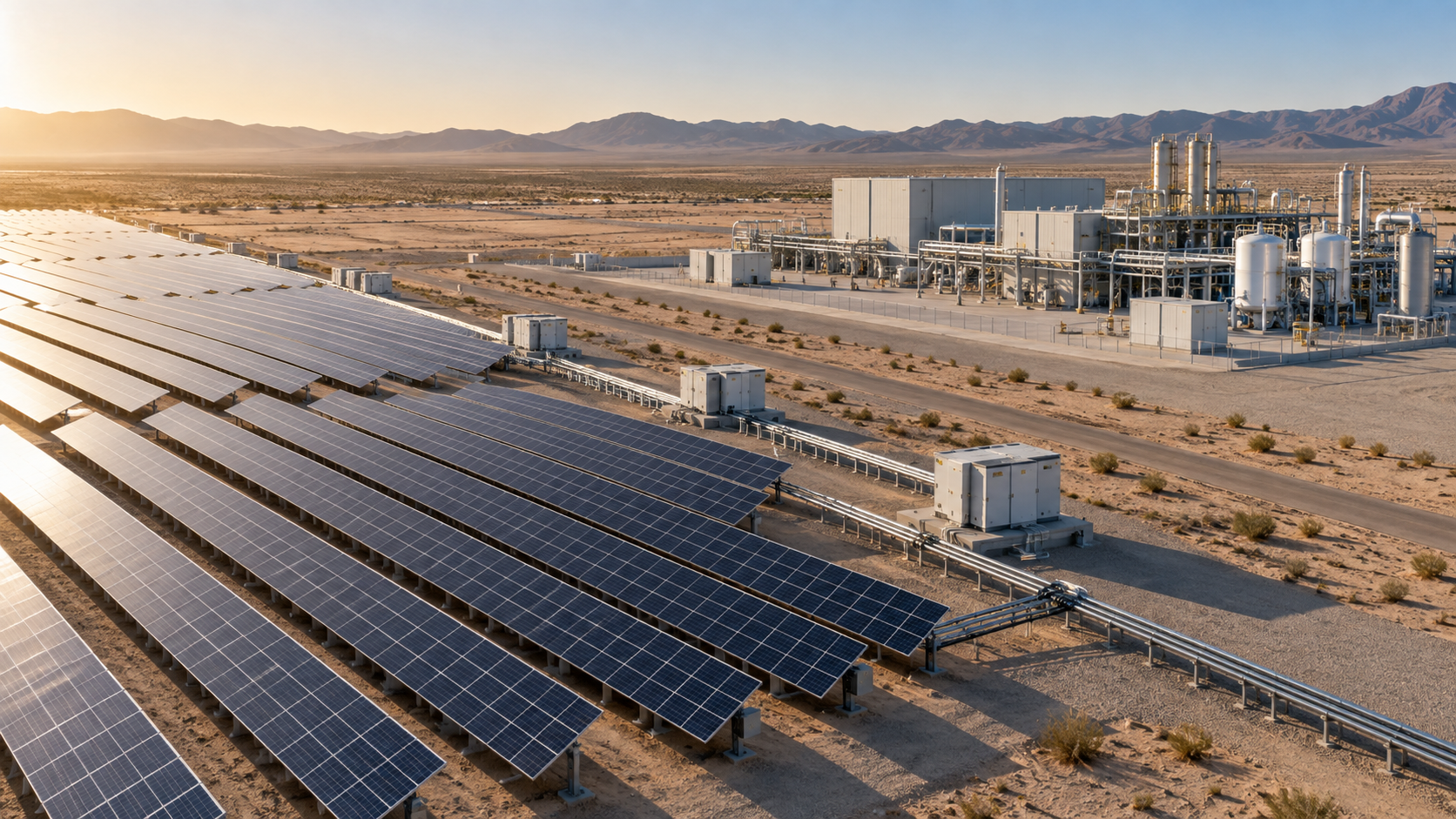
1. Solar feeding a process load
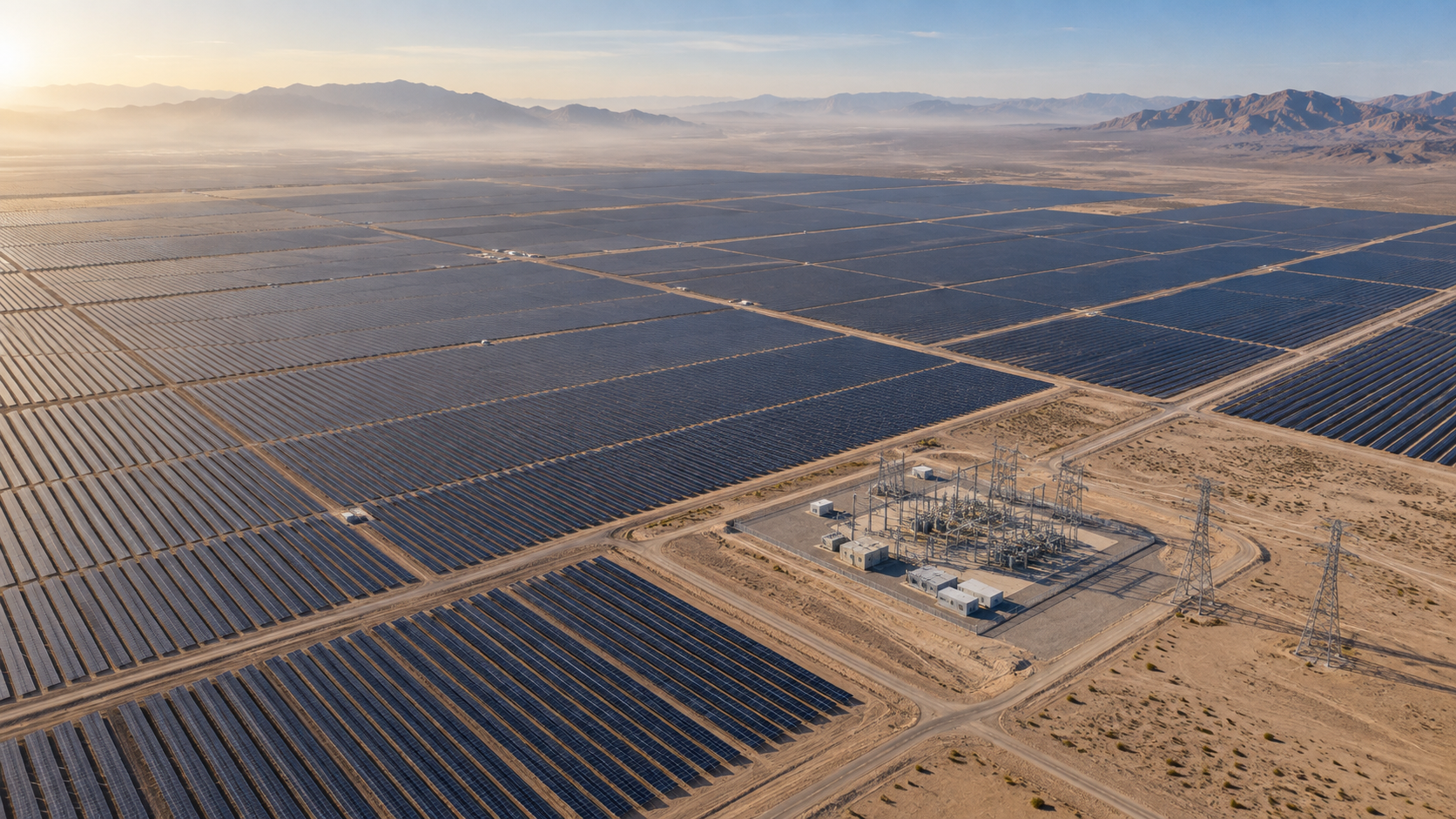
When PV feeds electrolysis, the protection and switching equipment must suit both a variable renewable input and a continuous industrial process. Availability matters because downtime on the solar side can starve the process line.
2. NEUTRON DC protection scope
- PV combiner boxes rated to 1500 V DC collecting many strings with individual gPV fuse protection.
- DC disconnect switches and DC SPDs staged to the 1500 V envelope.
- DC MCBs for auxiliary and monitoring circuits.
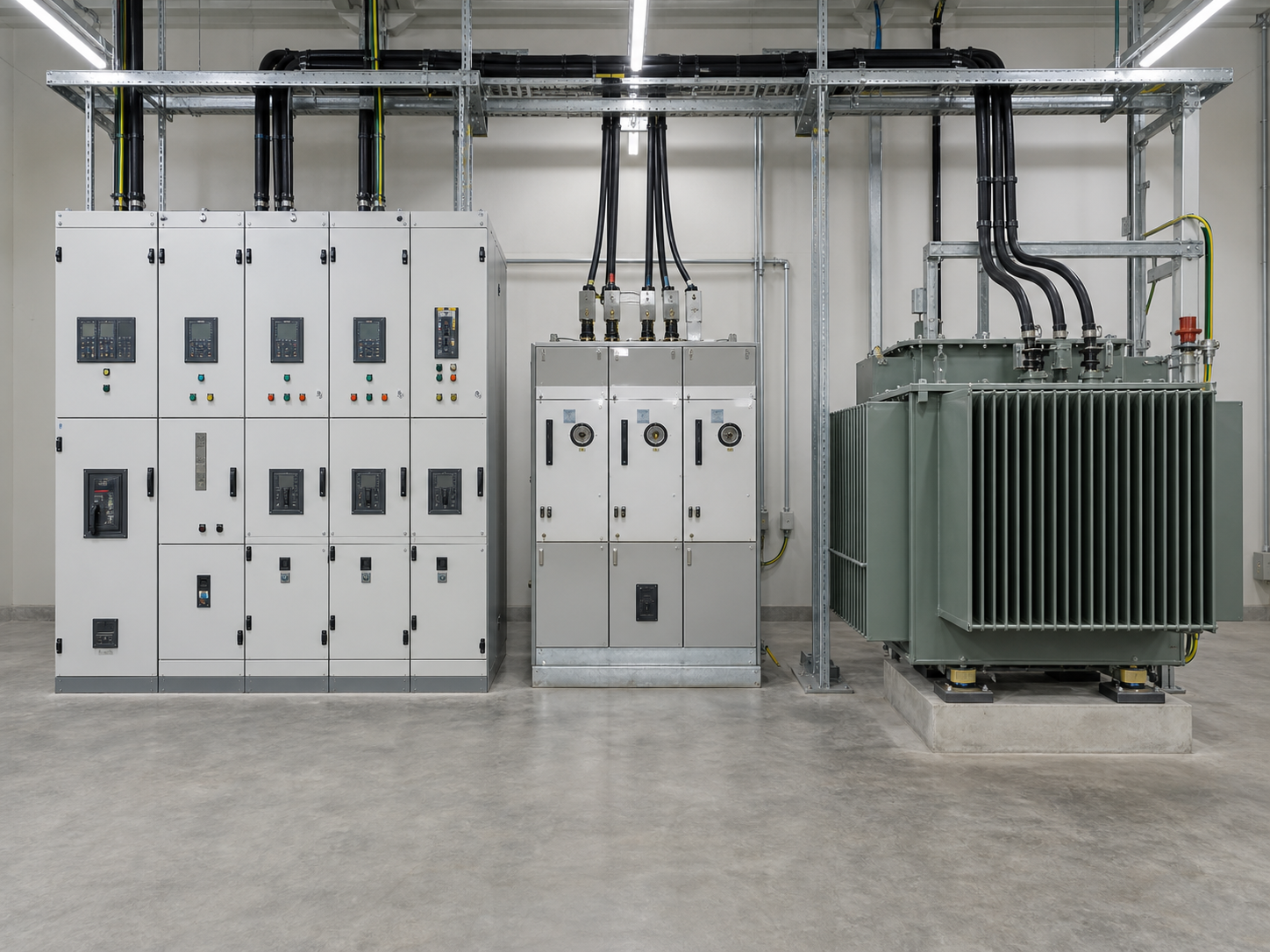
- Low-voltage switchgear for the AC collection and interface side.
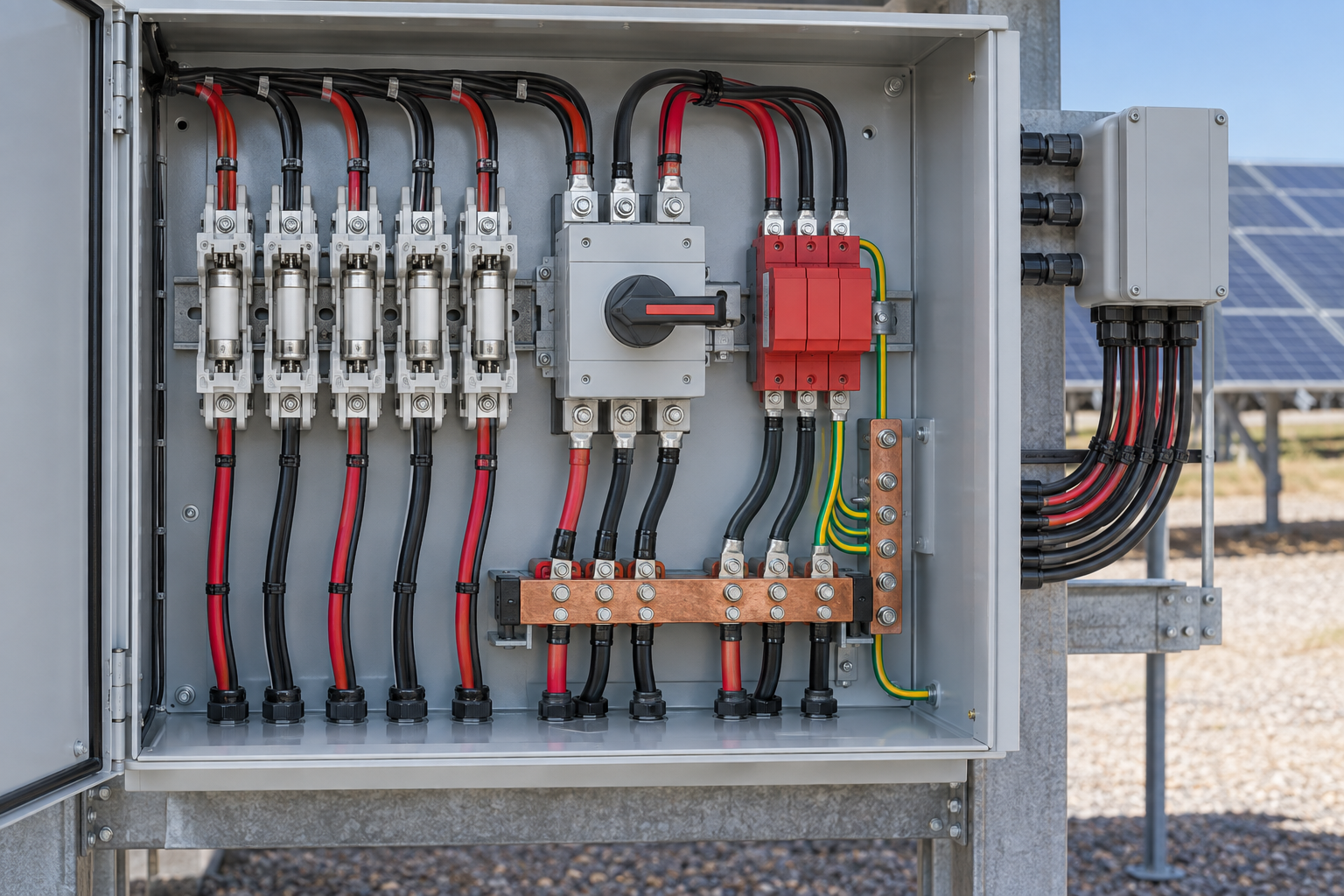
3. Switchgear and RMU coordination
At the collection point the AC feeders terminate in NEUTRON low-voltage switchgear. A ring main unit provides the controlled interface to the step-up transformer, with selective coordination so a downstream fault isolates locally without dropping the whole array.
4. Availability and selectivity
- Selective protection verified against projected fault levels before release.
- Spare gPV fuses and labelled boards to restore a faulted string quickly.
- Monitoring so operators see degradation before it becomes downtime.
5. Environmental specification
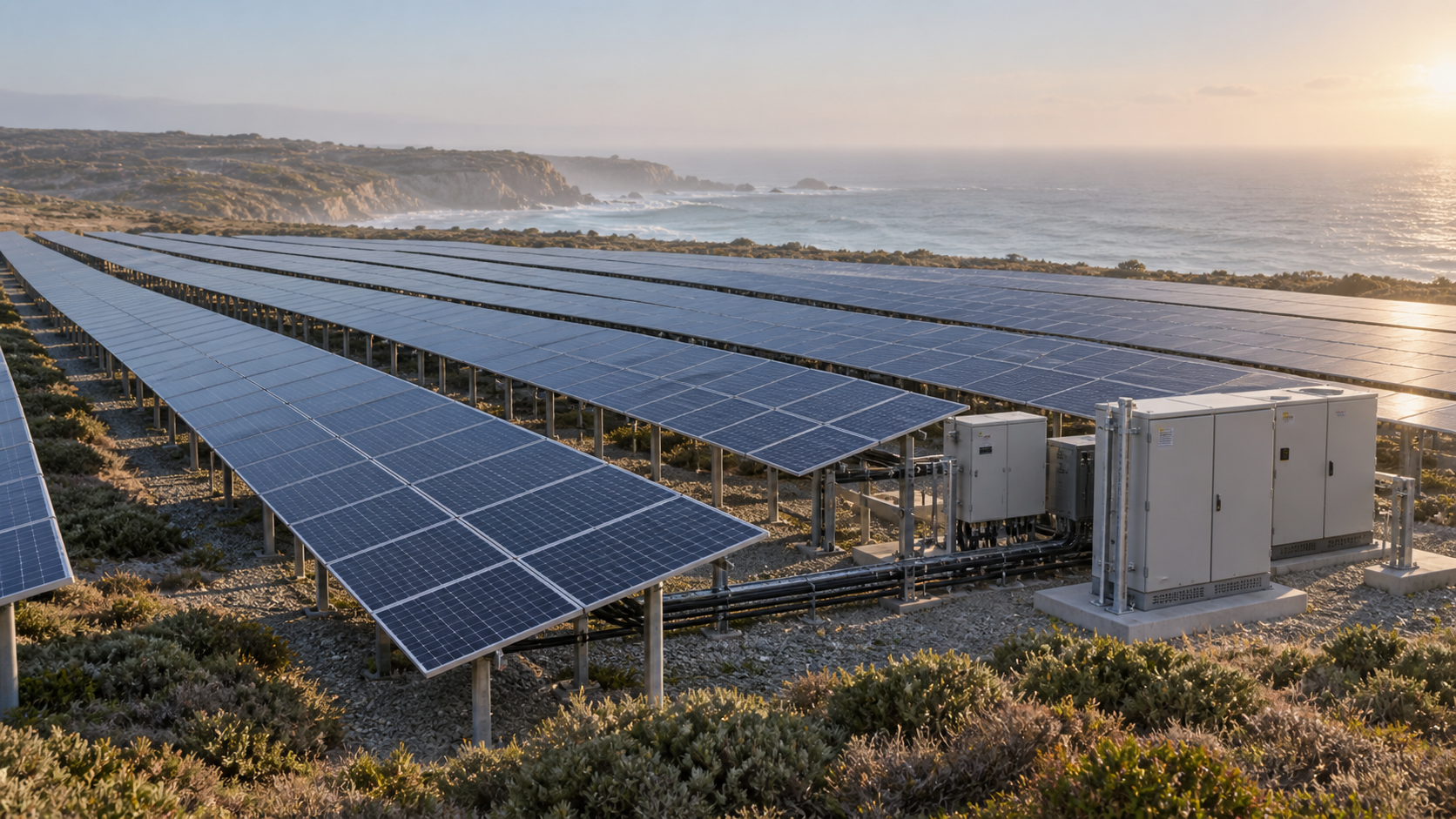
The NEOM region mixes desert heat with coastal sections, so enclosures were specified for dust and, where relevant, salt mist, with current parts derated for sustained high ambient.
6. Outcome
The protection layer gave the solar feed a serviceable, availability-focused foundation for the hydrogen process. The lesson is that industrial solar needs the same protection discipline as a grid plant, plus tighter selectivity for process continuity.
Final ratings, coordination, installation and applicable local requirements must be verified against current standards, manufacturer documentation and the approved project design.
Frequently asked questions
How does solar for hydrogen differ from grid solar?
The solar feed powers a continuous industrial process, so availability and selective protection matter as much as energy yield.
What does NEUTRON supply for such a plant?
PV combiner boxes, DC disconnect and SPD, DC MCBs and low-voltage switchgear with an RMU for the grid interface; inverters and batteries are integrated by others.
Which standards apply?
IEC 62916, IEC 60269-6, IEC 60947-2, IEC 61643-31, IEC 61439 and IEC 62271.
Why is selectivity important here?
Selective coordination keeps a single fault from dropping the whole array, protecting process continuity.
Bring the solar-to-process interface to review.
Share the PV collection, process interface and environmental inputs for a coordinated scope review.
Discuss a projectContinue learning
Explore related technical guidance in Power Distribution.
Published from the approved Period 12 source package; project, technical and standards statements are retained from the supplied publication content.