
1. The short answer and why it matters
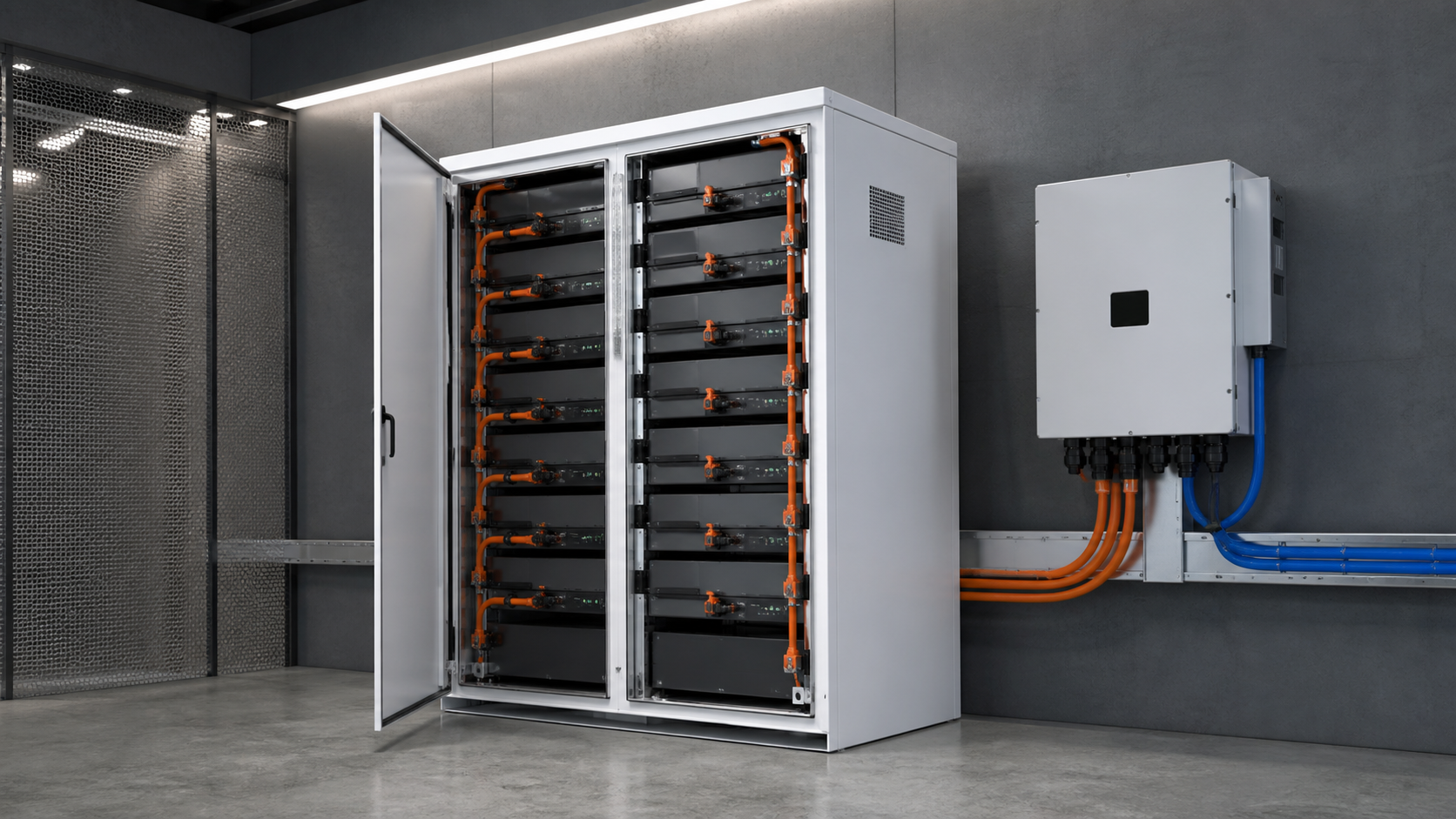
Battery power is DC. A lithium iron phosphate cell rests at about 3.2 V, a lithium nickel manganese cobalt cell at about 3.7 V, and a lead-acid cell at about 2.0 V, always with the same polarity. Series and parallel arrangements scale that into a 48 V telecom string, a 400 V or 800 V vehicle pack, or a 1000 V storage rack — but the current direction never alternates.
This matters commercially because it determines where the conversion equipment sits and who pays for it. A cheap AC charging point pushes the conversion cost into the vehicle. A DC fast charger carries that cost itself, which is why the two products differ by an order of magnitude in price and footprint.
2. AC and DC compared
Direct current flows continuously in one direction at a nominally constant voltage. Alternating current reverses direction periodically — 50 times per second in most of the world, 60 times per second in North America and parts of Asia.
Table 1 — AC and DC in practical electrical systems
The line about fault interruption is not academic. A DC arc has no natural current zero, so a device rated AC 400 V must never be used on a DC 750 V string. DC applications require breakers, fuses and switch-disconnectors specifically rated and marked for DC service, with the correct polarity and the correct number of poles in series.
| Title tag (57 chars) | Is Battery Power AC or DC? Chargers & Inverters Explained |
|---|---|
| Meta description (150 chars) | Batteries store and deliver DC. Learn why, how rectifiers and inverters convert power, AC vs DC EV charging, and what it means for backup and storage. |
| Slug | is-battery-power-ac-or-dc |
| Canonical | https://neutronele.com/insights/is-battery-power-ac-or-dc |
| Primary keyword | is battery power ac or dc |
| Secondary keywords | AC vs DC, DC fast charging, on-board charger, inverter, rectifier, IEC 61851, energy storage cabinet |
| Search intent | Informational — engineers, EV charging buyers and facility managers clarifying AC/DC conversion in charging and storage systems |
| Schema type | Article + FAQPage + BreadcrumbList |
3. Why electrochemistry can only produce DC
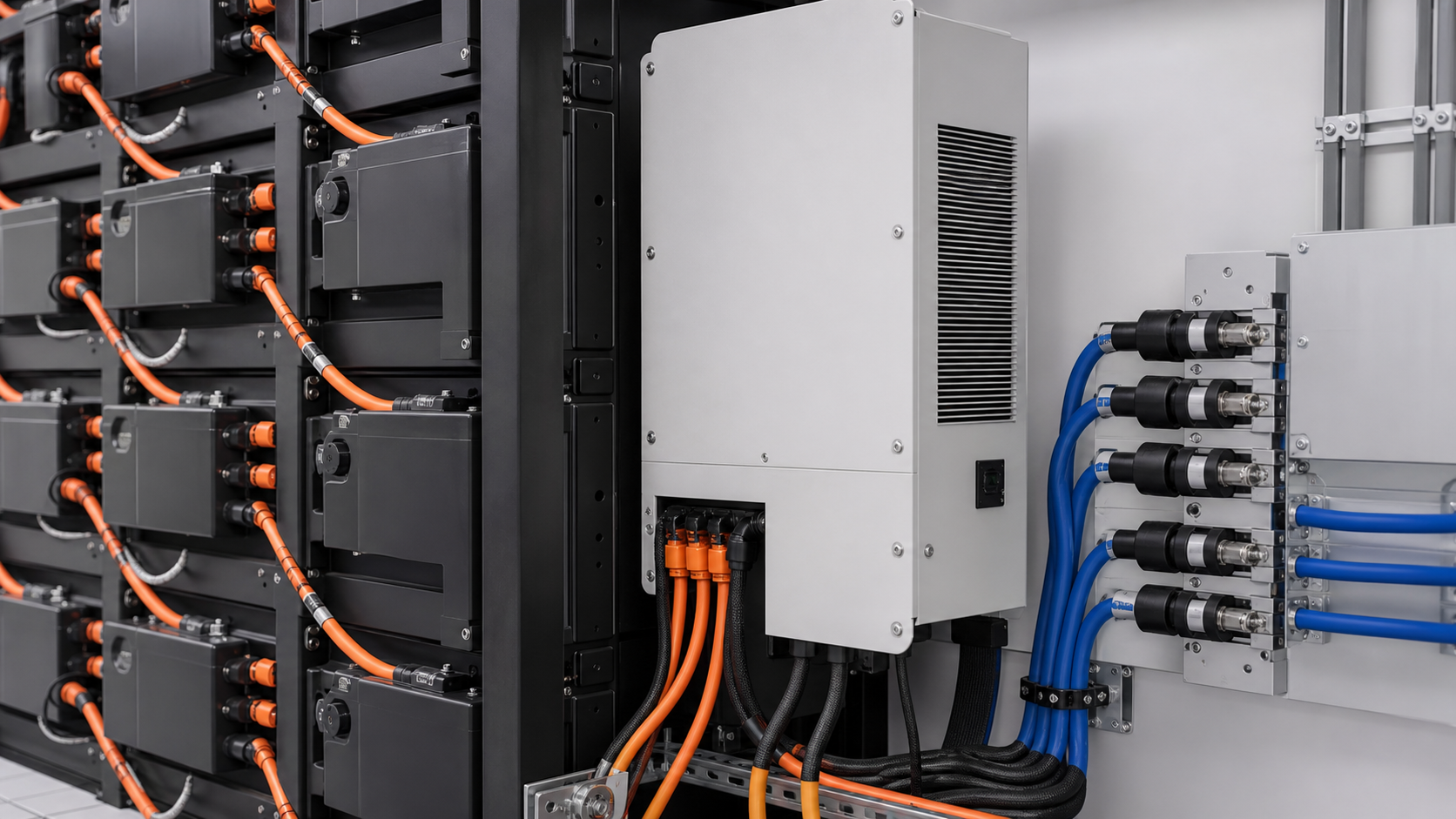
Inside a cell, an oxidation reaction at the negative electrode releases electrons and a reduction reaction at the positive electrode consumes them. The chemistry fixes which electrode does which job, so electrons always leave the same terminal. Reversing the flow means reversing the reaction — which is exactly what charging does, and why charging must be controlled precisely.
- Cell voltage is set by chemistry, not by design choice, so packs are built by series stacking to reach the working voltage.
- State of charge maps to voltage, which is how a battery management system estimates remaining capacity.
- Charging is the reverse reaction, so current, voltage and temperature must be held inside a narrow window to avoid lithium plating, gassing or thermal runaway.
- A battery management system (BMS) monitors cell voltages, temperature and current, balances the string and commands the charger to stop. It is a safety device, not an accessory.
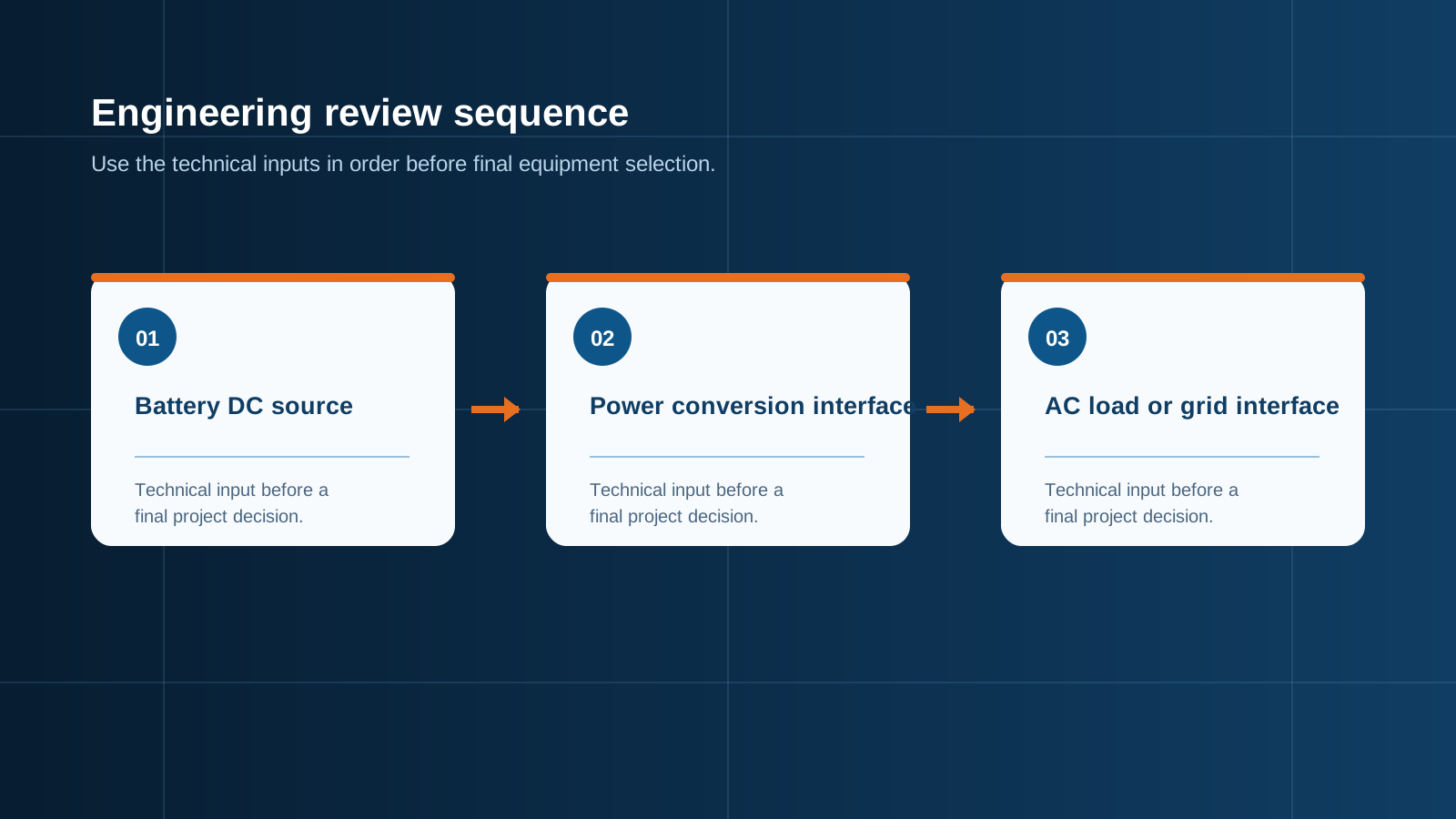
Technical diagram shown at a readable responsive scale.
4. Rectifiers, inverters and the conversion chain
Two conversion blocks do all the work in any battery installation.
Each conversion costs energy. A good rectifier or inverter stage runs at 95 % to 98 % efficiency, so a chain of AC to DC to AC loses several percent before the load sees anything. That is the engineering argument for keeping DC loads on DC where practical, and it is why solar-plus-storage systems increasingly couple on the DC bus.
- Rectifier (AC to DC) — takes grid AC, rectifies it, filters it and regulates it into a controlled DC charging profile. Modern units use active power factor correction to keep the input power factor above 0.99 and limit harmonic distortion.
- Inverter (DC to AC) — switches the DC into a pulse pattern and filters it into a sine wave at 230 V or 400 V, 50 Hz. Quality is judged on total harmonic distortion, transfer time and overload capability.
- DC-DC converter — steps DC from one voltage to another, for example from a 400 V pack to the 12 V auxiliary system of a vehicle.
- Bidirectional converter — combines rectifier and inverter in one power stage, which is what makes battery storage, UPS systems and vehicle-to-load functions possible.
5. AC charging versus DC fast charging for electric vehicles
An electric vehicle battery is DC, always. The difference between an AC charging point and a DC charger is simply which side of the cable the rectifier sits on.
Table 2 — AC charging point versus DC fast charger
Two practical consequences follow. First, plugging a vehicle with a 7.4 kW on-board charger into a 22 kW AC point still gives 7.4 kW — the vehicle is the bottleneck. Second, DC charging power tapers as the pack fills; a 150 kW charger rarely delivers 150 kW above roughly 80 % state of charge, because the BMS reduces current to protect the cells.
6. What this means for site infrastructure
For a facility owner, the AC/DC question is really an infrastructure question. DC fast charging concentrates a large, non-linear, rapidly varying load on one point of the network.
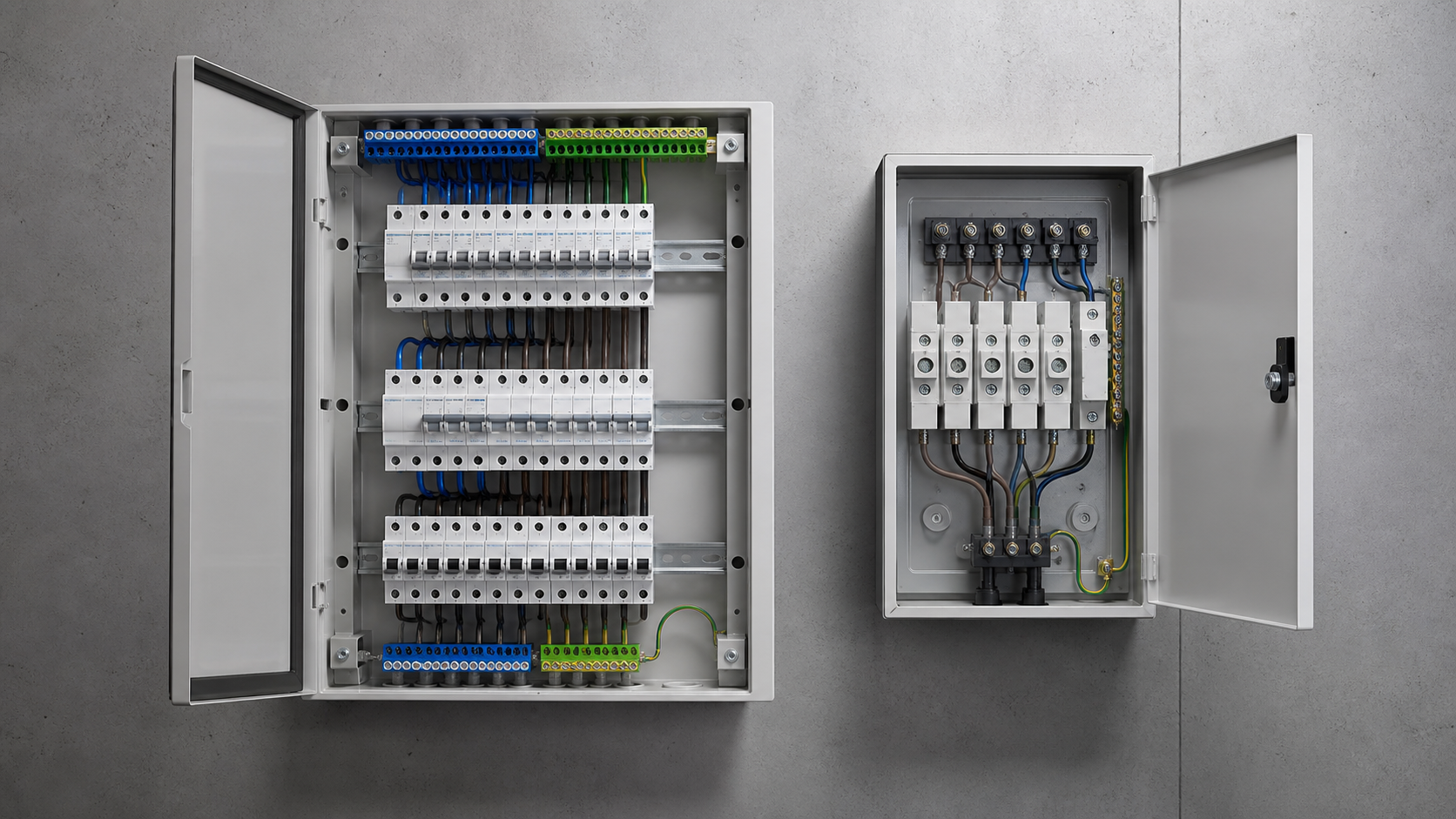
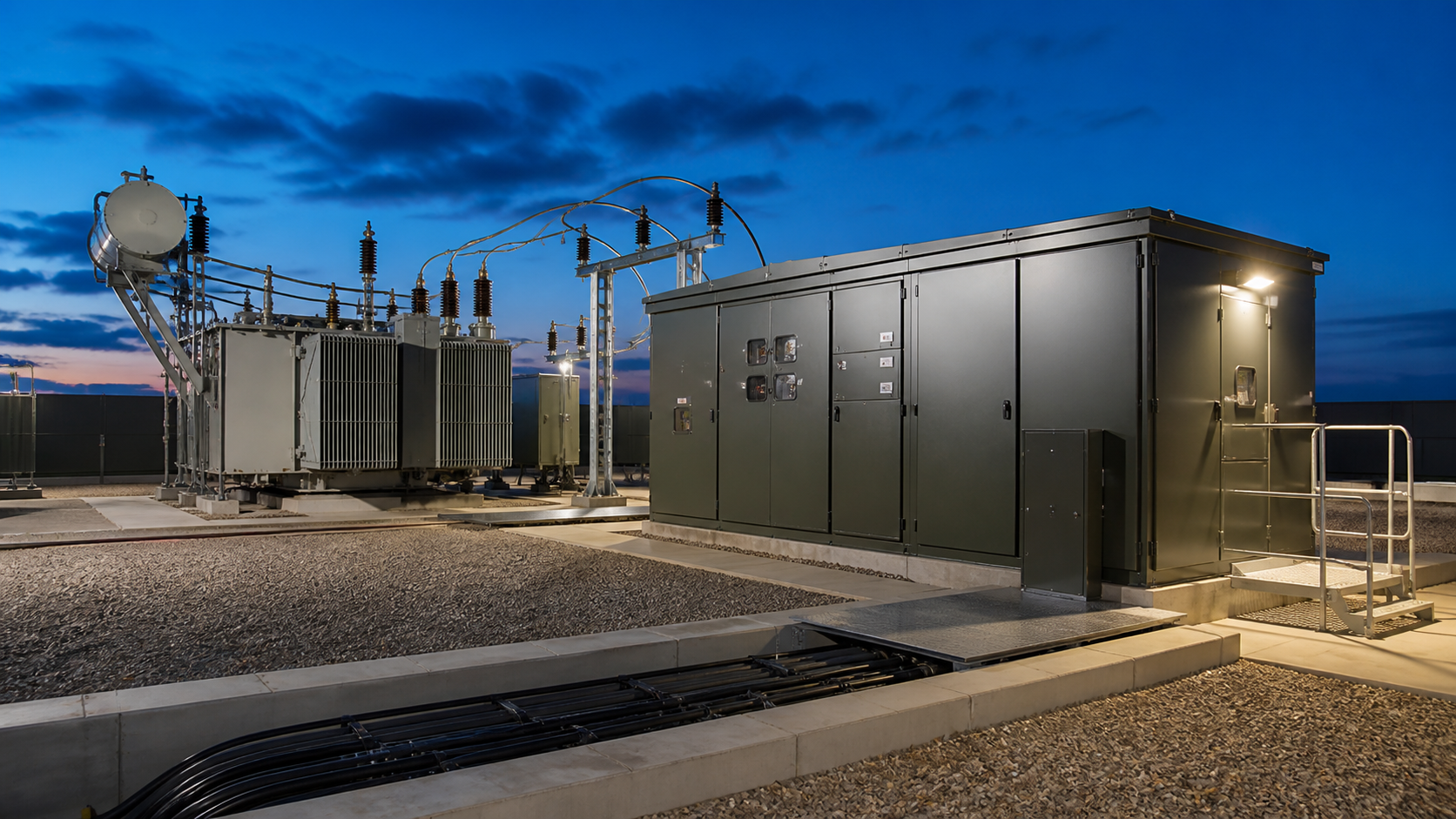
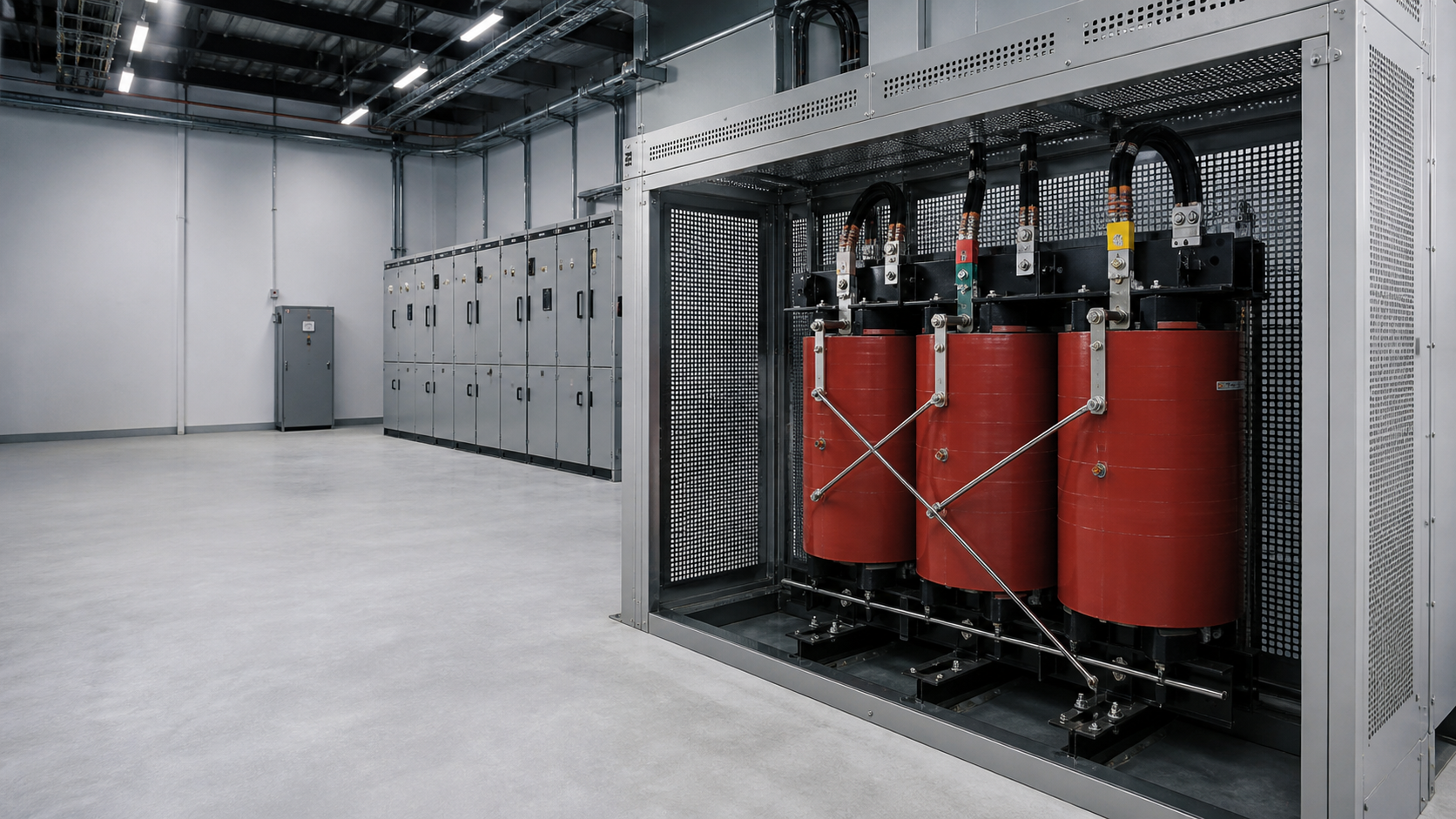
NEUTRON manufactures the electrical infrastructure around these systems: low voltage distribution and feeder cabinets, energy storage control cabinets, intelligent high-frequency DC control panels for substation auxiliary supply, and reactive power compensation and power quality cabinets. Equipment is engineered to the project single-line diagram, fault level and enclosure requirements.
- Feeder capacity. Several DC chargers can exceed the rating of an existing building supply. A load study comes before the equipment order, not after.
- Distribution assemblies. Charging hubs are fed from low voltage boards verified to IEC 61439-1/-2, with breakers sized for continuous duty rather than intermittent duty.
- Protection coordination. DC charging equipment introduces the possibility of smooth DC residual currents, which is why downstream residual current protection must be selected for the fault types that can actually occur.
- Power quality. Rectifier front ends generate harmonics; active power factor correction, filtering and compensation equipment keep the installation within utility limits.
- DC auxiliary supplies. Substations and control rooms serving charging hubs use dedicated DC control panels to keep protection and control circuits alive during an AC outage.
- Energy storage. Battery cabinets buffer peak demand so that a site can deliver high charging power without upgrading the incoming feeder.
Media and assets
Placement plan for the /insights article template:
Subject: an electric vehicle charging hub with several DC fast chargers in a row and a grey low voltage distribution cabinet visible at the end of the bay
Style: clean industrial B2B photography, on-site
Details: modern charging pedestals, thick liquid-cooled cables coiled on holders, painted bay markings, grey steel distribution cabinet, no brand marks or readable text
Background: outdoor charging plaza, softly defocused
Lighting: natural daylight, overcast soft light
Aspect ratio: 16:9
No text, no logos unless specified.
Subject: technical block diagram of the AC to DC conversion chain: grid supply, rectifier with power factor correction, battery pack with battery management system, inverter, AC load
Style: flat technical block diagram, two-colour engineering drawing
Details: labelled blocks with arrows showing power flow direction, DC bus voltage annotation, clean sans-serif labels, IEC-style symbols
Background: plain white
- Hero image, 16:9, under the H1 — EV charging hub with distribution cabinet in the background.
- Inline technical diagram after Section 4, 4:5 — conversion chain from grid AC through rectifier to battery DC and back through inverter.
- Inline image after Section 6, 1:1 — energy storage / DC control cabinet interior.
- Tables 1 and 2 rendered as responsive comparison tables.
- CTA block at the end of the article, full width.
Request a quote
Planning a charging hub, a storage installation or a DC auxiliary supply upgrade? Send your connected load, feeder capacity, fault level and site layout. NEUTRON engineers will specify the distribution, storage control and power quality cabinets required, verified to IEC 61439, and return a full quotation with delivery schedule.
This is general technical guidance, not a substitute for local electrical code, the applicable standard, product datasheets or a qualified engineer's design review. Confirm ratings and final configurations against the actual project.
Bring the project inputs to the first review.
NEUTRON can review the application context, electrical envelope, enclosure conditions and document requirements related to is battery power ac or dc? how batteries, chargers and inverters work before quotation.
Discuss a technical requirementContinue learning
Explore related technical guidance in Power Distribution.
Converted from the approved Period 01 source article for Is Battery Power AC or DC? How Batteries, Chargers and Inverters Work. Editorial instructions, duplicate anchor placeholders and embedded publishing directions were removed; the technical body is retained for educational use.