
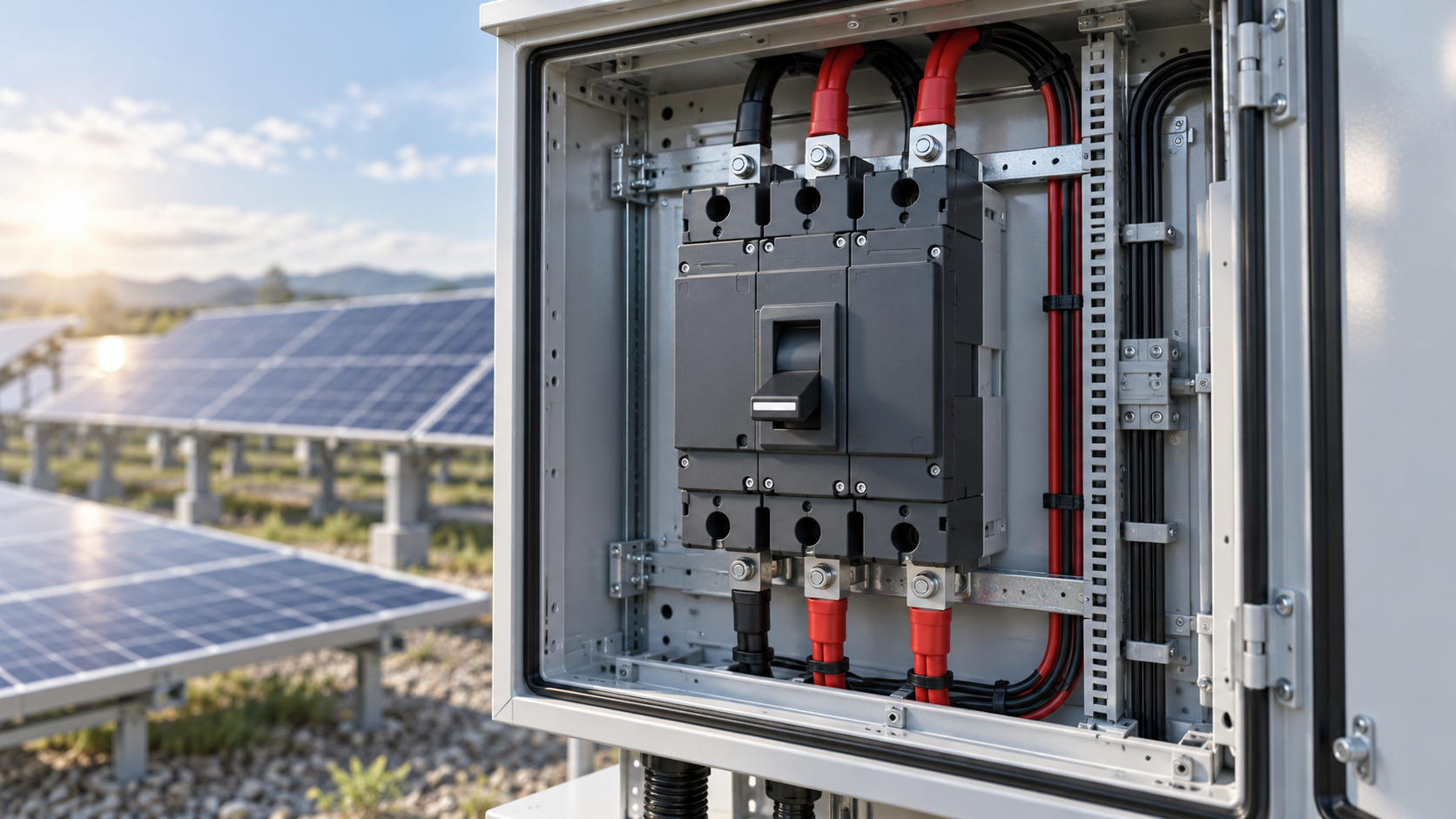
What IEC 60947-2 covers
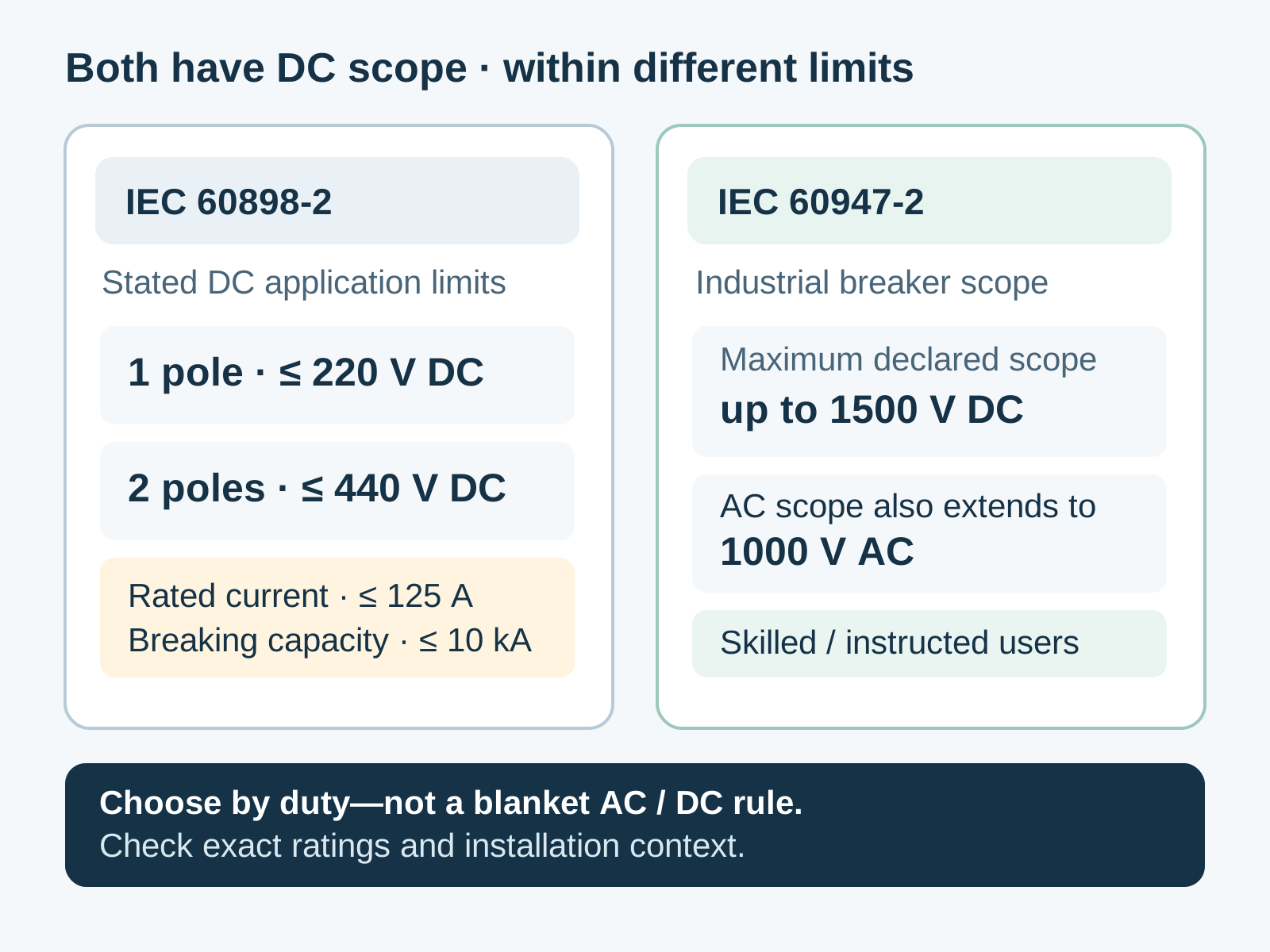
IEC 60947-2 is a circuit-breaker standard within the low-voltage switchgear and controlgear family. Its 2024 edition covers circuit breakers used by skilled or instructed persons and includes both AC and DC duties within stated limits. The published scope extends up to 1,000 V AC or 1,500 V DC, subject to the standard’s definitions and the product’s declared ratings.
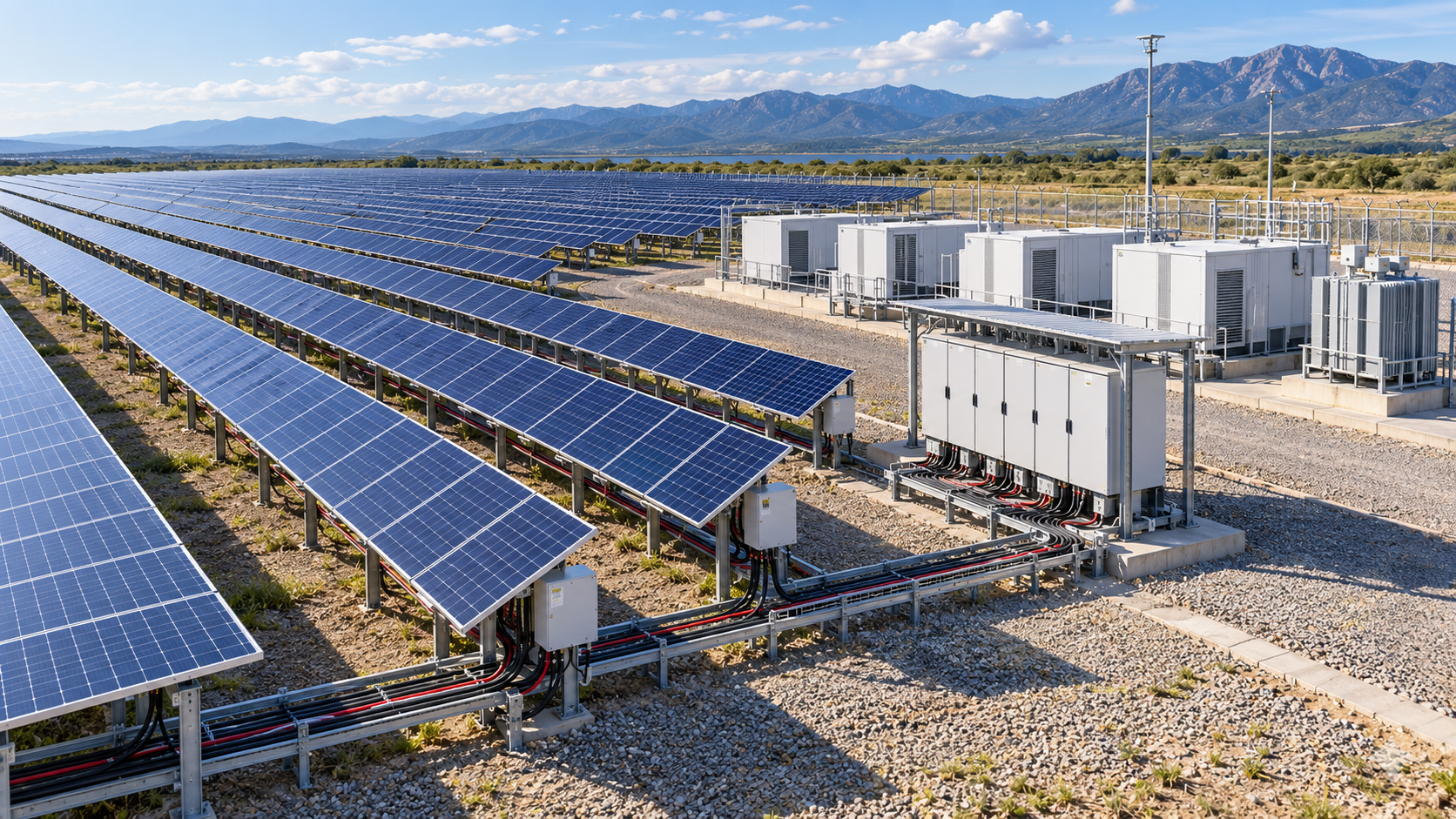
That scope makes IEC 60947-2 relevant to many PV array and collection designs, particularly where the equipment and operating environment fit the industrial category. It does not mean every circuit breaker used anywhere in a PV installation must be specified to this standard. Determine the intended use, user category, voltage, current and protection function, then identify the applicable product standard and conformity route.
A label such as ‘DC MCB’ is not enough to make that determination. Products with similar enclosures can have different construction, tests, ratings and limitations. Read the nameplate and technical data for the exact model, not merely a family brochure or the general appearance of a DIN-rail device.
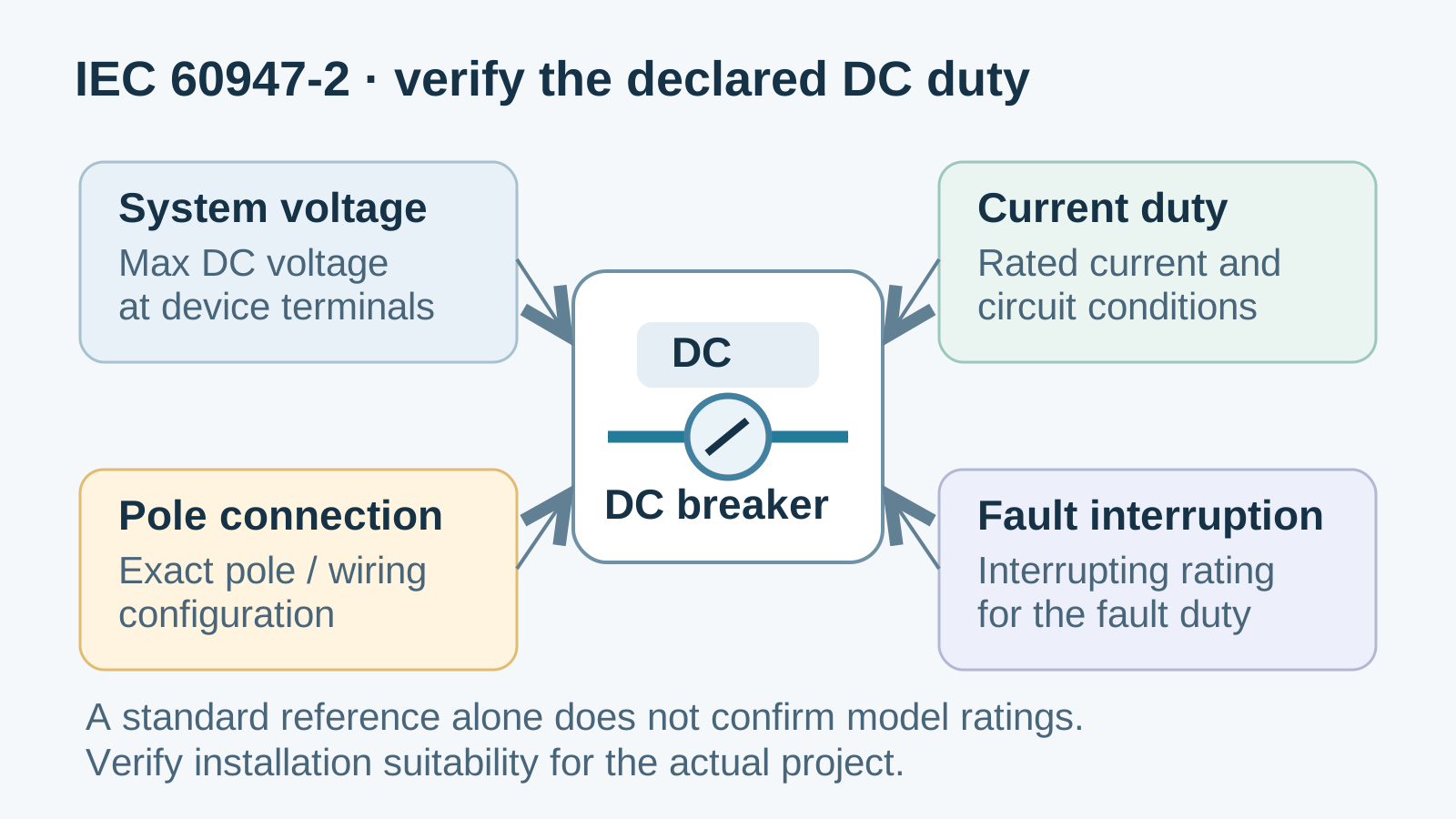
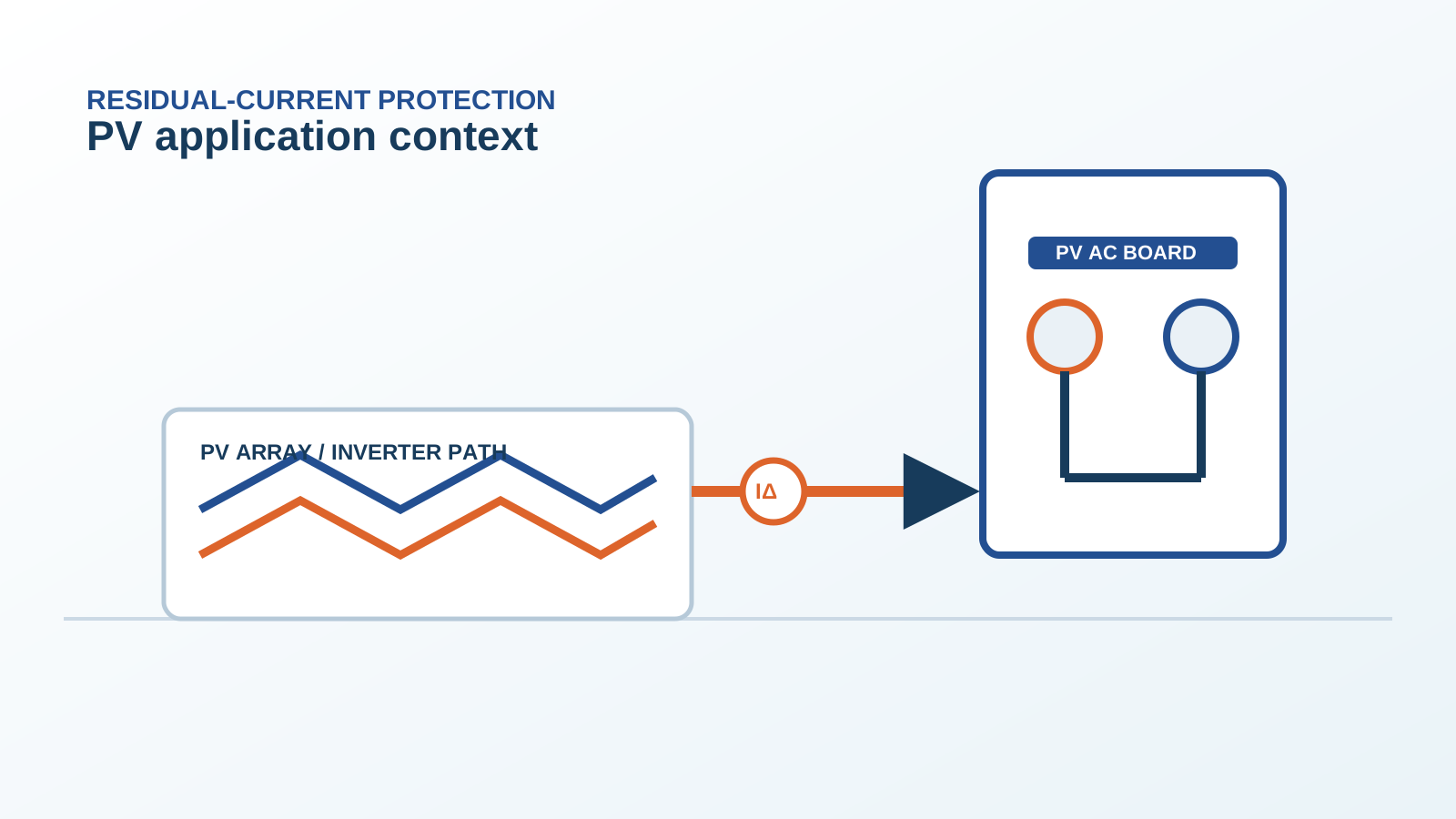
Technical diagram shown at a readable responsive scale.
IEC 60898-2 also has a limited DC scope
IEC 60898-2 is not an AC-only standard. Its published DC scope includes specific household and similar-use circuit-breaker configurations, with limits that include up to 220 V DC for a single-pole device and up to 440 V DC for a two-pole device, rated current up to 125 A and rated short-circuit capacity up to 10 kA. These boundaries are part of the standard’s defined application; they should not be expanded by assuming that any product carrying an IEC 60898 reference is suitable for a higher-voltage PV array.
The comparison is therefore not ‘IEC 60898 means AC’ versus ‘IEC 60947-2 means DC’. It is whether a particular product standard and the model’s declared DC ratings cover the project duty. Some PV circuits may fall outside IEC 60898-2’s voltage, current, fault or intended-use limits, while other low-voltage DC uses may be within its stated scope. Check the standard edition and actual product declaration before deciding.
The equipment selection must also account for who operates and maintains it. A household/similar-use device and an industrial breaker can be designed for different user assumptions and installation conditions. Treat those distinctions as part of the scope review, not as a shortcut based on product price or physical size.
Read DC ratings with their pole configuration
A DC voltage marking is valid only for the configuration stated by the manufacturer. Verify whether the rating applies to one pole, multiple poles in series or another specified connection; confirm line and load identification, polarity limitations where stated, and the exact wiring diagram. Do not assume that series connection of poles is permitted unless the model’s instructions and tested rating explicitly allow it.
Breaking capacity is likewise linked to the declared DC voltage and circuit conditions. A value shown for AC, or for a different DC voltage or pole arrangement, cannot simply be carried across to the PV design. Compare the prospective fault current at the installation point with the device’s applicable DC interrupting rating and any required backup or coordination conditions.
Because PV arrays can remain energized in daylight and DC arcs do not naturally extinguish at an AC zero crossing, selecting a device from an AC rating alone is unsafe. The relevant checks are the device’s actual DC declarations, instructions and approval scope, together with the array design values—not a generic claim that a breaker ‘looks suitable for solar.’
Avoid a universal standard prescription
The correct standard depends on circuit purpose and product scope. A string circuit, array collection feeder, inverter input and auxiliary circuit may have different voltage, current, prospective fault and operating conditions. The responsible designer should map each device location to those conditions and then determine which product standard or assessment applies.
Where the project specification calls for IEC 60947-2, verify that the offered model is actually assessed and marked for the required DC duty. Where another standard may apply, do not reject it solely because it is not IEC 60947-2; instead, compare the declared scope and ratings with the installation and code requirements. Any deviation should be documented and accepted through the project’s conformity process.
Evidence to check before approval
Build the review around the exact catalogue number. Record the standard and edition, AC or DC use, rated operational voltage, rated current, DC breaking capacity at the intended voltage, pole arrangement, trip characteristic, terminal and polarity instructions, ambient or installation limitations and any short-circuit coordination condition. Confirm that the certificate or test report includes that reference and configuration.
Compare the submittal with the device schedule and the installation drawing. If the drawings show series-connected poles, the submitted instructions must show the same arrangement. If the datasheet has separate AC and DC columns, cite the DC line in the project calculation. Missing or ambiguous data should be returned for clarification rather than silently inferred from a neighbouring product model.
Write the specification around the duty
A useful request for quotation states the maximum system voltage under the project’s design conditions, expected current, fault-current basis, circuit function, required isolation and the selected product standard or acceptable assessment route. Require the supplier to return the exact model, DC rating table, pole connection drawing, interrupting rating and supporting certificate or test report.
This wording reduces substitutions based solely on a similar frame size or an AC current rating. It also creates a record that can be checked during installation and future maintenance. The final device and its wiring should be reviewed against the local installation requirements and the responsible engineer’s design—not approved on the article’s general comparison alone.
This is general standards guidance, not a universal device prescription. Confirm the current standard edition, circuit duty, product listing or certificate, manufacturer connection instructions and local rules with the responsible electrical engineer.
Frequently asked questions
Does IEC 60898-2 cover DC circuit breakers?
Yes, within a limited household and similar-use scope. The standard includes defined single-pole and two-pole DC voltage limits, up to 125 A rated current and up to 10 kA rated short-circuit capacity. Those limits do not establish suitability for a PV circuit that exceeds them or falls outside the intended product scope.
Does every PV DC breaker have to comply with IEC 60947-2?
Not as a universal rule. IEC 60947-2 is relevant to many industrial DC breaker applications, but the correct product standard depends on the circuit duty, intended users, device scope, ratings and local requirements. Verify the exact product declaration and document the acceptance basis for the project.
Why must DC breaking capacity match voltage and pole arrangement?
The manufacturer’s interrupting rating is declared for specific electrical conditions and connection configurations. A rating at a different voltage, for AC duty or for a different series-pole arrangement may not apply. Use the datasheet row and connection diagram that match the installed configuration and compare its value with the project fault-current basis.
Can I use the AC interrupting rating for a PV DC circuit?
No. An AC rating does not establish the breaker’s ability to interrupt the DC duty. Confirm a specific DC voltage and breaking rating for the exact model and intended pole arrangement, then check it against the installation design and applicable rules.
Compare the declared duty, not the appearance
A model-specific DC rating and wiring diagram are the evidence needed to connect the product to the PV design conditions.
Discuss a project requirementContinue learning
Explore related technical guidance in Electrical Protection.
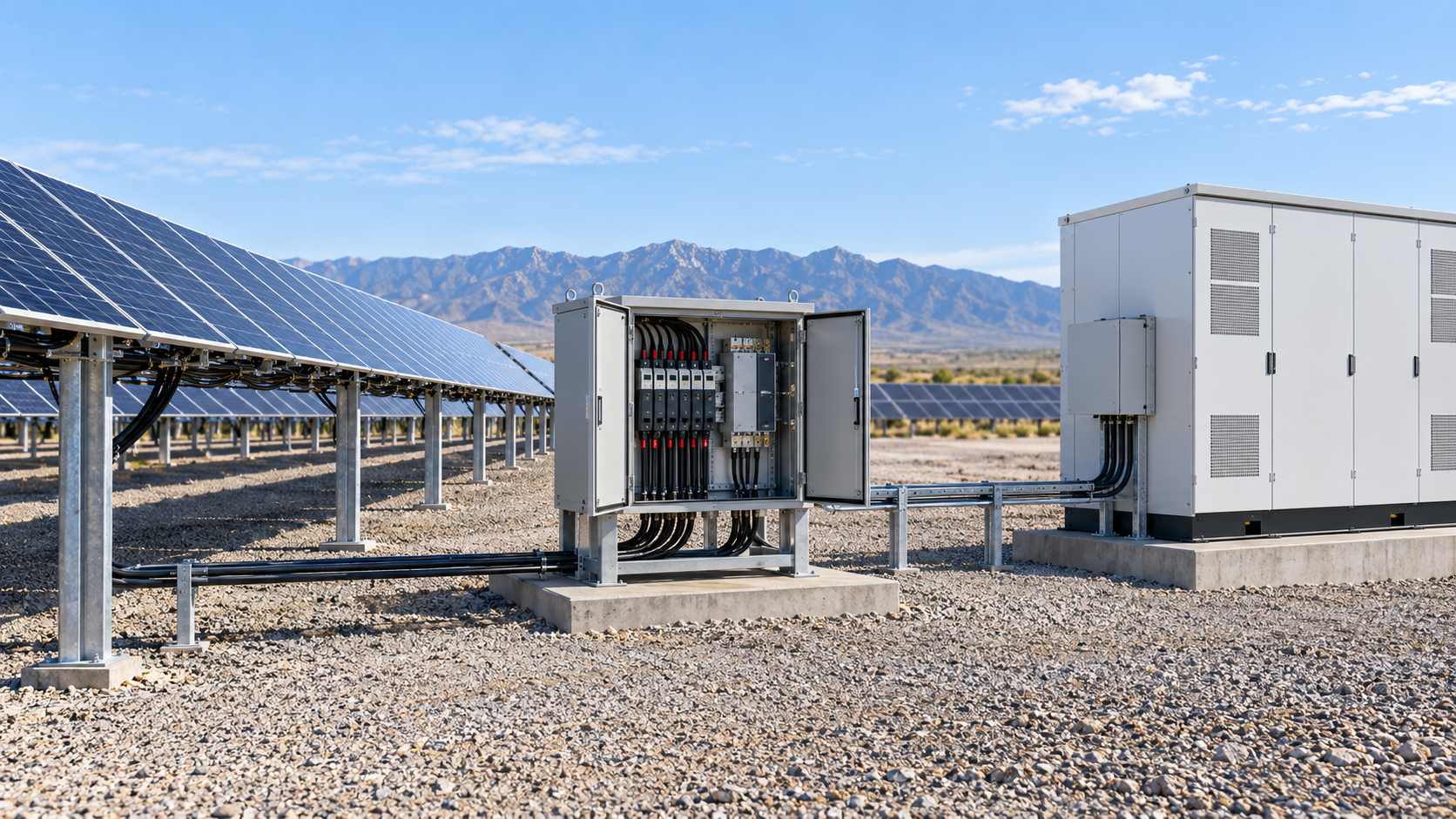
IEC scope statements and the limited DC scope of IEC 60898-2 are linked to the official publication pages in the relevant sections.