
The role of IEC 60755
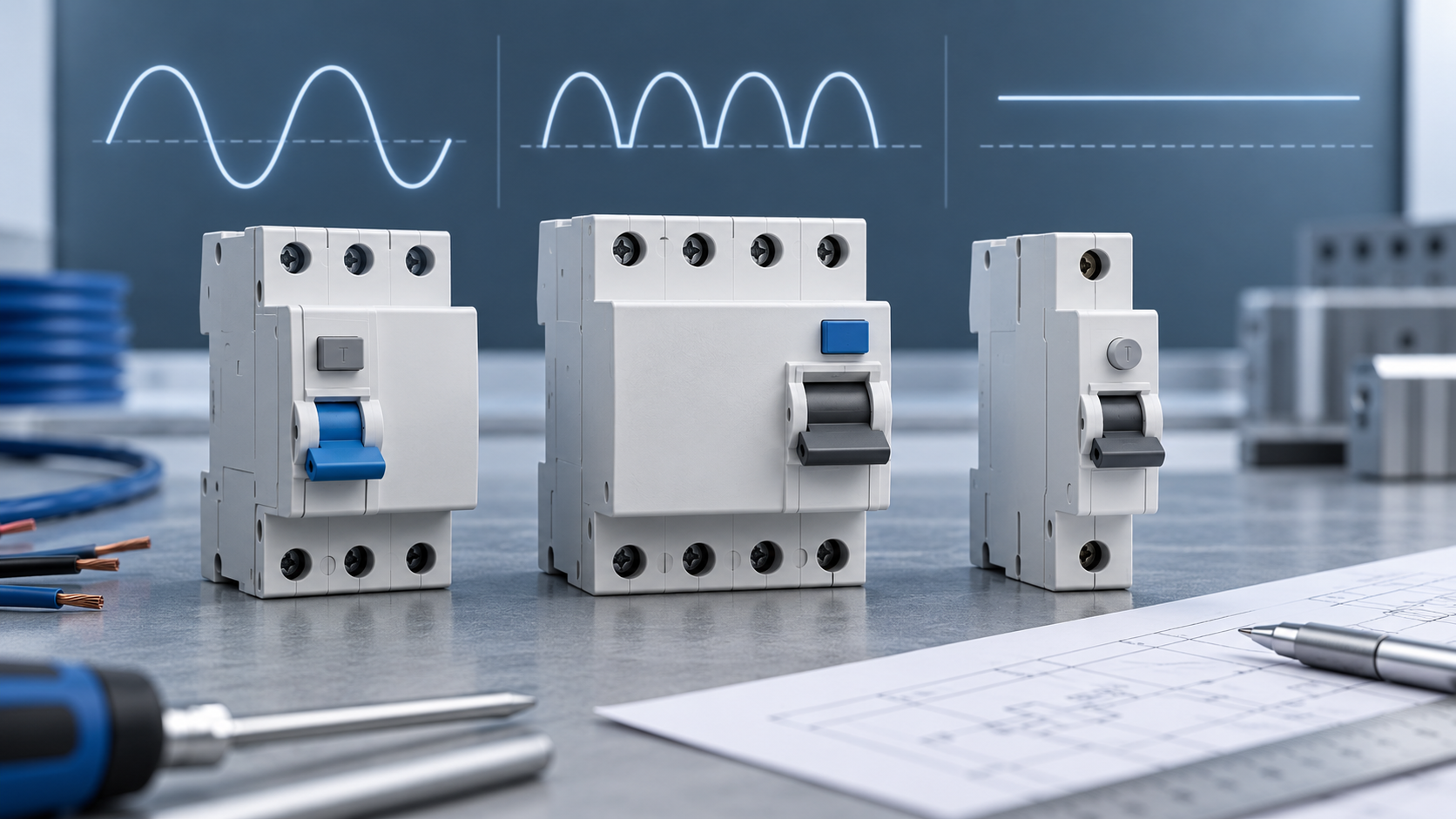
IEC 60755:2017 is a general-requirements publication for residual-current operated protective devices. It provides common concepts and requirements that help standards writers and engineers describe residual-current protection consistently. Its role is broader than one device construction, and it is not by itself the complete product specification for a particular RCCB, RCBO or other RCD.
That distinction is important in tenders. A reference to IEC 60755 can help explain the technical framework, but a buyer still needs the standard applicable to the product being offered, the ratings declared for that model and the conformity evidence that covers its exact configuration. A document citing only general requirements does not automatically show that the device has met all construction, marking and performance tests required for its product category.
For PV, identify the device, intended residual-current conditions, applicable product standard and fit with the inverter and installation. Trace the answer to current, model-specific technical documents.
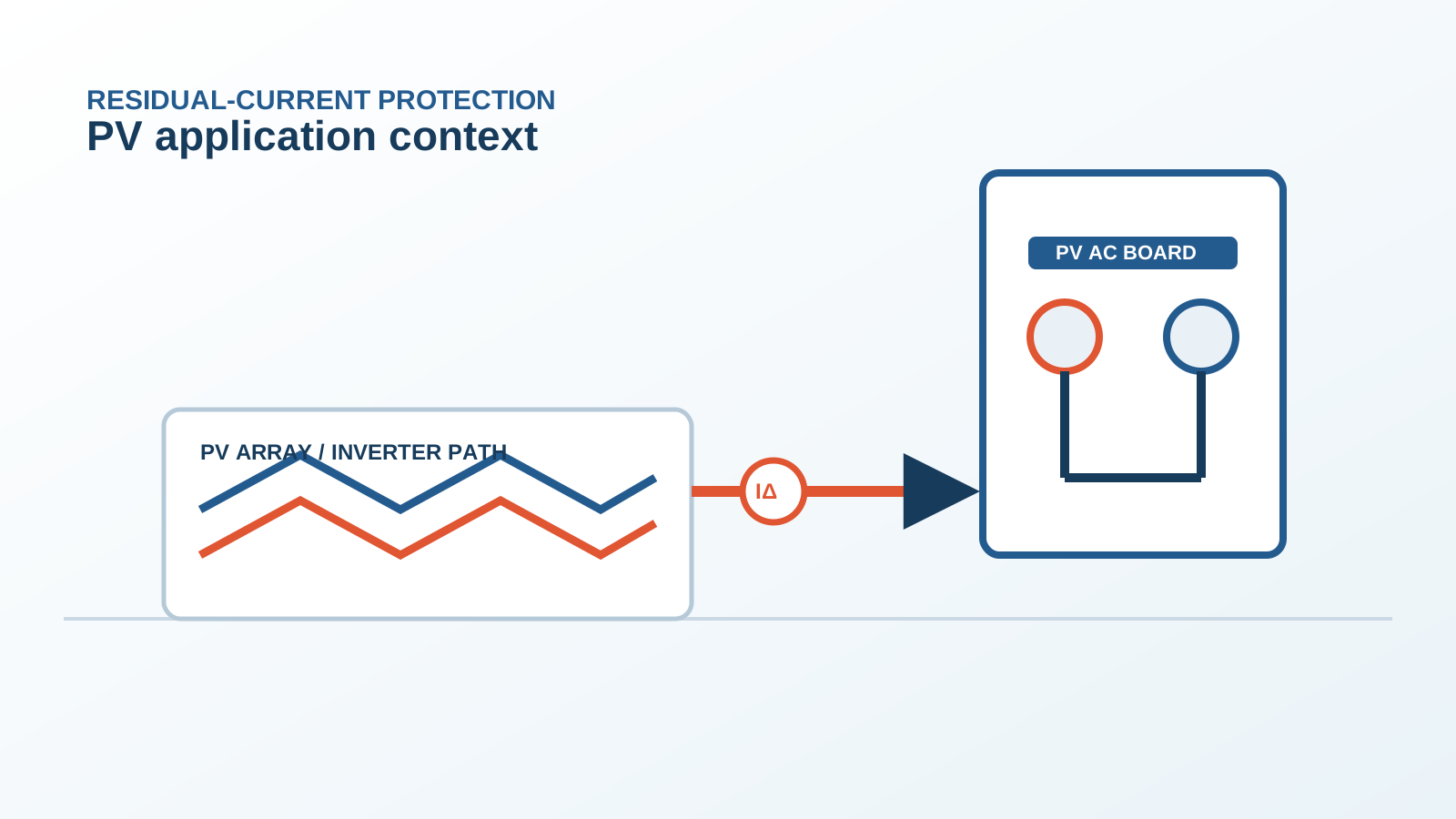
Technical diagram shown at a readable responsive scale.
General framework versus device-specific standards
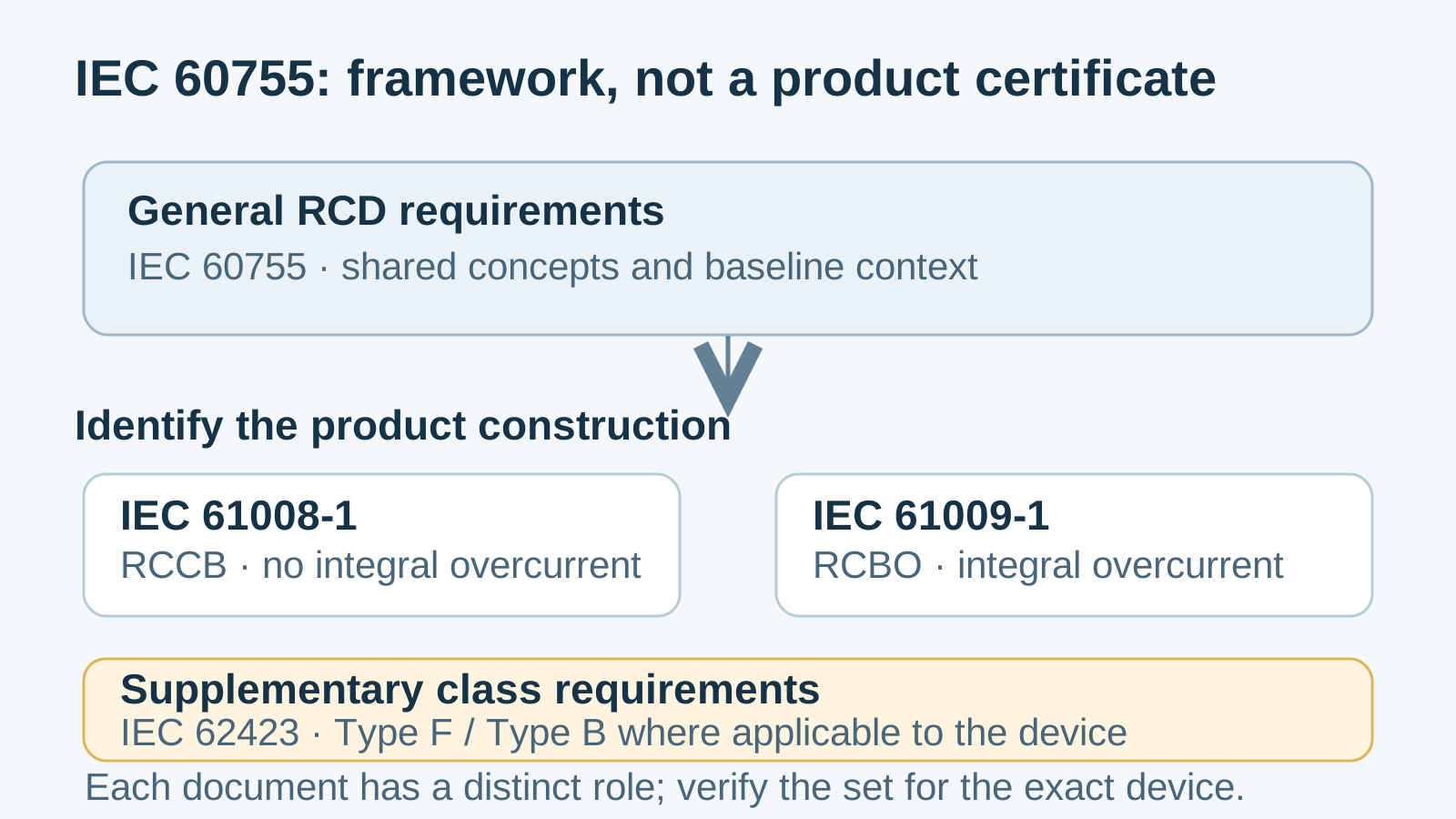
The standards landscape is easier to read when each document is assigned a job. IEC 60755 provides general requirements. IEC 61008-1 covers the defined RCCB product category, while IEC 61009-1 covers the corresponding RCBO category with integral overcurrent protection. IEC 62423 adds requirements for Type F and Type B devices within its stated application. These documents are related, but one does not erase the need to check the others when a product claim depends on them.
A useful procurement record therefore names the exact product reference, the construction standard and edition, the detection class and its supplementary standard where applicable, plus the device’s ratings and any stated limitations. If a certificate lists a family, check that the offered poles, residual rating and current rating are within its scope. Do not infer that all products share the same approvals because they appear under one brand or series.
This separation also prevents a common wording problem: describing IEC 60755 as though it were a mandatory certification chain for every RCD. Whether a document must be referenced for a given product depends on the applicable product standard and conformity route. The safe practice is to report exactly what the product evidence cites, without adding requirements that have not been established.
Where IEC 60755-1 fits for DC systems
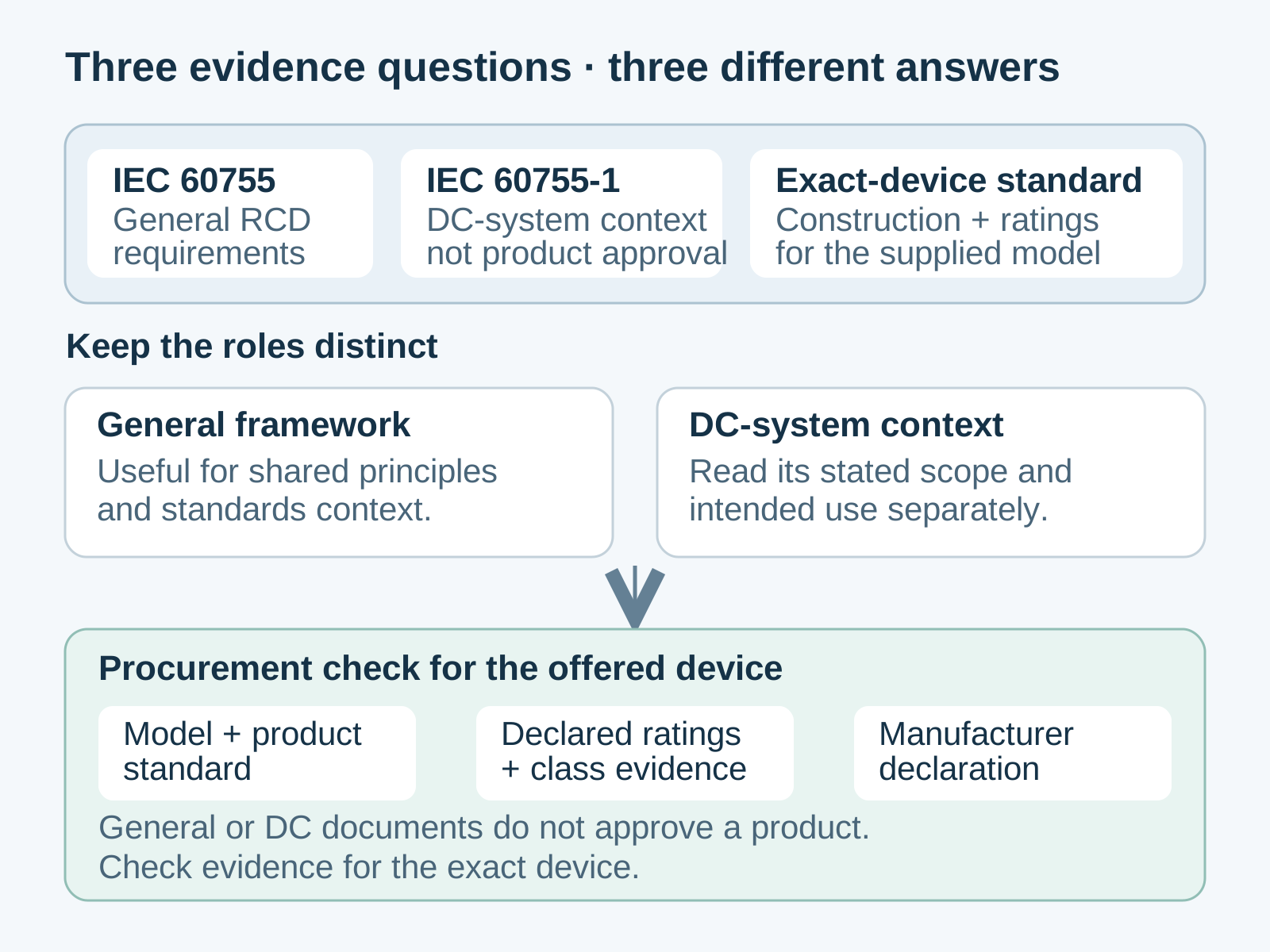
IEC 60755-1:2022 is a separate publication addressing additional general requirements for RCDs in DC systems. It should not be collapsed into IEC 60755:2017 or described as a stand-alone product certification. The publication’s stated purpose is directed to standards committees developing requirements for RCDs in DC systems; a manufacturer or buyer should not cite it alone as proof that a finished product is certified for a particular PV duty.
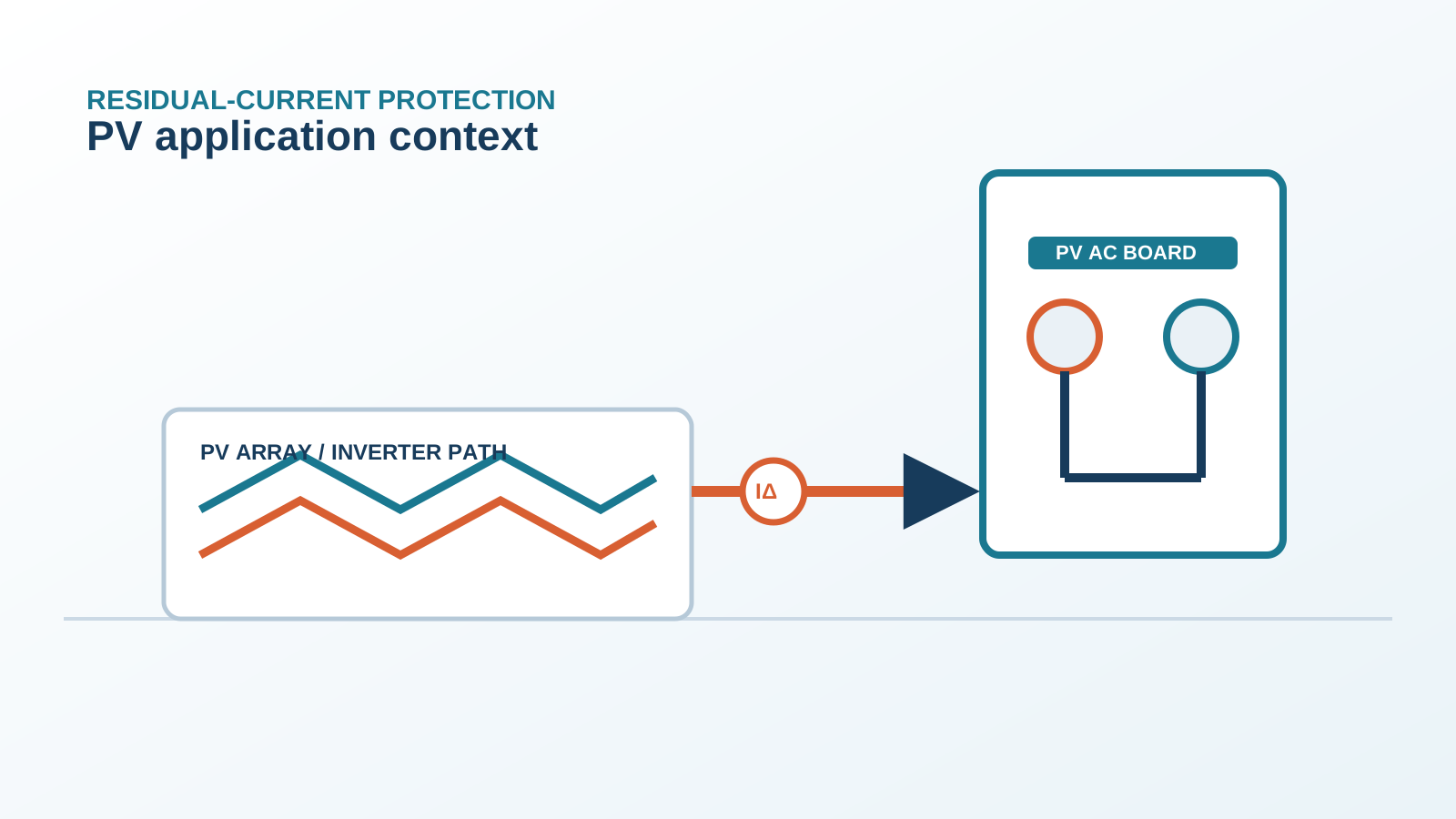
In a PV project, use the document to understand the standards context only where relevant, then identify the product-specific standard and conformity evidence for the device actually selected. DC-side protection and AC-side residual-current protection are different functions and may use different device families. The location, waveform, earthing arrangement and applicable rules determine which standard set matters.
When a supplier presents a DC-related declaration, check that its scope, test basis and ratings correspond to the intended installation. If the document’s purpose is not a product test specification, state that clearly in the review record so it is not later mistaken for certification evidence.
Discuss waveform capability without overclaiming
RCD selection may depend on whether a device is intended to detect alternating, pulsating direct, smooth direct or mixed-frequency residual current. Those capabilities must be tied to the relevant product category and test requirements; a general standard reference does not establish the numeric response limits of a specific device. Use the product’s declared class and supporting documents rather than translating general terminology into a performance promise.
The same care applies to PV inverters. Do not conclude from the words ‘PV’, ‘transformerless’ or ‘all-current sensitive’ alone that one RCD class is always mandatory. Check the exact inverter manual, any internal residual-current monitoring declaration, the protective function required at the installation point and the local rules. The engineer should document why the selected class is adequate for the identified fault conditions.
How to review a manufacturer declaration
A useful declaration identifies the manufacturer and exact catalogue reference, the relevant product standard and edition, rated voltage and current, residual-current operating characteristics, detection class where claimed, and the applicable short-circuit or coordination data. It should point to the certificate or report supporting the claim and state any installation condition needed to obtain the declared performance.
If the declaration says only ‘suitable for solar’ or lists a broad family name, ask for the exact reference and the underlying scope. Check that the model, number of poles and ratings on the physical device match the records. Any gap between a marketing statement and the technical evidence should be resolved before the product is accepted into the design schedule.
Turn the standards hierarchy into a query sheet
For each proposed device, ask the supplier to state: the construction type; product standard and edition; detection class and supplementary standard if claimed; rated residual current and non-operating characteristics; declared frequency or waveform range where relevant; short-circuit coordination or breaking rating; exact model reference; and the evidence document that covers it. Add the inverter model and project requirement that led to the requested class.
This format makes substitutions easier to compare. Similar-looking replacements may differ in scope, class or test basis; consistent questions distinguish documented equivalence from visual similarity.
This is a standards-orientation guide, not product certification or installation advice. Confirm applicable editions, product evidence, inverter instructions and local rules with the responsible engineer and conformity body.
Frequently asked questions
Is IEC 60755 a product certification standard for an RCD?
No. IEC 60755:2017 is a general-requirements publication. To assess a finished RCCB or RCBO, identify the applicable product standard, the exact model’s ratings and the conformity evidence that covers its configuration. A reference to IEC 60755 alone does not establish product certification.
What is the difference between IEC 60755 and IEC 60755-1?
IEC 60755:2017 provides general safety requirements for residual-current operated protective devices. IEC 60755-1:2022 is a distinct document for additional general requirements related to RCDs in DC systems, with a stated purpose directed to standards committees. Do not treat either as a stand-alone certificate for a specific commercial device.
Which standard should appear in an RCD product review?
Name the product category and check its applicable product standard—for example, the relevant IEC 61008 or IEC 61009 edition for the device construction. If a Type F or Type B capability is claimed, verify the applicable IEC 62423 evidence as well. The exact model and ratings must fall within the submitted certificate or report scope.
Does IEC 60755 make Type B mandatory for PV?
No. The standard reference does not create a universal Type B rule for all PV circuits. The need for a particular class depends on the inverter documentation, possible residual-current waveforms, the function required at that location and the local installation rules. Record the project-specific reasoning and verify the selected device evidence.
Keep framework and evidence distinct
Separate general standards context from the actual product certification record, then retain both alongside the project’s device schedule.
Discuss a project requirementContinue learning
Explore related technical guidance in Electrical Protection.

Official IEC publication pages are linked in the relevant sections. The article distinguishes general-requirements documents from product-specific conformity evidence.