
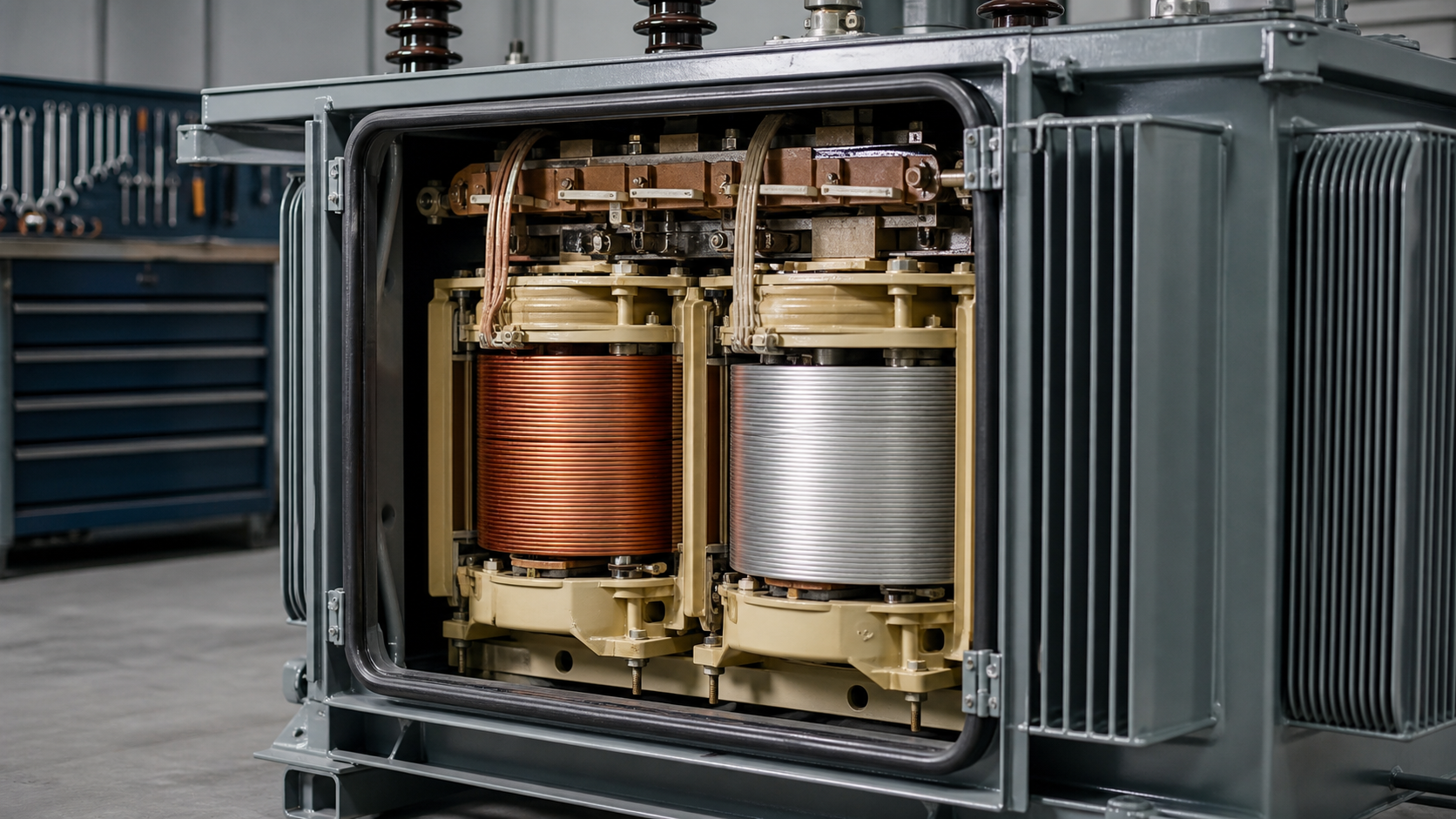
1. Direct answer: which winding wins
Anchor: #copper-vs-aluminum-wound-oil-transformers-s1
Both winding metals are permitted by IEC 60076-1 and both can reach the same efficiency tier. What changes is how the manufacturer gets there. To match a copper design's losses, an aluminium design needs roughly 60 % more conductor cross-section, which enlarges the window, lengthens the mean turn, increases core steel and raises tank volume and oil quantity.
A short decision rule works well in practice:
- Choose copper where load factor exceeds about 60 %, where footprint or weight is constrained, or where frequent through-faults are expected.
- Choose aluminium where load factor is low, first cost dominates the tender score, and installed space is not restricted.
- Choose either where a guaranteed loss figure and a penalty clause are written into the contract — then the metal becomes the manufacturer's engineering problem, not yours.
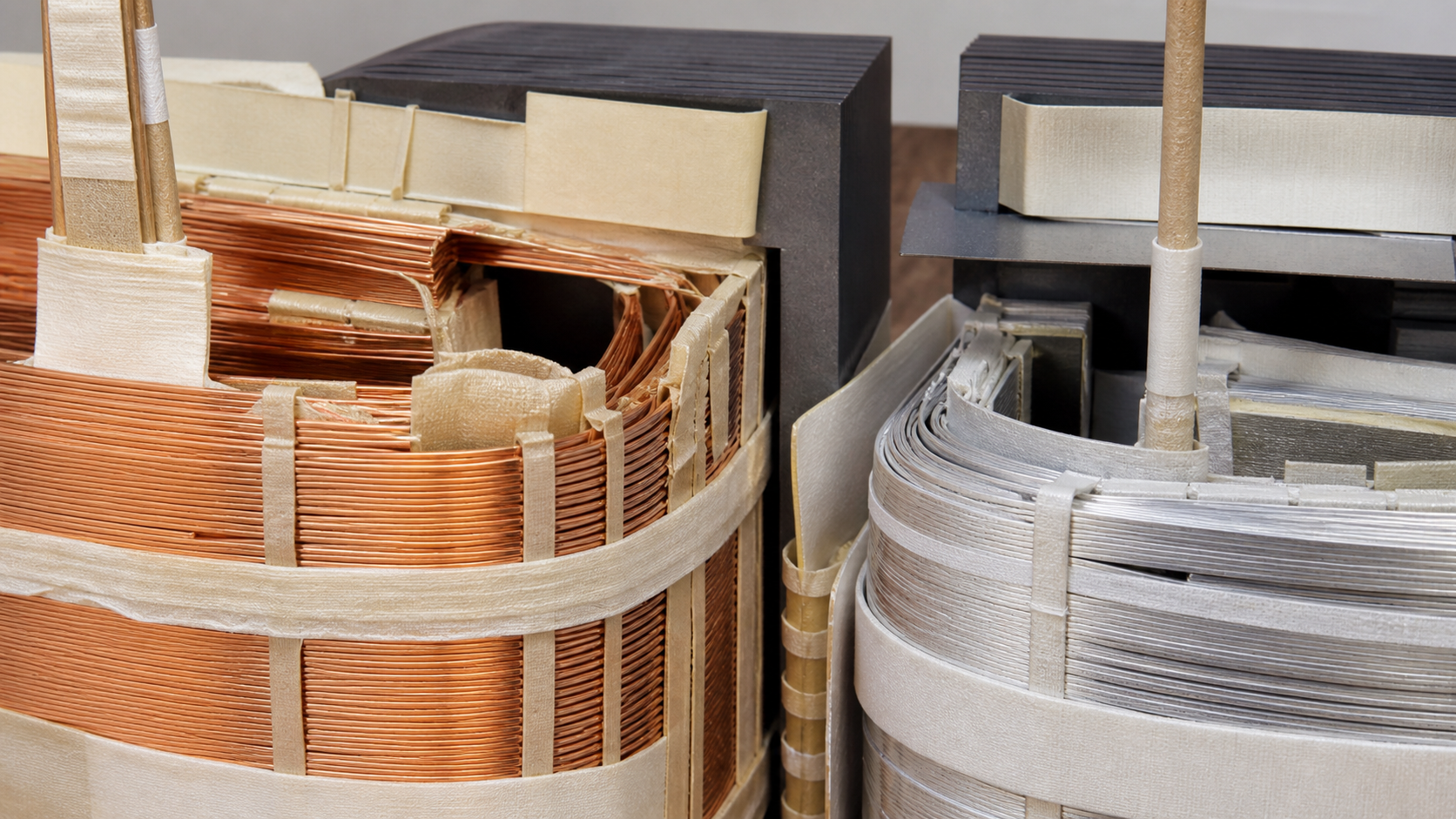
2. Conductivity and the 61 % IACS reality
Anchor: #copper-vs-aluminum-wound-oil-transformers-s2
Electrolytic tough-pitch copper has a volume resistivity of about 1.72 × 10⁻⁸ Ω·m (roughly 58 MS/m, defined as 100 % IACS). Electrical-grade aluminium (EC-grade, 1350 alloy) sits near 2.83 × 10⁻⁸ Ω·m, about 35 MS/m or 61–62 % IACS. On a like-for-like cross-section, aluminium therefore carries about 61 % of the current for the same loss.
The often-quoted counter-argument is conductivity per unit mass. Aluminium's density is 2.70 g/cm³ against copper's 8.96 g/cm³, so per kilogram aluminium conducts roughly twice as well. That matters for overhead lines, where mass drives tower loading. It matters far less inside a transformer tank, where the binding constraint is the winding window volume, not conductor mass. Volume, not weight, is what sets the price of the surrounding core and tank.
| Property | Copper winding | Aluminium winding | Practical effect |
|---|---|---|---|
| Volume resistivity at 20 °C | ≈1.72 × 10⁻⁸ Ω·m | ≈2.83 × 10⁻⁸ Ω·m | Sets load loss for a given cross-section |
| Conductivity | 100 % IACS | 61–62 % IACS | Aluminium needs ≈60 % more section |
| Density | 8.96 g/cm³ | 2.70 g/cm³ | Lighter coil, heavier core and tank |
| Tensile strength (annealed) | ≈200–250 MPa | ≈70–110 MPa | Short-circuit force withstand |
| Thermal expansion | ≈16.5 µm/m·K | ≈23.1 µm/m·K | Joint creep and clamping pressure loss |
| Melting point | 1085 °C | 660 °C | Margin during severe overload |
| No-load loss influence | Negligible | Negligible | Driven by core steel grade |
| Relative conductor cost | High and volatile | Lower, less volatile | Main CAPEX driver |
3. Cross-section, core size and the knock-on effects
Anchor: #copper-vs-aluminum-wound-oil-transformers-s3
Enlarging the conductor to compensate for lower conductivity triggers a chain of design consequences that buyers feel on site:
In practice a well-designed aluminium unit of the same rating and loss class is commonly 10–20 % larger in footprint and can be similar or slightly lower in total mass, because the lighter winding partly offsets the heavier core and tank. Always ask for the actual dimension and mass drawing rather than assuming.
- Larger window area — the core limbs move apart, increasing the magnetic path length and the mass of grain-oriented silicon steel.
- Higher no-load loss potential — more core steel means more hysteresis and eddy-current loss unless a higher grade of steel is specified.
- Longer mean length of turn — which partially cancels the benefit of the added cross-section.
- Bigger tank and more oil — typically 10–25 % greater oil volume, affecting fire load, bund sizing and transport weight.
- Different thermal behaviour — aluminium's specific heat is higher per kilogram, but the winding hot-spot still has to meet the same IEC 60076-2 temperature-rise limits.
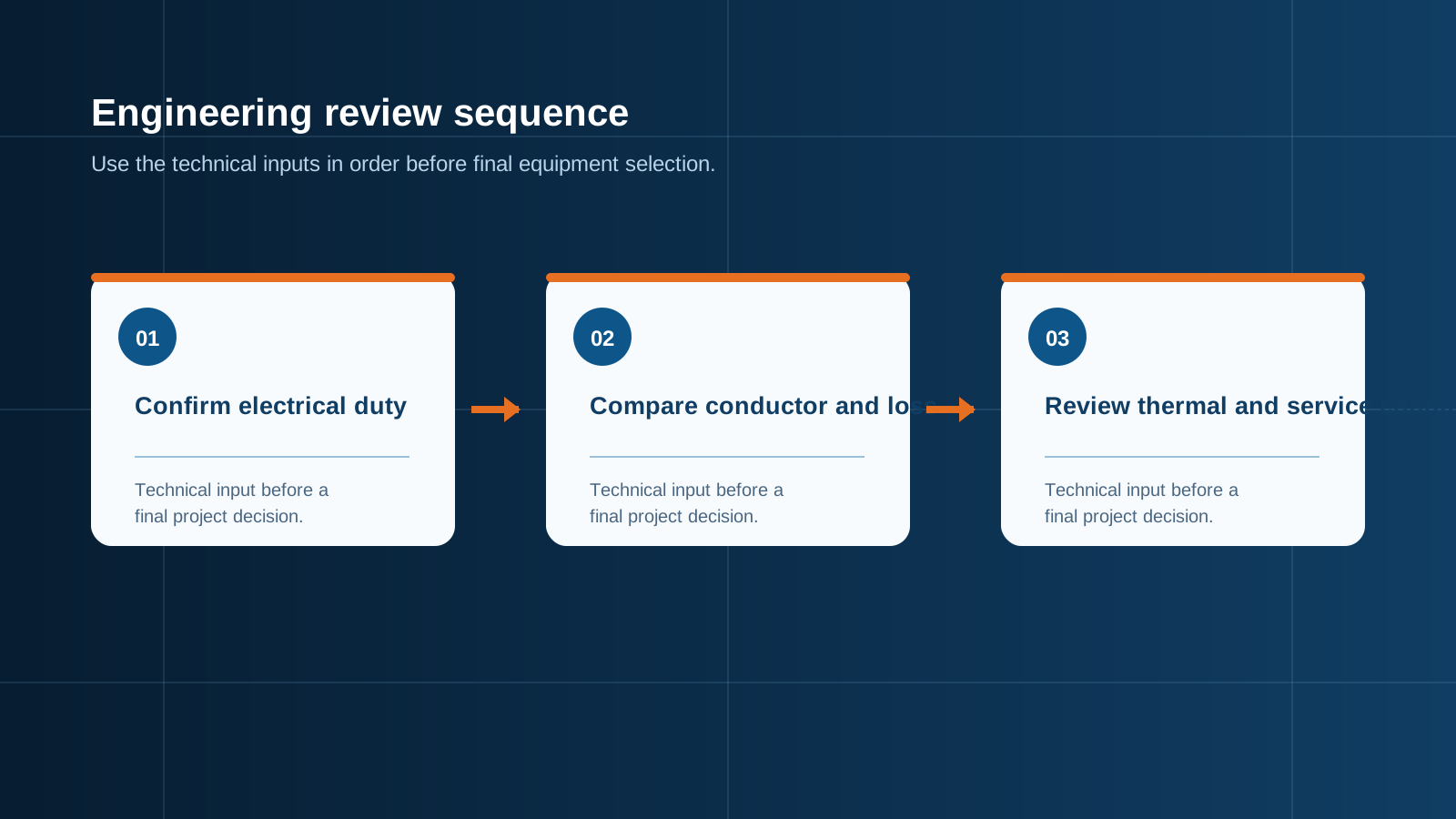
Technical diagram shown at a readable responsive scale.
4. Load and no-load losses compared
Anchor: #copper-vs-aluminum-wound-oil-transformers-s4
Transformer losses split into two parts. No-load loss (P0) is present whenever the unit is energised and is governed almost entirely by core steel grade and flux density — the winding metal barely affects it. Load loss (Pk) varies with the square of load current and is dominated by winding resistance, so this is where the metals diverge.
Both constructions can meet EU Ecodesign Tier 2 loss limits and equivalent national efficiency schemes. Specify the required P0 and Pk in watts with a tolerance and a penalty, and let the manufacturer choose the metal that meets it most economically.
5. Mechanical strength and short-circuit withstand
Anchor: #copper-vs-aluminum-wound-oil-transformers-s5
During a through-fault, axial and radial electromagnetic forces act on the winding in proportion to the square of the fault current. Copper's higher tensile strength and higher yield point give a larger intrinsic margin against conductor buckling and coil telescoping.
This does not make aluminium unsuitable. It makes design detail decisive: aluminium windings need heavier clamping structures, more radial spacers, pre-compressed pressboard and often continuously transposed conductor to reach the same withstand. The compliance evidence to request is the IEC 60076-5 short-circuit withstand assessment — either a type test on a representative unit or a calculation validated by an independent laboratory. A tender that names a metal but offers no IEC 60076-5 evidence tells you nothing about survivability.
Thermal expansion is the second mechanical concern. Aluminium expands about 40 % more per kelvin than copper. Over thousands of load cycles this relaxes bolted joint pressure unless Belleville washers and correctly torqued hardware are used.
6. Terminations: the oxide layer problem
Anchor: #copper-vs-aluminum-wound-oil-transformers-s6
Aluminium forms a tenacious, electrically insulating oxide film within seconds of exposure to air. A joint made without preparation develops rising contact resistance, local heating and eventually a thermal fault. This is the single most common in-service failure mode attributed to aluminium windings, and it is almost always an installation defect rather than a metal defect.
Controls that eliminate it:
- Factory-welded or brazed internal joints rather than field-made connections.
- Bimetallic (copper-clad aluminium) terminal pads so the customer's cable lands on copper.
- Wire-brushing plus inhibitor compound immediately before assembly on any field joint.
- Calibrated torque to the manufacturer's figure, with a documented re-torque after the first thermal cycle.
- Thermographic survey at commissioning and at each annual inspection.
7. CAPEX versus 25-year total cost of ownership
Anchor: #copper-vs-aluminum-wound-oil-transformers-s7
Loss capitalisation converts watts into currency so the two offers can be compared on one number. The standard method assigns an A-factor to each watt of no-load loss and a B-factor to each watt of load loss, then evaluates:
Evaluated cost = purchase price + (A × P0) + (B × Pk)
A and B are derived from the electricity tariff, the expected load factor, the discount rate and the evaluation period. The illustrative comparison below uses a 1000 kVA oil-immersed unit, 70 % load factor, 25-year evaluation and a 0.10 currency-unit/kWh tariff. Substitute your own figures — the structure is what matters.
Two observations follow. First, if the aluminium offer is uprated to match copper's losses, its price advantage shrinks sharply — you are then buying more steel and oil instead of more copper. Second, copper's commodity price is materially more volatile, so a copper-based tender should carry a validity period and a metal adjustment clause.
8. Procurement checklist and common mistakes
Anchor: #copper-vs-aluminum-wound-oil-transformers-s8
Mistakes to avoid: comparing offers on price per kVA alone; ignoring the footprint increase until the plinth is already cast; accepting “equivalent to” loss claims without a witnessed test; and specifying copper as a quality proxy while leaving losses, short-circuit withstand and temperature rise unspecified. The metal is a means, not a specification.
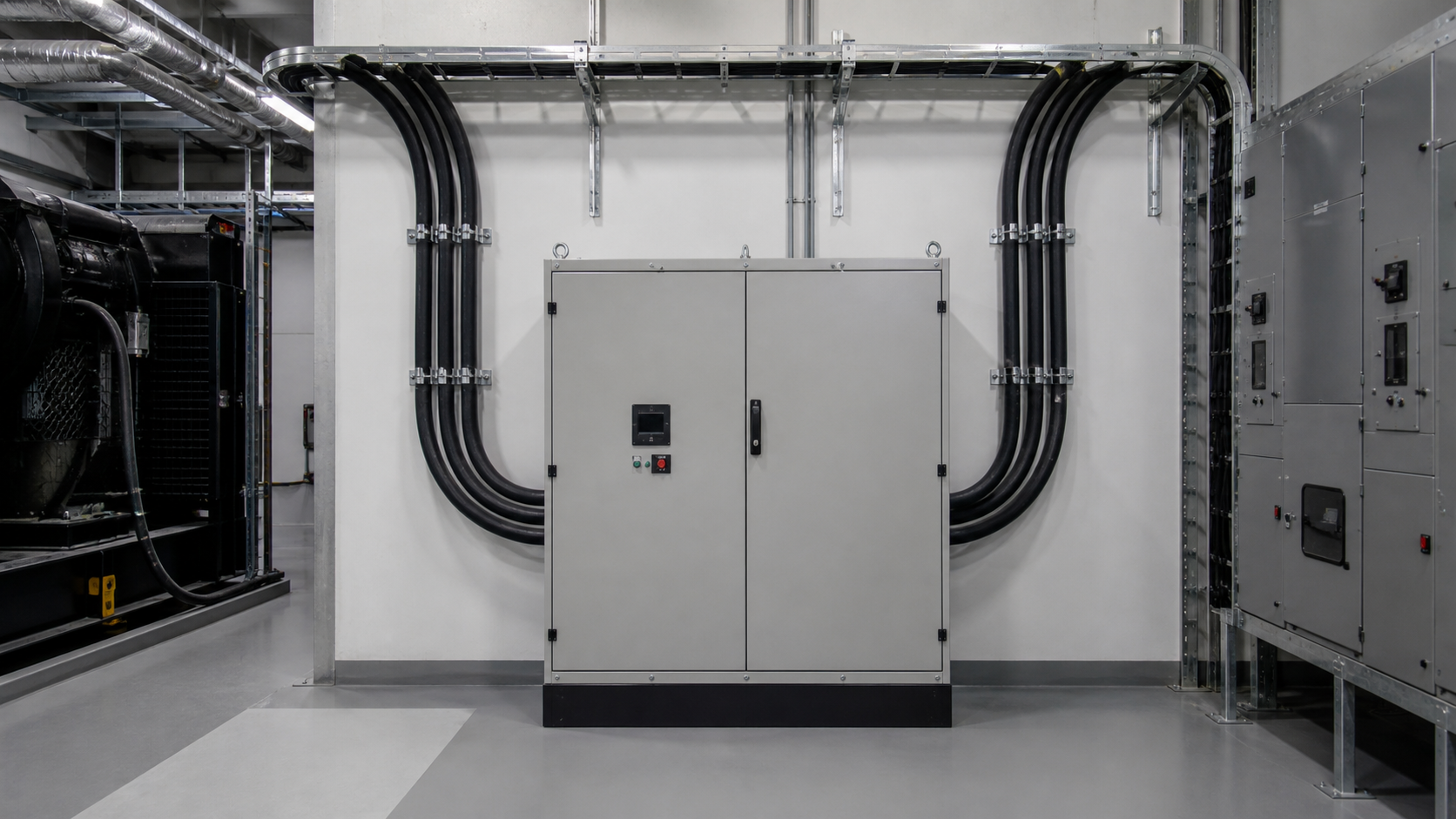
On the low-voltage side of the same installation, NEUTRON supplies the switchgear that receives the transformer output: GGD fixed-pattern and GCS withdrawable assemblies to IEC 61439 with copper busbar, WCW1 intelligent air circuit breakers from 200 A to 6300 A with 80–120 kA breaking capacity, WCM series moulded case circuit breakers to IEC 60947-2, and reactive power compensation cabinets that reduce the current the transformer has to carry.
- Specify guaranteed P0 and Pk in watts with tolerance and penalty, not a winding metal.
- State the load profile — average load factor and daily cycle — so loss capitalisation is meaningful.
- Require IEC 60076-5 short-circuit withstand evidence for every offer.
- Ask for the general arrangement drawing with mass, footprint and oil volume before comparing prices.
- Confirm bimetallic terminal pads if the winding is aluminium and the incoming cable is copper.
- Fix the routine test scope to IEC 60076-1: ratio, vector group, winding resistance, no-load and load loss, and applied and induced dielectric tests.
Frequently asked questions
Anchor: #copper-vs-aluminum-wound-oil-transformers-faq
Q: Is a copper-wound transformer always more efficient than an aluminium one?
A: No. Efficiency is set by the guaranteed no-load and load losses, not by the metal. An aluminium winding with a larger cross-section and a good core steel grade can match a copper design's losses; it will simply be physically larger. Compare guaranteed P0 and Pk in watts.
Q: How much cheaper is an aluminium-wound oil transformer?
A: For an equivalent rating and loss class the purchase price is typically 10–20 % lower, though the gap moves with commodity prices. If the aluminium unit is uprated to match copper losses exactly, much of that advantage is absorbed by extra core steel, tank and oil.
Q: Do aluminium windings fail more often?
A: Field failures attributed to aluminium usually trace back to poorly prepared bolted joints rather than the winding itself. Factory-welded internal joints, bimetallic terminal pads, correct torque and periodic thermographic inspection remove that risk almost entirely.
Q: Which winding handles short circuits better?
A: Copper has roughly two to three times the tensile strength of annealed aluminium, giving a larger intrinsic margin against radial buckling and axial collapse. Aluminium designs compensate with heavier clamping and spacer arrangements. Request IEC 60076-5 short-circuit withstand evidence for either option.
Q: What is loss capitalisation and why does it matter?
A: Loss capitalisation converts each watt of no-load and load loss into a present-value cost using A and B factors derived from your tariff, load factor and evaluation period. Adding those figures to the purchase price gives a single evaluated cost, which is the only fair way to compare two offers.
Q: Can NEUTRON supply the switchgear for a transformer installation?
A: Yes. NEUTRON manufactures GGD and GCS low-voltage switchgear to IEC 61439, WCW1 intelligent air circuit breakers from 200 A to 6300 A with 80–120 kA breaking capacity, WCM series moulded case circuit breakers to IEC 60947-2, and reactive power compensation cabinets for the transformer's low-voltage side.
Talk to a NEUTRON engineer
Send your single-line diagram, ratings and destination-market standards. NEUTRON engineering returns a specification-matched proposal with drawings, test scope and lead time.
This is general technical guidance, not a substitute for local electrical code, the applicable standard, product datasheets or a qualified engineer's design review. Confirm ratings and final configurations against the actual project.
Bring the project inputs to the first review.
NEUTRON can review the application context, electrical envelope, enclosure conditions and document requirements related to copper vs. aluminum wound oil transformers: data & tco comparison before quotation.
Discuss a technical requirementContinue learning
Explore related technical guidance in Power Distribution.
Converted from the approved Period 01 source article for Copper vs. Aluminum Wound Oil Transformers: Data & TCO Comparison. Editorial instructions, duplicate anchor placeholders and embedded publishing directions were removed; the technical body is retained for educational use.