
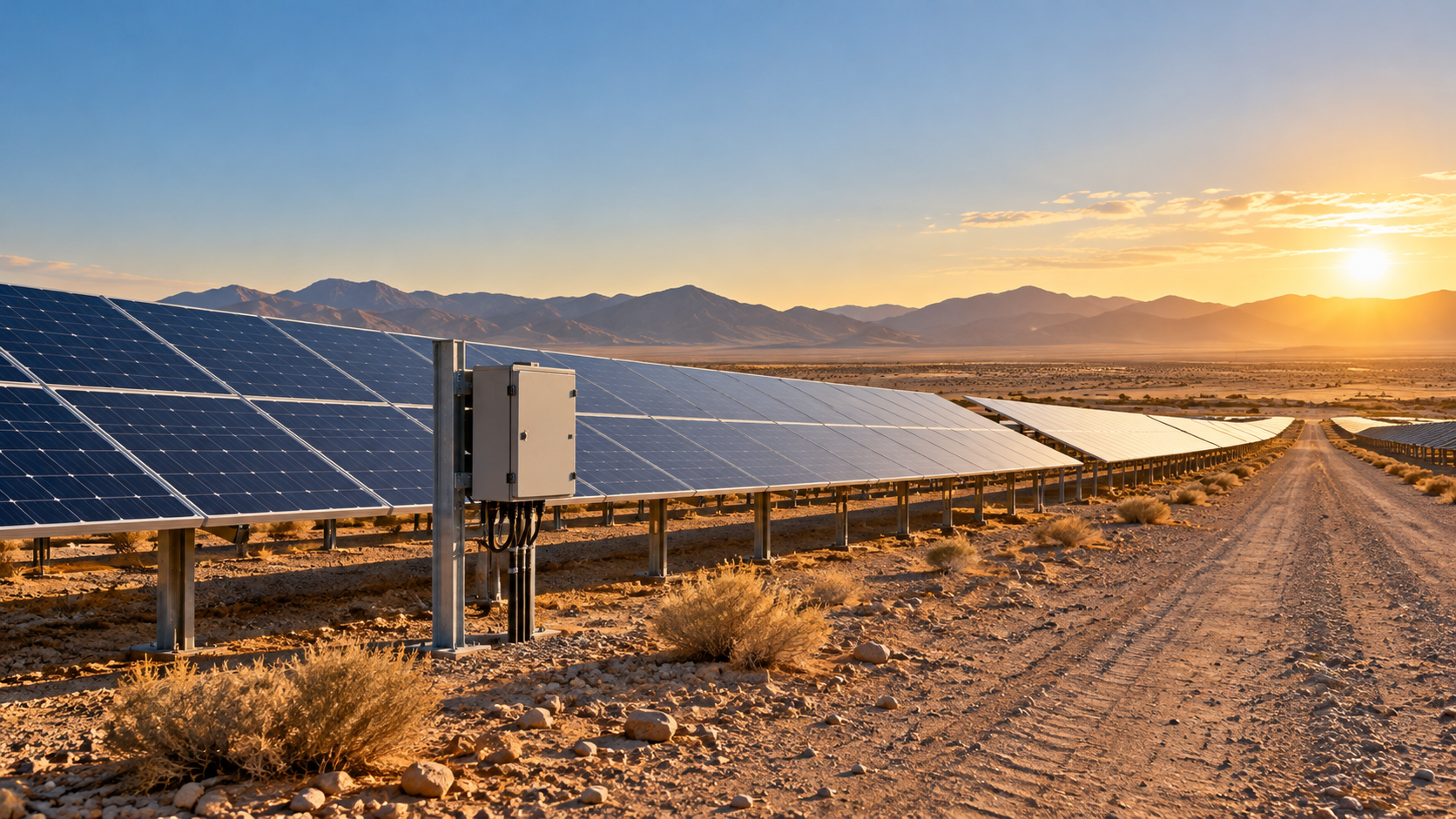
Collect site temperature and solar data
A hot desert site can expose an enclosure to high ambient air temperature and direct solar heating at the same time. The design input should be the project weather basis and mounting condition, not a generic temperature threshold. Record the expected ambient range, solar exposure, elevation, ventilation constraints and daily operating profile.
Inside the box, fuses, terminals and surge protective devices add heat through electrical losses. Verify that selected components remain within their stated operating limits at the combined ambient and enclosure condition. IEC 61439-2 includes assembly temperature-rise verification; IEC TR 60890 describes a calculation method for applicable enclosed assemblies. The method is not an approval by itself, and verification must match the actual assembly and declared operating conditions.
- Obtain design ambient and solar exposure from project documents.
- List component losses and temperature limits from current datasheets.
- Include orientation, shading and mounting surface in the review.
Technical diagram shown at a readable responsive scale.
Check component loading and temperature derating
Current ratings often depend on the reference temperature and installation conditions stated by the component manufacturer. Apply the product-specific correction curve at the expected enclosure temperature; do not assume every fuse, switch or SPD shares the same derating method. A nearby weather-station reading is not necessarily the hottest internal condition.
Review terminal connections, conductor size, busbar loading and operating duty together. A component rating cannot be considered in isolation if adjacent devices add heat or restrict airflow. Record the calculation or verification method and its assumptions in the procurement file.
- Use the exact model and applicable manufacturer table.
- Check the assembly arrangement and load together.
- Flag any rating that depends on unverified ventilation or shade.
Control dust without undermining enclosure protection
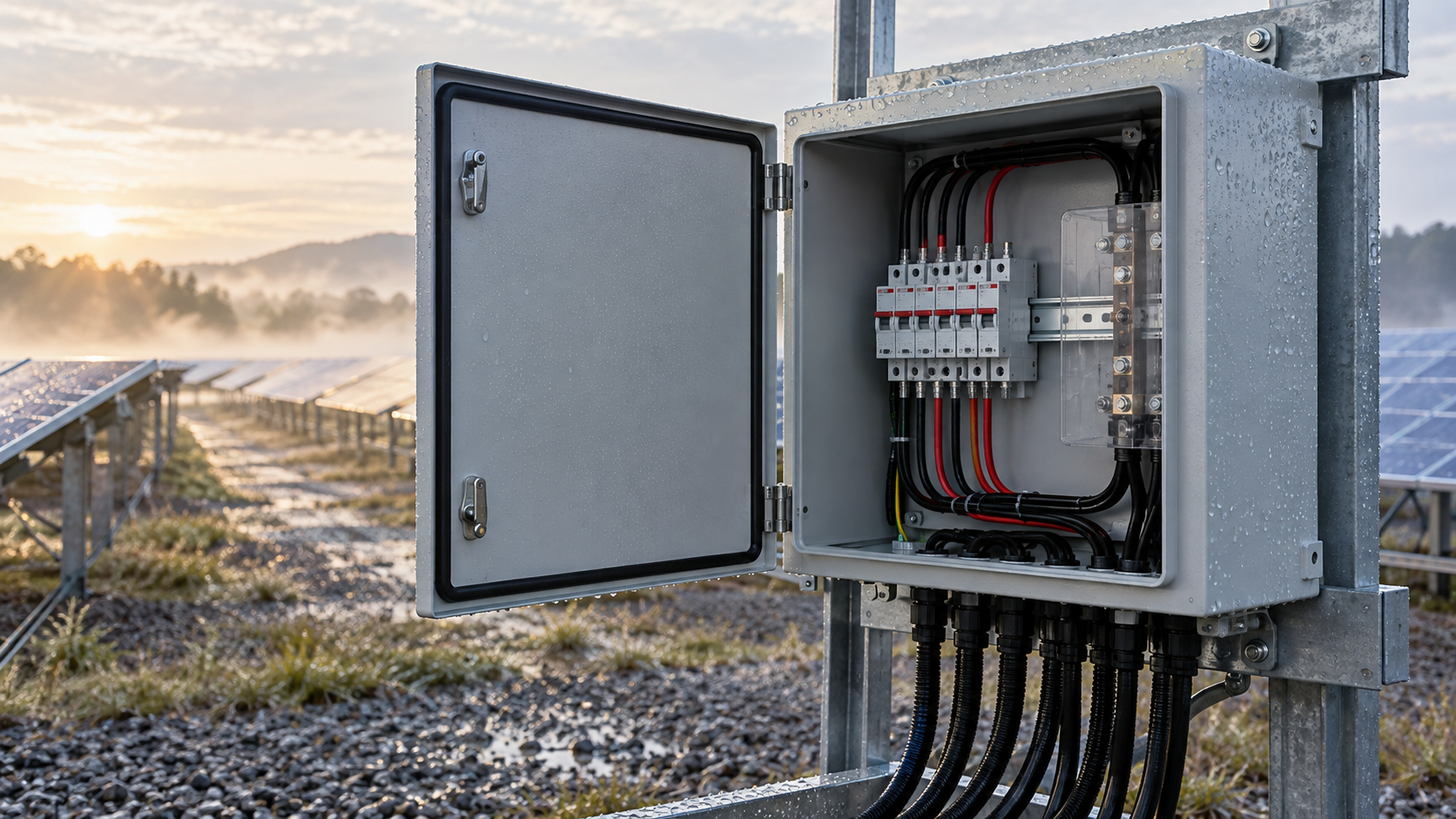
Wind-blown dust can settle on surfaces, enter through poorly specified openings or complicate maintenance. Select enclosure protection for the documented dust and water exposure and verify it under IEC 60529 classification and supplier instructions. A filter, vent or field-drilled entry may change the tested configuration and its maintenance needs.
If the design uses filtered ventilation or a pressure-equalization accessory, confirm its rating, airflow assumptions and replacement interval. If it uses a sealed enclosure, confirm that heat and condensation remain within component limits. No enclosure label removes the need to inspect seals and cable entries over time.
- Document dust exposure and any cleaning or filter plan.
- Check the assembled enclosure, including accessories and entries.
- Avoid cleaning methods that force water or grit inside.
Technical diagram shown at a readable responsive scale.
Select materials for UV and site chemistry
Sunlight, temperature cycling and airborne contaminants can affect enclosure finishes, polymer seals and exposed cable materials. Specify material and coating evidence for the actual exposure. A dusty inland site and a saline industrial desert are different corrosion environments even when daytime temperatures are similar.
Ask which surfaces and accessories the environmental statement covers, how the rating was tested, and what cleaning or inspection interval the supplier recommends. Keep material compatibility, corrosion class and replacement parts tied to the exact delivered configuration.
- Describe dust chemistry, humidity and nearby saline or industrial sources.
- Verify UV and temperature limits for seals, glands, labels and coatings.
- Set an inspection plan based on exposure and equipment documentation.
Choose a thermal-management approach
The enclosure has to manage expected losses without sacrificing protection or service access. Options may include a different enclosure size or finish, a shaded mounting location, a conductive heat path or an appropriately rated ventilation method. Select among them only after checking thermal performance and environmental protection for the complete configuration.
Do not add vents or filters based on a generic rule. For each proposed change, document the effect on ingress protection, maintenance, internal temperature and component limits. Verify the final assembly at actual loading and site conditions.
- Compare temperature rise at expected load with component limits.
- Evaluate cooling accessories as part of the complete enclosure.
- Retain thermal verification and declared operating limits.
Technical diagram shown at a readable responsive scale.
Coordinate surge protection and commissioning
Desert location alone does not determine SPD type or rating. PV system voltage, lightning-risk assessment, grounding and bonding arrangement and inverter interface drive selection. IEC 61643-31 defines requirements and test methods for PV DC SPDs; confirm the current applicable edition and the project requirements.
Commissioning should confirm delivered device ratings, wiring, monitoring contacts if fitted, enclosure sealing and labels against approved drawings. Record the test method, responsible person and any deviation. A climate-rated enclosure does not prove the complete protection scheme is coordinated.
- Match SPD data to the project DC voltage and design.
- Check earthing, conductor routing and device status indicators.
- Record field changes and update the as-built package.
General engineering information, not a project design, product certificate, code determination or safe-work procedure. Verify final ratings, installation, protection coordination and local requirements against current standards, exact manufacturer documentation and the approved project design.
Frequently asked questions
Is 45 °C a universal design temperature for desert combiner boxes?
No. Use the project's climate basis, enclosure solar exposure and internal losses. The correct design temperature depends on location, mounting and the equipment's documented operating limits.
How do you prevent overheating in a desert combiner box?
Verify expected temperature rise with actual loading and mounting, then compare each device with its manufacturer limits. Any enclosure or cooling change must retain required environmental protection.
Does IP rating prove a box is suitable for blowing sand?
An IP classification is one part of the enclosure specification. Check the test basis, complete assembled configuration, cable entries and maintenance requirements against actual dust and water exposure.
Should a desert box use forced ventilation?
Only when the thermal design calls for it and the selected ventilation method is rated for the exposure. Filters and vents add maintenance and can affect enclosure protection.
Does a desert location determine the SPD type?
No. SPD selection follows the project DC voltage, lightning-risk assessment, bonding arrangement and inverter interface, using current device and project documentation.
Review the project inputs
Share the system voltage, circuit schedule, installation location and site conditions so the equipment discussion can be checked against approved project documentation.
Discuss a projectContinue learning
Explore related technical guidance in Electrical Protection.
Prepared from the approved Period 09 source package with technical claims revised to retain project-specific and manufacturer-specific limits. Official source pages describe scope; they do not certify a NEUTRON product configuration or a customer installation.