
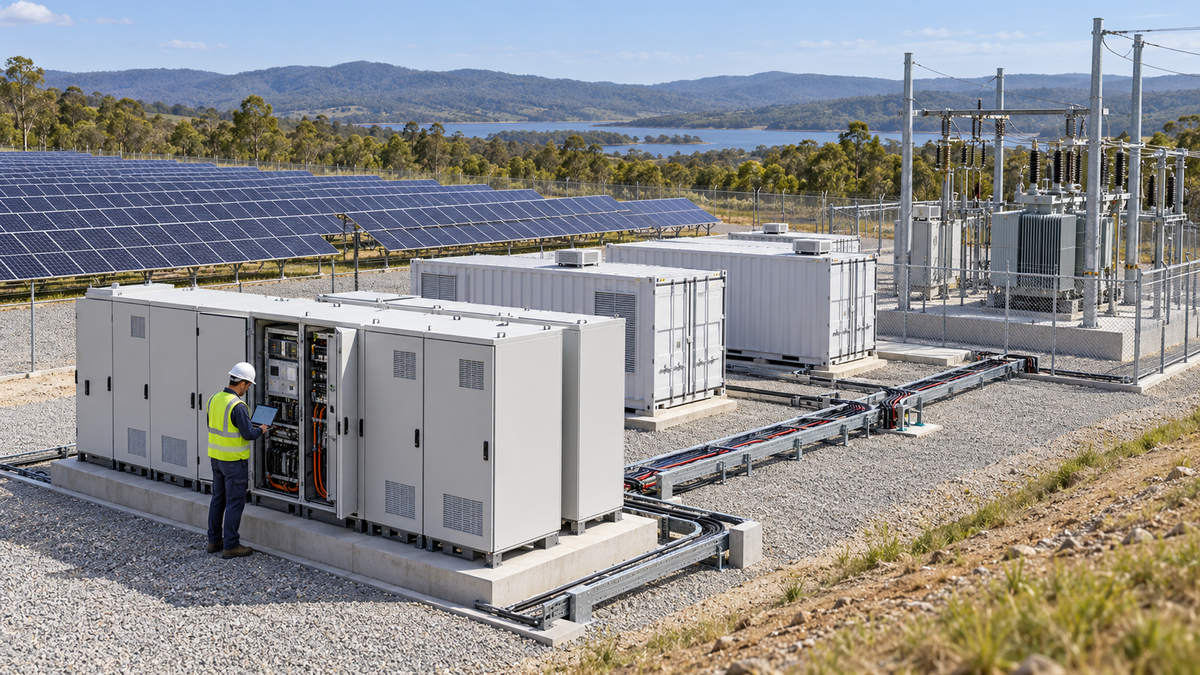
Read the control research within its scope
The National Laboratory of the Rockies describes research on grid-forming inverter controls for low-inertia systems with substantial inverter-based resources. Its public research page, updated in March 2026, emphasizes control methods, modelling and interoperability.
The programme concerns how converters behave within an electrical system. It does not establish a commercial guarantee that every photovoltaic installation using a grid-forming label can deliver continuous power under all weather conditions.
Specify the behaviour the converter must demonstrate
A grid-forming specification should identify the voltage and frequency behaviour required in the intended operating mode. Define the network conditions, other resources and disturbance cases used for assessment. A label on a datasheet is not a complete test procedure.
Interoperability matters when converters with different controls operate together or alongside synchronous generation. Review the actual combination and settings rather than assuming that each individually suitable device will produce the desired combined response.
Account for the resource behind the response
Supporting an electrical disturbance and sustaining a scheduled active-power delivery are different duties. PV availability, battery usable energy and the state-of-charge policy constrain the energy that can be delivered over time.
Converter power ratings and available storage energy should therefore remain separate in the service model. Reserve margins, auxiliary loads and any constraints on recharging also affect how much capacity can responsibly be committed.
Verify transitions and protection explicitly
If islanded operation, black start or reconnection is required, specify and verify that capability for the proposed system. Those functions should not be inferred automatically from the description of its grid-forming control.
Review protection coordination, communications failure and the authority to change settings. An operating transition can alter fault behaviour and resource availability, so the acceptance plan should cover more than a successful steady-state demonstration.
Translate firm power into a measurable obligation
A firm-power service needs an output level, duration, availability window and clearly stated exceptions. Define the metering boundary and what counts as successful delivery. Include adverse conditions relevant to the intended duty.
A project can then test control response and sustained energy delivery against their respective criteria. This gives buyers evidence for the actual service without treating a fast inverter response or a favourable forecast as an assurance of continuous supply.
Frequently asked questions
Does grid forming guarantee continuous renewable power?
No. Control behaviour and sustained energy availability require different evidence.
Does every grid-forming inverter support black start?
No. Check the specific product, system arrangement and tested operating modes.
What makes a firm-power promise measurable?
Define power, duration, operating window, metering boundary and the agreed availability conditions.
Use the news as a project input, then verify the scope.
This News item is editorial context. Confirm the final datasheet, applicable standard, project conditions and acceptance evidence before changing a design or purchase decision.
Discuss a project implication