
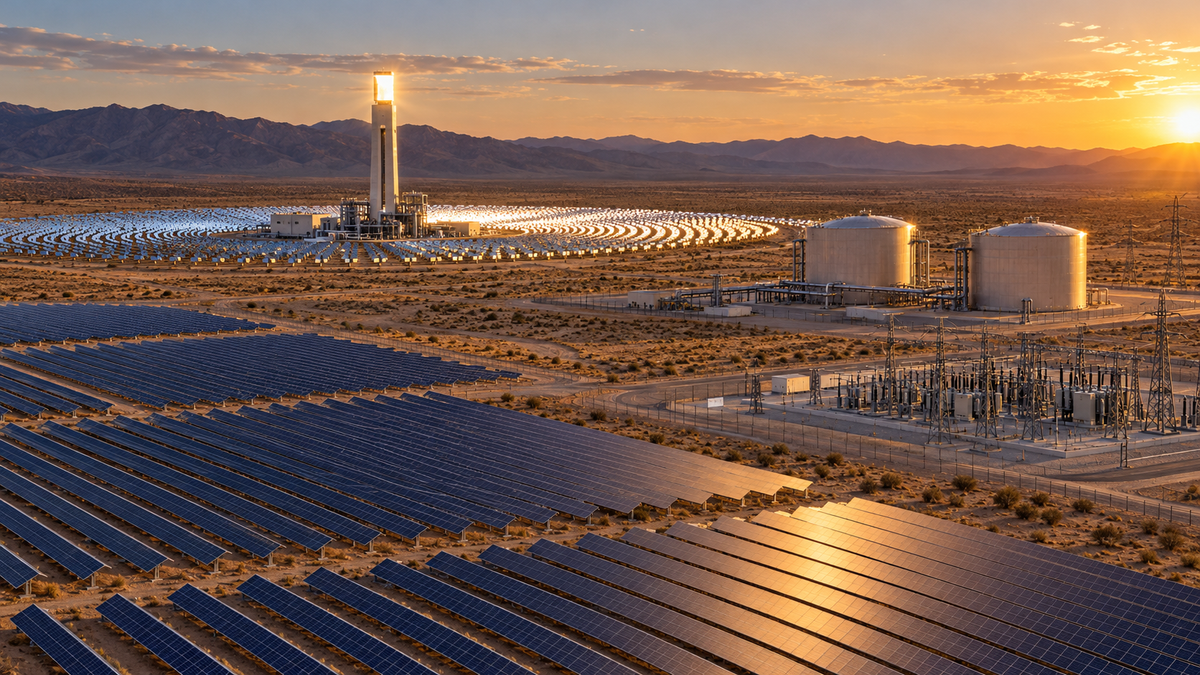
Begin with two different conversion paths
US Department of Energy guidance explains that concentrating solar-thermal power uses mirrors and a receiver to heat a fluid, with heat used to drive a turbine or engine. Photovoltaic modules instead produce electricity through their semiconductor devices.
That distinction matters when describing a hybrid plant. Locating PV beside a solar-thermal installation does not, by itself, establish a physical route for surplus PV electricity to enter thermal storage.
Identify what charges the thermal store
In a proposed arrangement, trace each charging path explicitly. Solar heat captured by the concentrating system and electricity converted to heat are different inputs. If an electric heater is intended, include its rating, controls and conversion losses in the design.
Describe the usable stored energy and the equipment that turns it into the required service. Tank volume or a storage-hour label alone does not establish the net electrical output available at the grid connection.
Define the power and time commitment
A dispatch proposition needs an output level, duration, operating window and conditions under which the service is available. Allow for the thermal plant start-up sequence, minimum operating limits and auxiliary consumption.
Coordinate PV output with the thermal generation schedule and the connection limit. A combined nameplate figure cannot demonstrate that an evening delivery obligation will be met after an unfavourable solar day.
Compare complete alternatives on the same duty
Evaluate thermal storage, batteries and other flexibility options against the same service requirement. Include capital cost, operating cost, losses, cycling pattern and the value of the delivered output. No technology is universally cheaper for every duration or market.
A study should also state the solar resource and which conversion assets already exist. Expanding an operating thermal plant and constructing a new hybrid site can have materially different economics.
Test the energy chain as an operating system
A project-level demonstration should measure net output at the agreed boundary through the specified charging and discharge sequence. Record initial stored energy, weather, equipment availability and any limits imposed by the connection agreement.
This makes dispatchability an auditable service. It avoids promising firm power merely because a plant combines PV, a concentrating field and tanks, and keeps renewable generation, storage capability and commercial obligations distinct.
Frequently asked questions
Does a CSP-PV hybrid automatically put PV electricity into molten salt?
No. That requires a designed electric-to-heat path and its associated conversion and control equipment.
Does storage duration alone establish firm output?
No. Usable energy, conversion limits, initial charge and the contracted output profile also matter.
Is thermal storage always cheaper than batteries?
No. Compare complete alternatives against the same site and service duty.
Use the news as a project input, then verify the scope.
This News item is editorial context. Confirm the final datasheet, applicable standard, project conditions and acceptance evidence before changing a design or purchase decision.
Discuss a project implication