
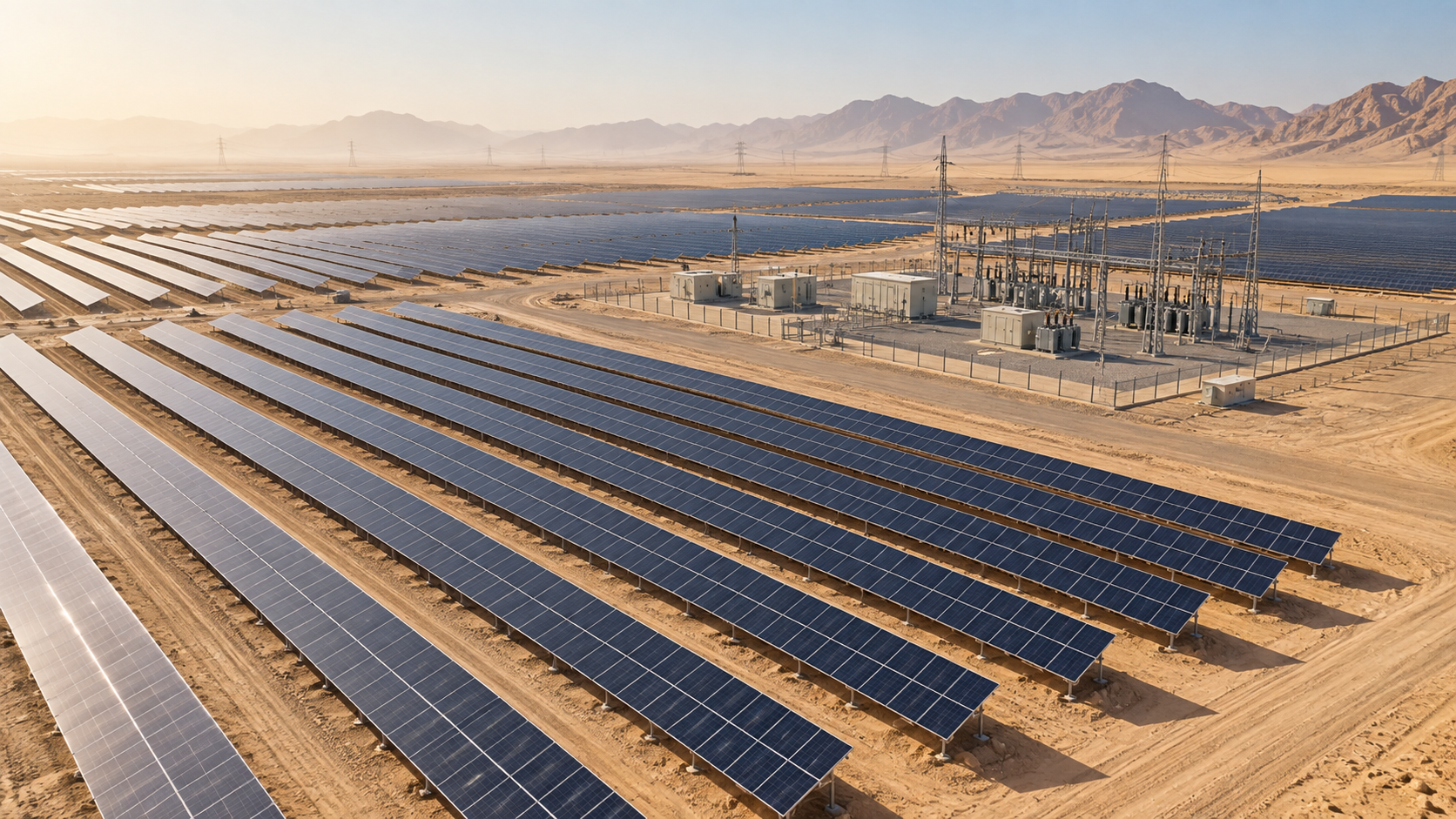
1. Project context and site constraints
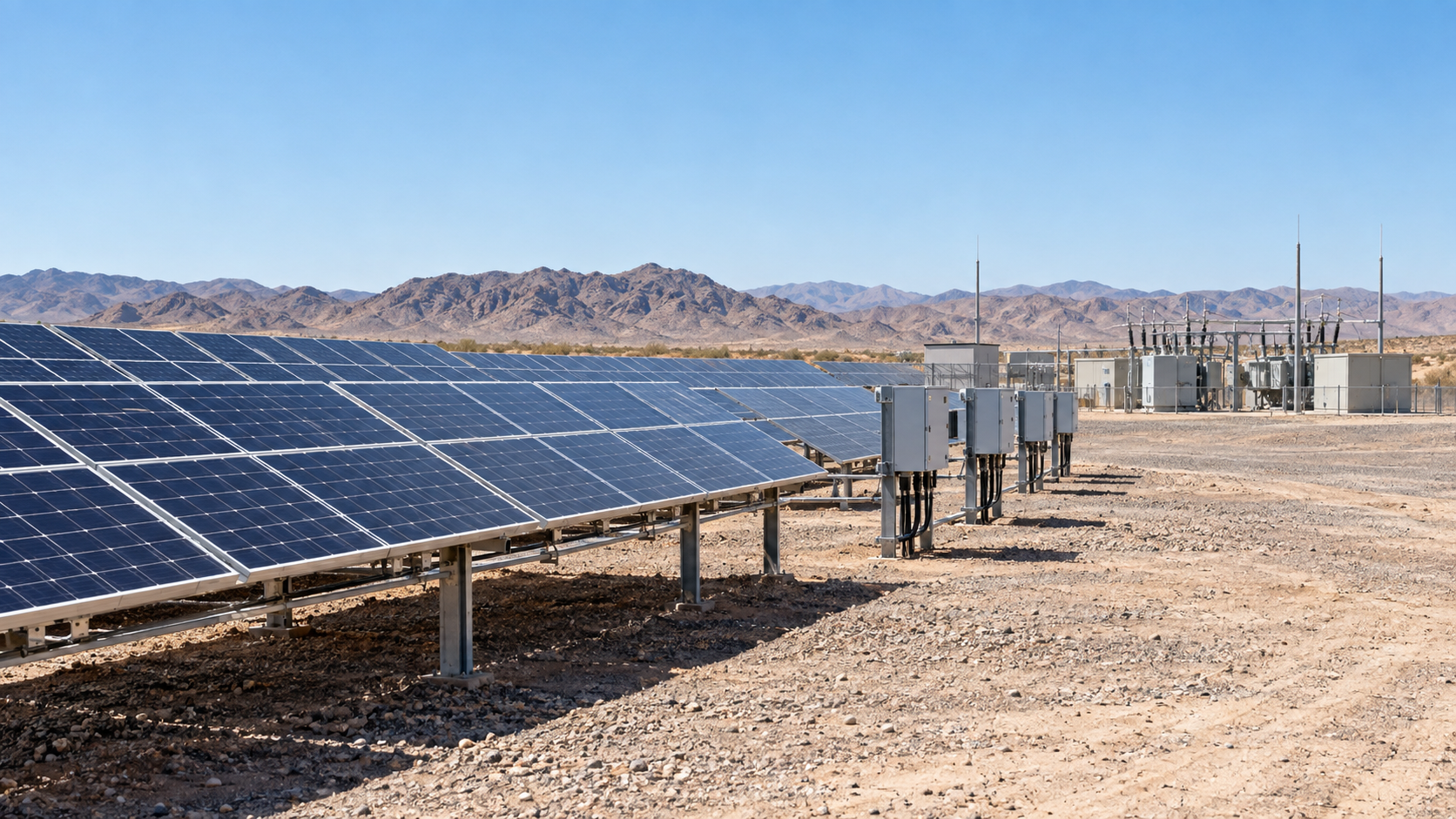
The site sits in a high-irradiation, dust-prone interior with sustained summer air temperatures well above 45 deg C. These conditions drive three specification decisions: rated current must cover bifacial string peaks, the enclosure class must resist abrasive dust, and every thermal limit must be derated for the climate rather than quoted at 25 deg C laboratory conditions.
2. Protection challenge: 1500 V DC strings at scale
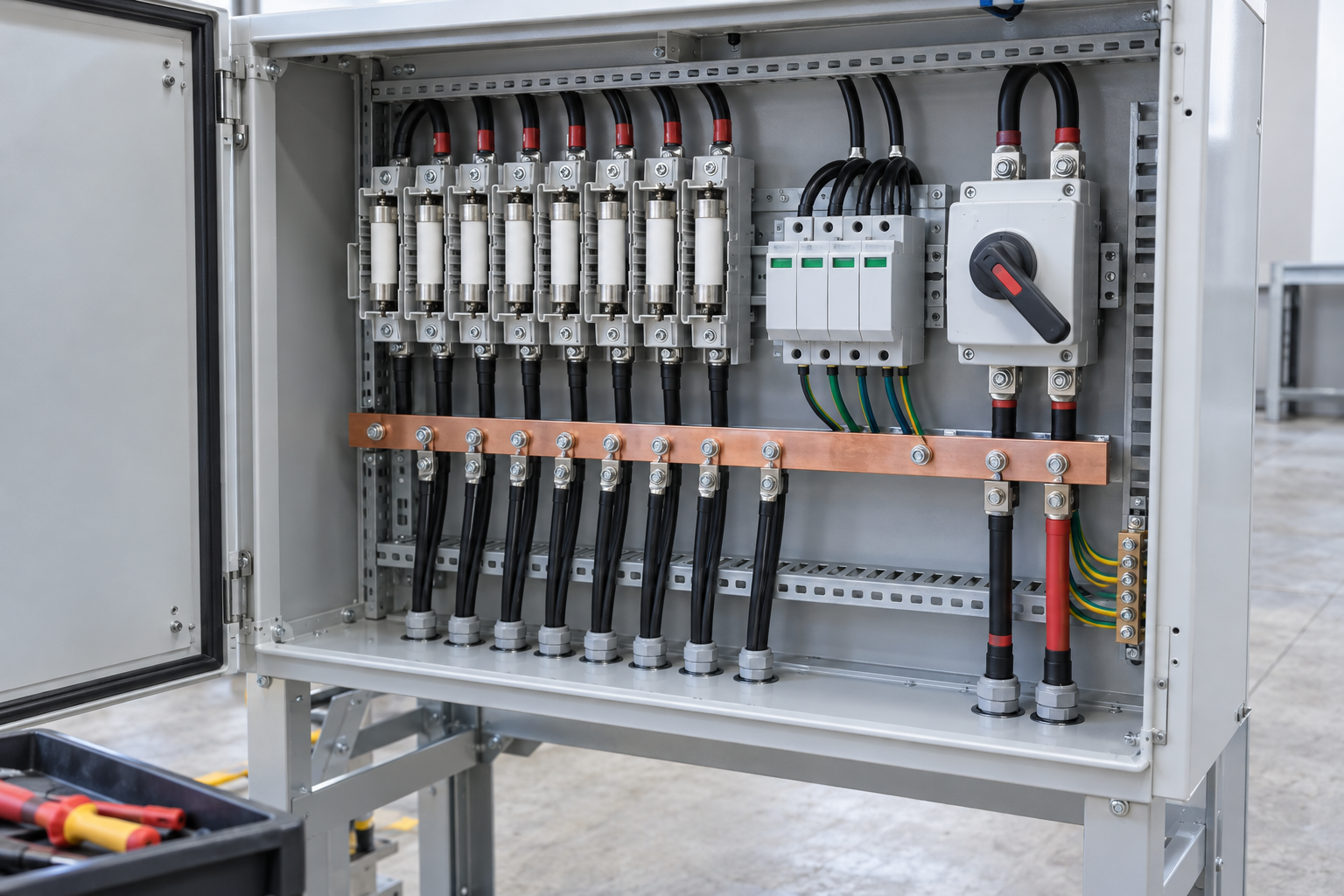
With the array arranged in many strings, the combiner layer is where fault current is first contained. Each string enters a combiner box protected by a gPV fuse sized to 1.25x the module short-circuit current including rear-side gain. A DC-rated disconnect switch and a coordinated DC surge protective device complete the in-box protection before the aggregated feed leaves for the inverter station.
3. NEUTRON supply scope
- PV combiner boxes rated to 1500 V DC, collecting multiple strings each with individual gPV fuse protection.
- DC miniature circuit breakers for auxiliary and monitoring circuits, DC-rated per IEC 60947-2.
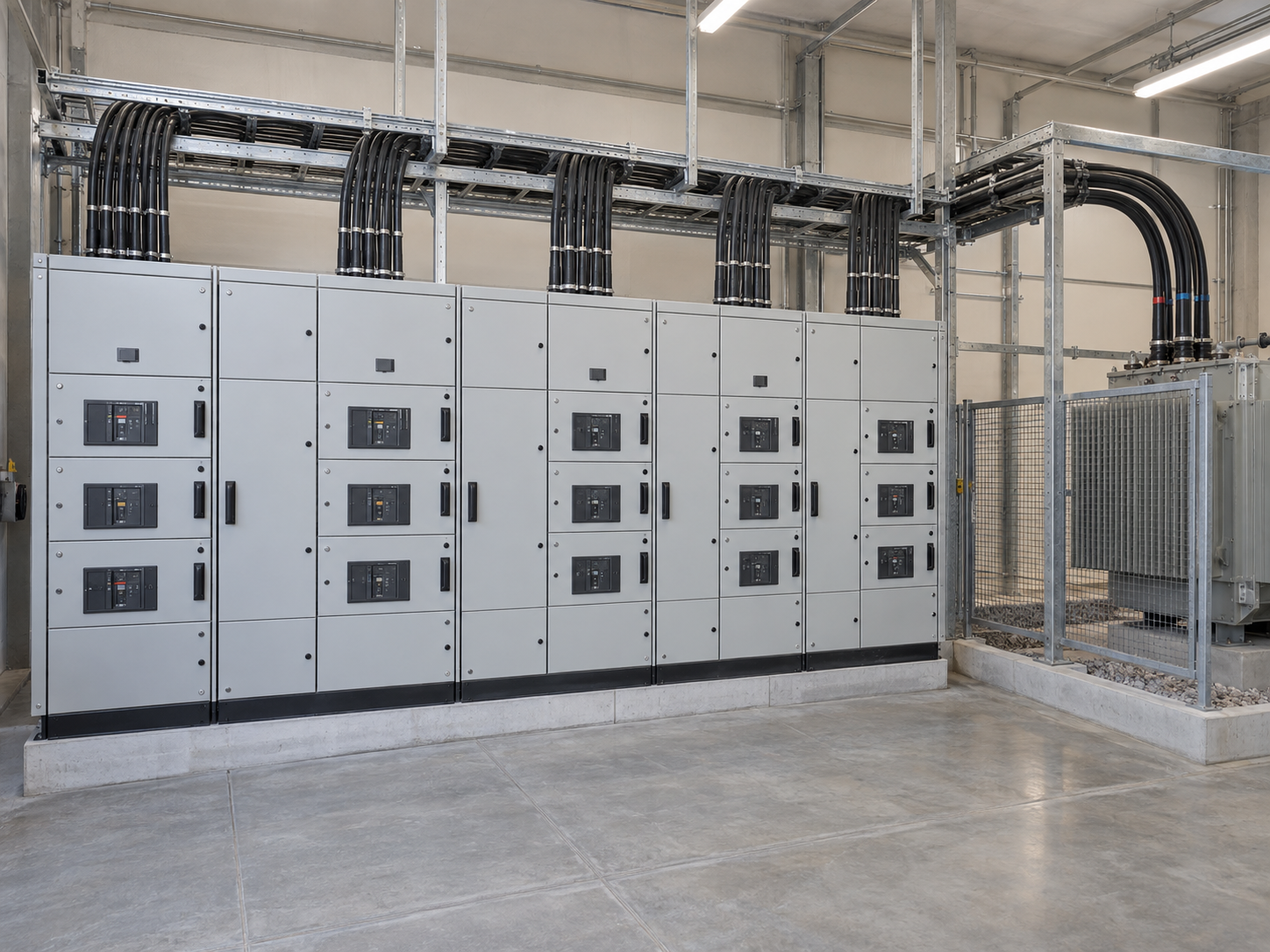
- Low-voltage switchgear assemblies at the substation, built to IEC 61439 for the AC collection side.
- DC surge protective devices staged to the 1500 V envelope (IEC 61643-31).
4. Combiner box configuration
NEUTRON configured the combiner boxes around four project numbers: maximum system voltage, string short-circuit current including bifacial gain, number of input strings, and site protection class. The internal busbar and terminal block were rated against the summed continuous current of all protected strings.
5. Thermal and environmental derating
- Current-carrying parts derated for sustained 45 deg C+ ambient and solar gain on the enclosure.
- Enclosure specified to IP65 with a corrosion class suited to inland dust.
- Ventilation path validated so the fuse and SPD stayed inside their rated temperature bands.
6. Outcome and lessons
The protection scope performed to specification through the first hot-season cycle, with no combiner-level nuisance trips attributable to the protection design. The key lesson for similar Saudi utility projects is to derate for climate up front and to coordinate the combiner, switchgear and RMU as one protection system.
Final ratings, coordination, installation and applicable local requirements must be verified against current standards, manufacturer documentation and the approved project design.
Frequently asked questions
What protection does a 300 MW PV plant require?
A layered chain: gPV fuses at each string, a DC disconnect and DC SPD in every combiner box, DC-rated MCBs for auxiliary circuits, low-voltage switchgear at the substation, and an RMU for the grid interface.
Why use 1500 V DC combiner boxes?
Utility plants standardise on 1500 V to cut current and balance-of-system cost; the combiner box, isolation switch and SPD must all be rated for that envelope.
How does NEUTRON handle desert heat derating?
Current ratings are applied against the site ambient, not the 25 deg C nameplate, and enclosures are specified for dust with a validated cooling path for the protection devices.
Which standards apply?
IEC 62916, IEC 60269-6, IEC 60947-2, IEC 61643-31, IEC 61439 and IEC 62271.
Review the utility protection inputs together.
Share the string, environmental and collection requirements for a coordinated protection review.
Discuss a projectContinue learning
Explore related technical guidance in Solar PV.
Published from the approved Period 12 source package; project, technical and standards statements are retained from the supplied publication content.