

What MC4 means
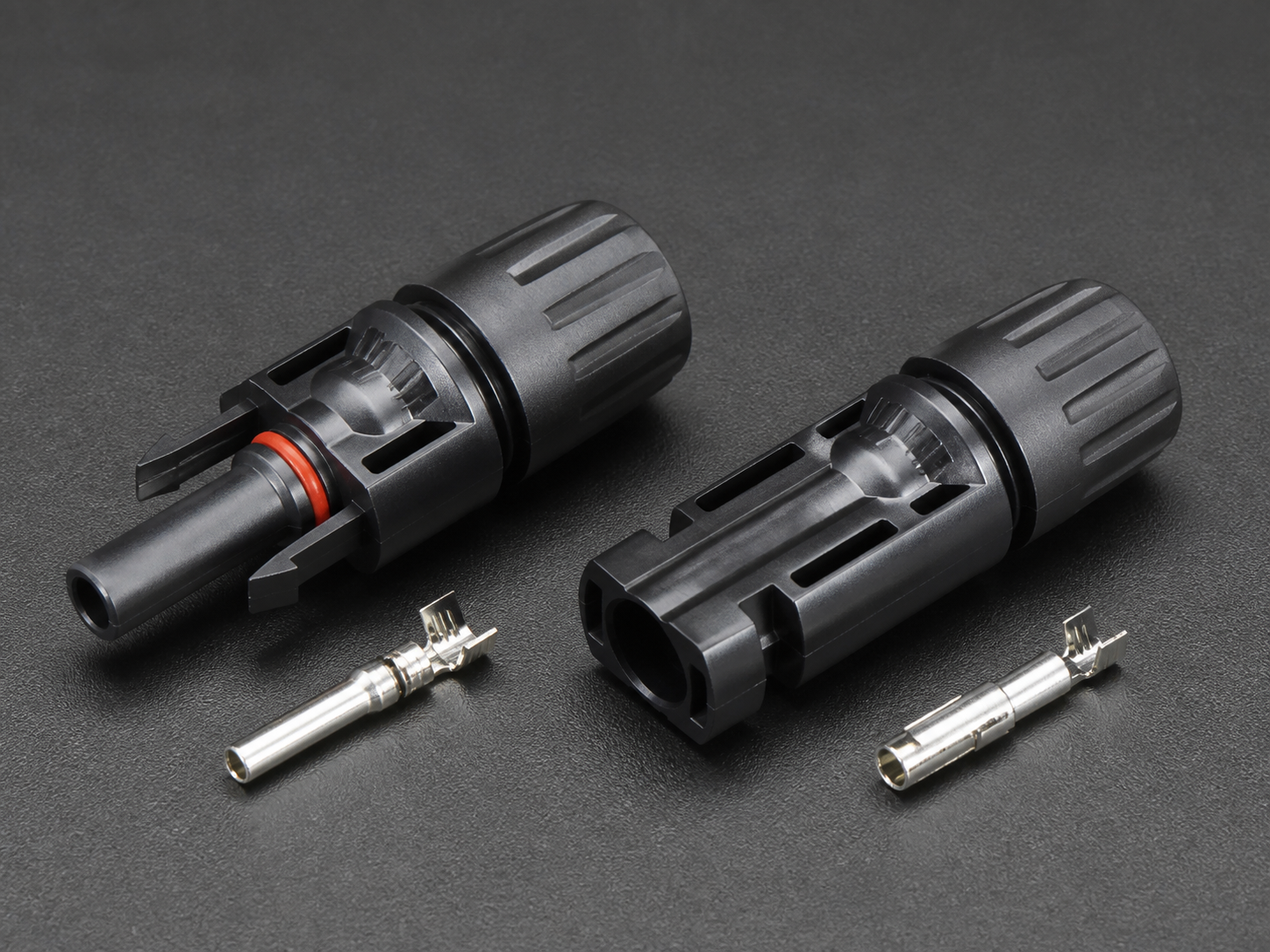
MC4 takes its name from the Multi Contact 4mm pin design, and the form factor has become the universal DC string interconnect for solar modules. The 4mm pin geometry defines the mechanical mating standard, while electrical ratings are defined by the product standard IEC 62852.
IEC 62852 ratings
IEC 62852 sets the test requirements for connectors in DC photovoltaic circuits. Qualified 1500V connectors must meet contact resistance at or below 0.5 milliohm before and after environmental conditioning, IP68 sealing at 1m depth for 24 hours, UV resistance to 3000 kJ/m2, and mechanical pull-out force of at least 80N for the 4mm version.
1000V versus 1500V connector classes
Connector insulation class must match the system maximum DC voltage. A 1000V connector in a 1500V string is a direct rating violation and a common field mistake. Specify 1500V-rated connectors whenever the array design reaches the higher class, and verify the rating printed on the housing.
The no-mixing rule
IEC 62852 qualifies each connector against its own mating counterpart; it does not make different manufacturers interchangeable. Pin diameter, contact spring force and seal geometry vary between brands by 0.1-0.3mm, enough to reduce contact force and create resistance hotspots at operating current. Solar system fire investigations repeatedly cite mixed-brand mating as a contributing factor.
- Buy one connector brand for the whole project.
- Do not substitute on partial shipments or site repairs.
- Keep mating pairs from the same batch where possible.
High-current variants
Standard MC4 connectors are rated 30A. High-current variants extend the range: the MC4-Evo 2 is rated 40A with a locking anti-unlocking feature, the H4 offers one-touch locking in the MC4 form factor, and large-format MC4-EVO connectors reach 55A for high-current combiner connections. Large-format versions are not compatible with the standard 4mm pin.
Connectors in the BOS chain
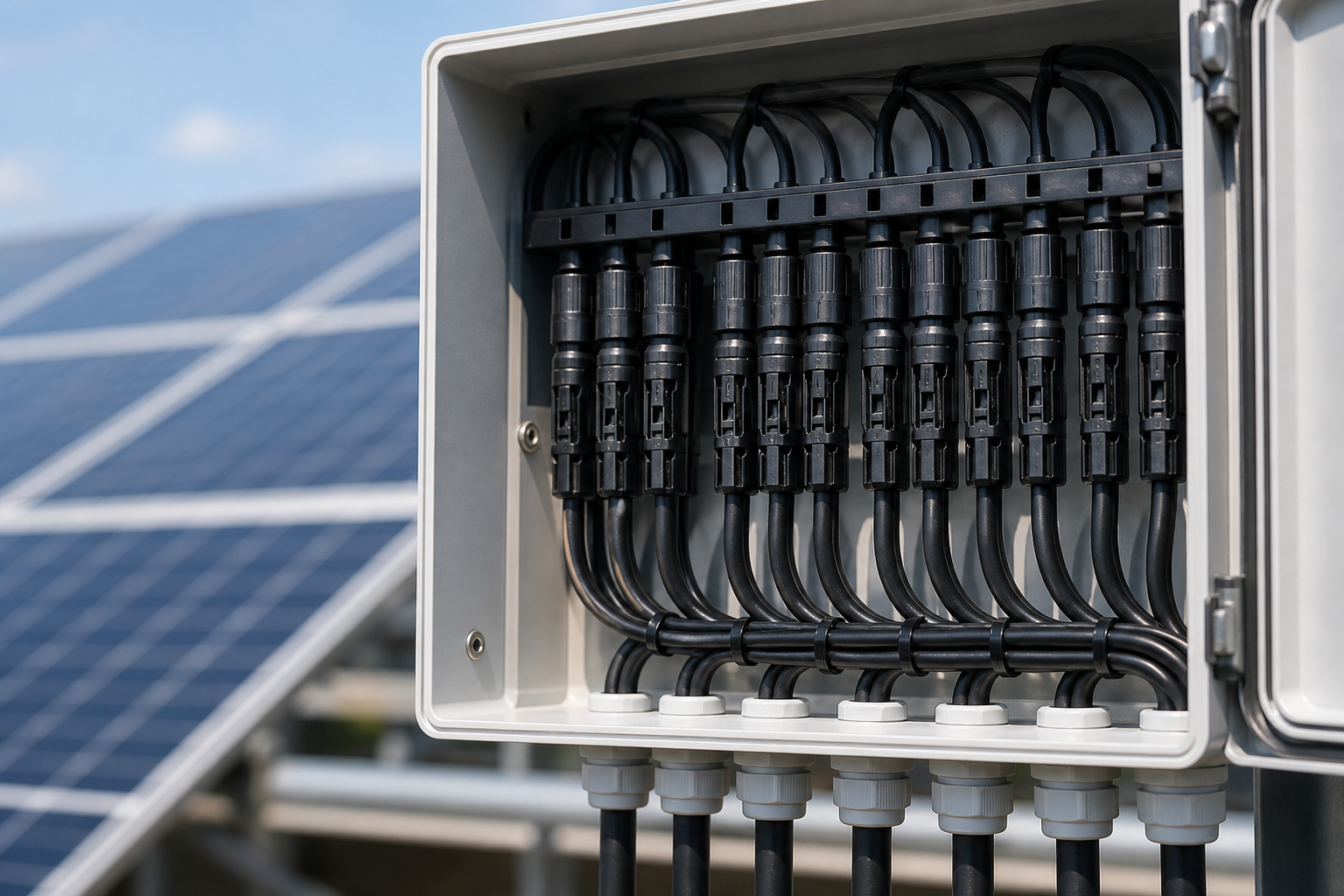
Connectors appear at every DC interface: module strings, fuse and diode connectors, branch connectors, and combiner box inputs. A combiner box specified with matching connectors for its string inputs removes the mixing risk at the most crowded junction of the array.
Procurement checks
- Confirm the connector standard (IEC 62852) and voltage class on the datasheet.
- Confirm one brand across cables, connectors and combiner inputs.
- Check IP rating suits the environment (coastal, desert, rooftop).
- Request test reports or certification references before ordering.
RFQ notes
When requesting quotations, state the connector brand, voltage class, current rating, cable cross-section compatibility and quantity. The supplier should confirm that the connector, the cable and the combiner input are rated as a matched set.
This guide supports an initial technical or commercial review. Final ratings, standards, shipping terms, documentation and configuration must be confirmed for the actual project requirement.
Frequently asked questions
Can I mix MC4 connectors from different manufacturers?
No. IEC 62852 qualifies connectors against their own mating counterpart. Pin diameter, contact spring force and seal geometry differ between brands by 0.1-0.3mm, creating resistance hotspots. Use one brand throughout a string and across the project.
What is the current rating of a standard MC4 connector?
Standard MC4 connectors are rated 30A at 1500V DC under IEC 62852. High-current variants such as MC4-Evo 2 are rated 40A and large-format MC4-EVO versions reach 55A for combiner connections.
Are 1000V and 1500V connectors interchangeable?
No. The insulation class must match the system maximum DC voltage. A 1000V connector in a 1500V string violates the rating and is a common field mistake. Verify the voltage class printed on the housing.
Why do PV fires sometimes start at connectors?
Undersized contact force from mixed-brand mating or loose seating raises contact resistance, creating resistance hotspots under operating current. Consistent torque and matched brands prevent most connector-related failures.
Bring the project inputs together
Use the checklist and technical inputs in this guide to prepare a clear project discussion.
Discuss a projectContinue learning
Explore related technical guidance in Solar PV.
Technical note: final ratings, standards, shipping terms, documentation and configuration remain subject to the agreed project requirement.