
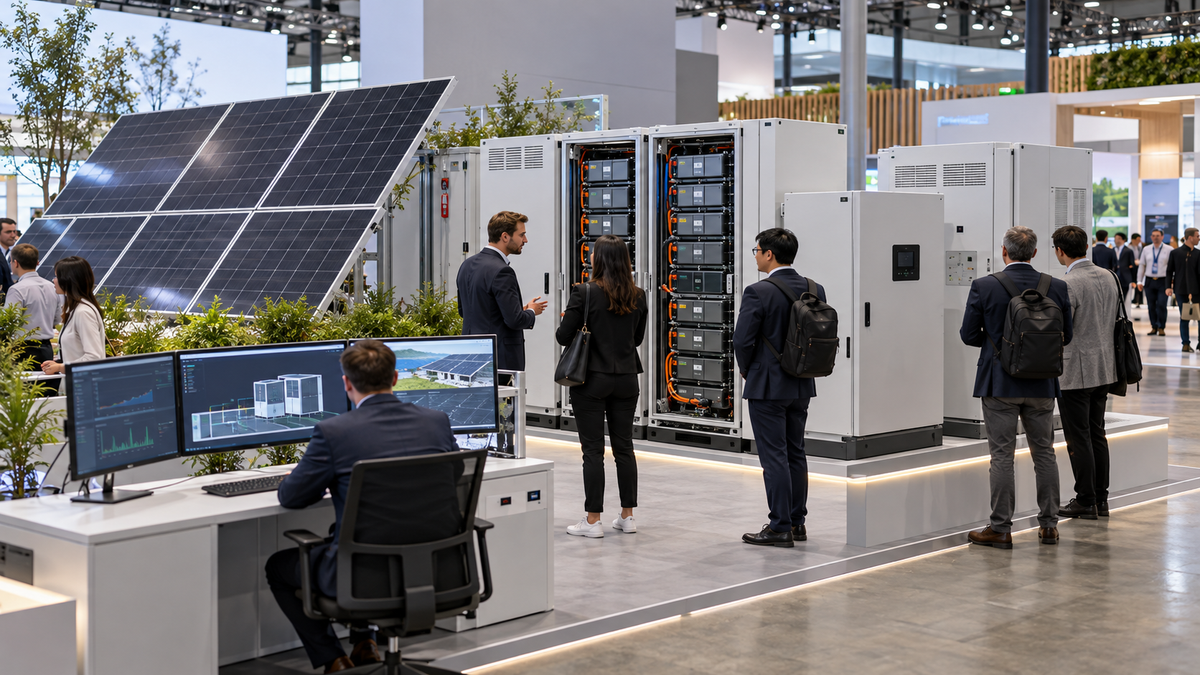
The organiser describes a broader system focus
The official SNEC closing report states that the 2026 exhibition ended in Shanghai on June 5. It describes a stronger emphasis on photovoltaic-storage integration and digital energy systems alongside developments in cells and modules. This is an organiser's account of the exhibition, with manufacturer announcements reported in that setting.
For a project buyer, the useful development is the growing need to review how equipment works together. A display can demonstrate an intended arrangement, but it does not establish the performance of a complete installation. Keep an exhibition announcement separate from the model and construction offered for a particular order.
Keep efficiency comparisons within their test format
When an exhibition report places cell, module and tandem results together, ask what was measured in each case. Active area, aperture area, device size and measurement method affect the comparison. A laboratory result should remain attached to its test sample rather than becoming a general production specification.
Request the applicable certificate and current datasheet for any shortlisted module. Record which bill of materials and manufacturing location the evidence covers. A technical roadmap, a pilot sample and routine production delivery represent different stages, even when they appear on the same exhibition stand.
Specify the interfaces between PV and storage
An integrated offer needs a defined electrical boundary, operating modes and control responsibilities. Ask how the PV inverter, storage converter, energy-management system and grid connection exchange commands and measurements. Include who owns the settings and who accepts a change in operating strategy.
The commercial review should also describe service access, software support and the handling of a communications failure. A coordinated system needs more than compatible connector names. Agree which party investigates a shortfall when component warranties overlap but the expected service is delivered by the combined installation.
Use a project-level acceptance plan
A useful demonstration reproduces the intended operating cases and records the measured response at agreed boundaries. Include transitions, unavailable equipment and limits imposed by the grid connection. Treat the resulting evidence as belonging to that tested configuration, with any exceptions recorded.
SNEC's integration theme can therefore improve a tender by making responsibilities and interfaces explicit. It should lead to better questions and more traceable acceptance evidence, rather than a universal efficiency ranking or an assumption that an exhibition system is already qualified for every project.
Frequently asked questions
Does an exhibition announcement establish project acceptance?
No. Acceptance requires evidence for the offered equipment and complete operating configuration.
Can research-cell and production-module efficiencies be ranked directly?
Only after identifying their different areas, formats and measurement conditions; they are not interchangeable specifications.
What should an integrated PV-storage tender define?
Electrical boundaries, operating modes, controls, responsibility for interfaces and a project-level acceptance method.
Use the news as a project input, then verify the scope.
This News item is editorial context. Confirm the final datasheet, applicable standard, project conditions and acceptance evidence before changing a design or purchase decision.
Discuss a project implication