
Two documented examples, with different dates
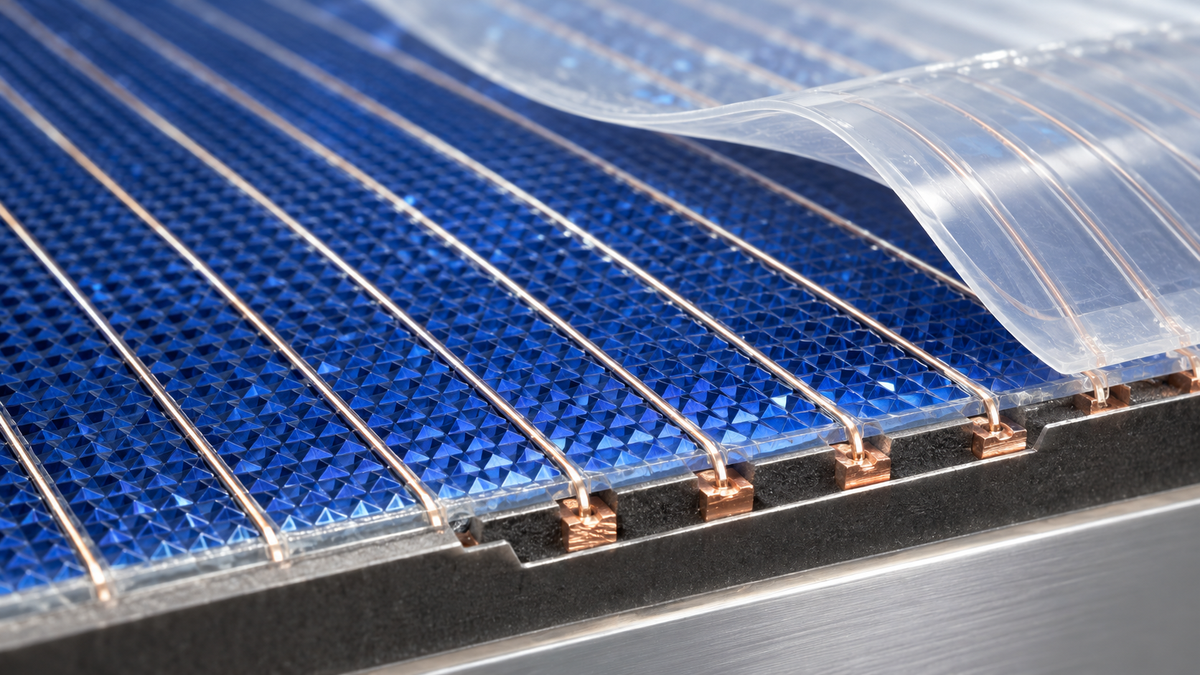
Meyer Burger's 2017 technology document describes SmartWire Connection Technology as a foil-wire electrode used to interconnect solar cells. LONGi's October 6, 2025 HPBC 2.0 article identifies a zero-busbar structure within its product platform. These are dated manufacturer descriptions. Their publication does not establish a new industry-wide interconnection standard in 2026.
The examples support a useful distinction for a manufacturing review: the absence of a conventional busbar does not specify an entire module process. A contact pattern, a bonding material and a production recipe answer different questions. Compare the actual cell and module construction before drawing conclusions from the terms SmartWire, multi-wire or 0BB.
Separate contact geometry from joining method
The SmartWire document describes an electrode combining foil and aligned wires, with a low-temperature encapsulation process. That description applies to the documented technology. It should not be expanded into a claim that every multi-wire system uses the same carrier, bonding chemistry or processing sequence.
Ask a proposed supplier to identify the wire material, contact preparation, joining mechanism and approved temperature window. The term zero busbar alone does not establish those details. Likewise, a back-contact cell architecture and the module's method of joining cells are related design choices rather than interchangeable descriptions.
Qualify the complete construction
A buyer comparing constructions can request initial electrical measurements, inspection records and environmental qualification for the delivered bill of materials. Review contact stability and laminate integrity together. A change in interconnection may require review of the encapsulant and process settings as well as the cell metallization.
Keep the exact model, construction revision and test conditions attached to the comparison. A reduction in visible front-side metal does not by itself quantify annual energy gain or establish lifetime reliability. Manufacturer marketing results should remain tied to their tested samples and stated baseline.
Treat a production change as an engineering change
For a factory considering a different cell pattern, review handling, alignment, bonding and inspection at each affected station. Request a trial using the intended materials and product geometry. Record the accepted operating window, reject criteria and changeover procedure before agreeing that existing equipment is compatible.
For a project buyer, the decision is whether the finished module meets the project requirements. Changing an assembled field module into a different cell-interconnection design is not a normal retrofit option. Evaluate replacement modules through their complete datasheets and qualification records instead of their busbar label.
What would make the next comparison useful
A useful next update would publish a dated, construction-specific comparison with a defined baseline and comparable durability testing. It would also identify whether results came from a demonstration, a production trial or delivered modules. Those details allow process evidence to support a purchasing decision.
Until that evidence is available, ask suppliers to explain the actual joining method and document material changes. This review does not assign one silver saving, yield gain or preferred cell architecture to every busbar-free technology. The practical outcome is a clearer specification for the module being purchased.
Frequently asked questions
Does 0BB identify one bonding process?
No. Ask for the joining method, materials and approved process window of the specific construction.
Is the SmartWire document a new 2026 launch?
No. The referenced manufacturer technology document dates to 2017; it is reviewed here alongside a 2025 product description.
Can a field module be converted to a different interconnection?
This is not a normal field retrofit. Evaluate a replacement as a complete qualified module.
Use the news as a project input, then verify the scope.
This News item is editorial context. Confirm the final datasheet, applicable standard, project conditions and acceptance evidence before changing a design or purchase decision.
Discuss a project implication