
The reported test
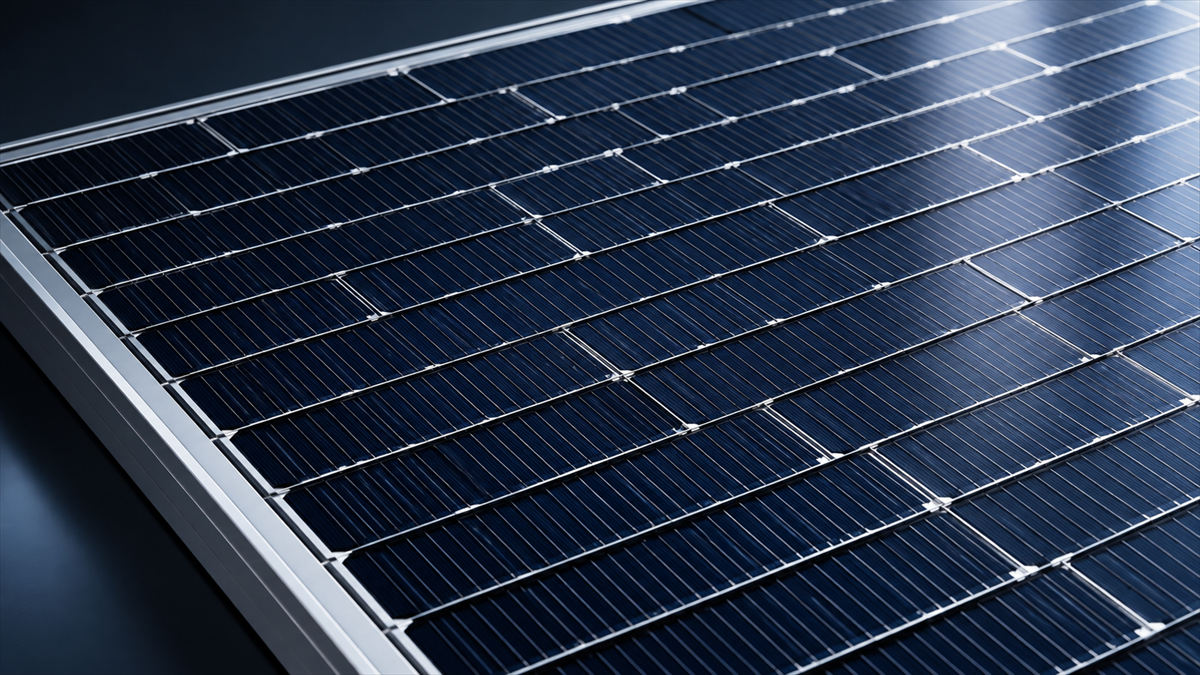
On 25 June 2026, JinkoSolar announced that its Tiger Neo 3.0 modules received TÜV Rheinland verification for shading resistance and hail testing. The company attributed the shading behavior in selected scenarios to a quarter-cut cell layout and an optimized internal circuit design.
The company release reports up to 16% higher output than the compared back-contact products and up to 17% higher than conventional TOPCon products under selected shading scenarios using the named PfG 2926/05.25 methodology. These are bounded test comparisons, not universal annual-energy gains.
What cell slicing changes
Cut-cell layouts alter current paths and how partial shading affects the module's electrical behavior. The result depends on cell geometry, bypass-diode arrangement, interconnection, shade position and test procedure; changing any of those inputs can change the comparison.
A module described as quarter-cut or multi-slice is not automatically superior in every condition. Buyers should compare the actual datasheet and shading test report for the specific model rather than transfer a result from a different module family.
What the result does not prove
A controlled shading scenario is not the same as a site's annual yield simulation. Nearby obstructions, tracker movement, string design, mismatch, soiling and inverter behavior affect field performance and should be modeled using project-specific inputs.
Likewise, a hail verification is a distinct mechanical test; it should not be inferred from the shading result. Keep the test standard, sample, product revision and pass criterion attached to each performance statement.
How to use the information
For procurement, request the model-specific TÜV report, test configuration, comparator models and shade-pattern details. Confirm that the offered product revision matches the tested configuration and that the warranty covers the selected installation and operating conditions.
For engineering, use the certified datasheet for voltage and current design, then model shading and mismatch separately. The headline result can inform screening, but it should not replace string design or yield analysis.
A more useful next comparison
Future reports will be easier to compare if they disclose the shade mask, irradiance, module orientation, electrical setup, repeated-trial variation and full output curve. Those details help buyers distinguish a robust design benefit from a result confined to one test window.
Frequently asked questions
What did TÜV Rheinland verify for Tiger Neo 3.0?
JinkoSolar reported an A+ shading score under the PfG 2926/05.25 method and a separate advanced hail-resistance verification according to VKF standards. The release's output comparisons apply to selected shading scenarios.
Does quarter-cut cell design guarantee higher annual energy?
No. The reported percentages are from selected test scenarios. Annual energy depends on site shading, orientation, system design, weather, mismatch and operating conditions.
Should a shading result be used to size a PV string?
No. Use the product datasheet and project electrical design for string sizing. A shading test may inform product comparison but does not replace voltage, current and protection calculations.
Use the news as a project input, then verify the scope.
This News item is editorial context. Confirm the final datasheet, applicable standard, project conditions and acceptance evidence before changing a design or purchase decision.
Discuss a project implication