
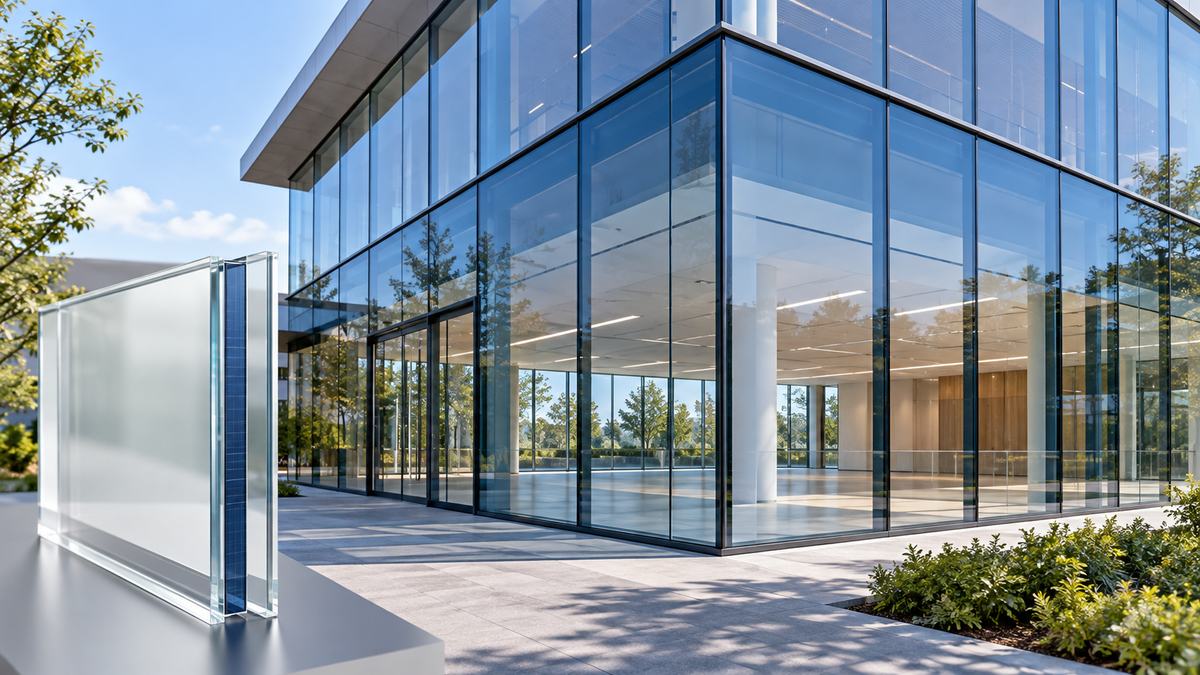
A documented research programme
The National Laboratory of the Rockies describes photovoltaic windows within its broader windows research programme. Its SwitchGlaze work combines thermochromic behaviour with perovskite electricity generation: the window changes from transparent to tinted in response to heat, generating power in the darkened state.
The programme also covers building modelling, materials development, prototypes, durability assessment and field demonstrations. The undated programme page is a research reference reviewed on October 15, 2026. It should not be described as a newly announced, generally available product launch.
Distinguish the optical behaviour
For a design comparison, ask whether the proposed product has fixed transparency or changes optical state during operation. Record which state applies to each reported power and daylight figure. A photograph of clear glass is insufficient to establish how a generating window behaves throughout a hot afternoon.
The laboratory discusses electrochromic windows separately from its thermochromic-photovoltaic work. Adjustable tint by itself does not establish electricity generation. A supplier comparison should therefore identify the generating layer, switching mechanism and electrical terminals rather than grouping all smart glass under one energy claim.
Compare the complete building effect
A project team can request a building model using the proposed orientation, glazing area and operating schedule. Compare electricity generation with heating, cooling, daylight and occupant requirements. Treat the model as a project calculation with visible inputs and a stated reference glazing specification.
Ask for optical and thermal properties in each relevant operating state, together with how shading and adjacent buildings are represented. Avoid applying a laboratory cell efficiency directly to an entire facade. The active area, framing and electrical arrangement need to be identified in the calculation.
Ask for glazing and electrical evidence
The laboratory identifies durability evaluation as part of emerging window development. For procurement, request evidence for the actual assembled glazing unit and its electrical construction. A result for a small cell does not describe every seal, edge connection or insulating glass configuration.
The acceptance review should allocate responsibility for installation, wiring access and replacement of a failed unit. Agree which party addresses a building-envelope defect and which addresses a generation fault. These practical boundaries belong in the specification before energy savings are included in the business case.
What would support a deployment decision
A useful next demonstration would report installed area, optical states, climate and measured building operation alongside electricity output. It should identify the baseline and monitoring period so that another project can judge whether the result is transferable to its orientation and occupancy.
For now, request a model-specific package covering glazing compliance, electrical characteristics, installation details and performance evidence. Keep generation and building energy effects traceable to their respective measurements. That approach allows photovoltaic windows to be assessed as part of the building rather than through a standalone efficiency headline.
Frequently asked questions
Does every tinted smart window generate power?
No. Confirm that the proposed glazing includes a photovoltaic generating layer and documented electrical output.
Does SwitchGlaze stay transparent while generating at its tinted-state output?
The cited programme describes a heat-responsive transition from transparent to tinted; reported properties must identify the operating state.
Can a cell efficiency establish facade energy savings?
No. Evaluate the complete glazing and building, including area, orientation, optical states and heating and cooling effects.
Use the news as a project input, then verify the scope.
This News item is editorial context. Confirm the final datasheet, applicable standard, project conditions and acceptance evidence before changing a design or purchase decision.
Discuss a project implication