
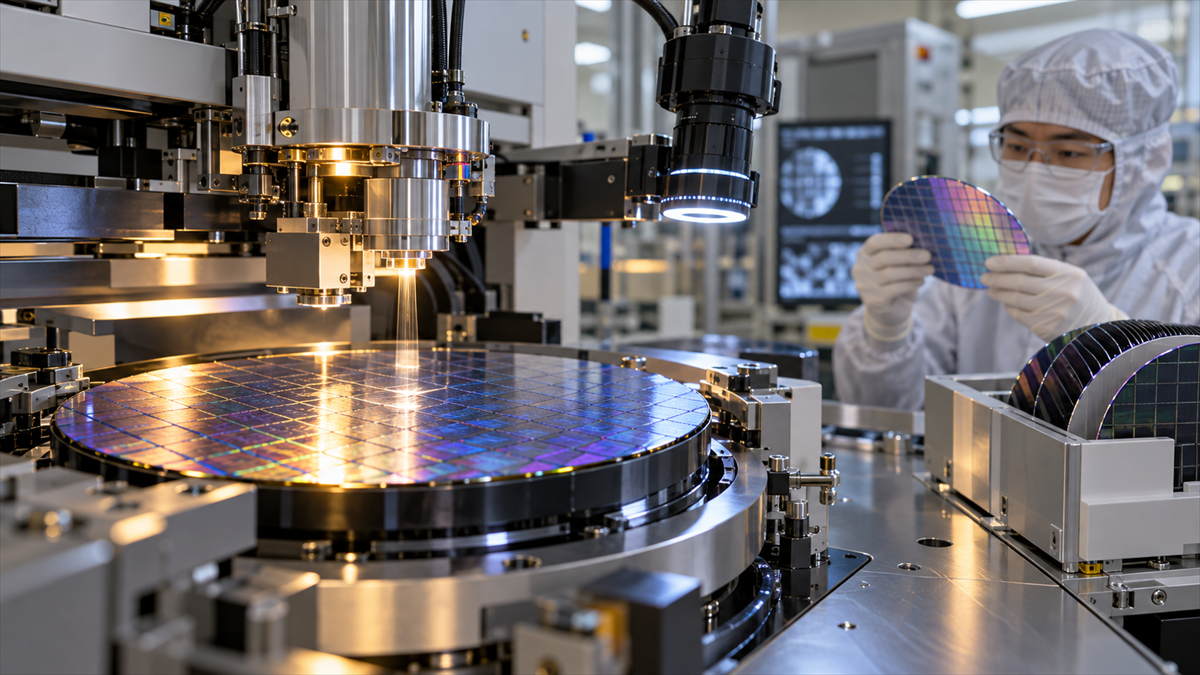
The study in brief
A 2026 paper in Energy and AI describes a data-driven machine-learning framework for wafer-quality decisions in solar-cell manufacturing. The authors report using more than 100,000 industrial production-line cell records and selecting an Extra Trees model for its predictive performance and computational efficiency.
The paper examines potential manufacturing uses such as screening wafers and identifying process pathways associated with better outcomes. It is a research result on a defined dataset, not evidence that every PV factory has moved from inspection to autonomous process control.
Prediction is not the same as control
A model can estimate a quality outcome from recorded input features. A production control system must also validate sensors, account for process drift, manage missing or biased data, operate within safe equipment limits and confirm that interventions improve yield without creating downstream failures.
The study's data scale is notable, but its claims remain bounded by the product mix, process route, measurement system and time period represented in the dataset. Readers should distinguish a retrospective model from a prospectively deployed control loop.
What manufacturers need before deployment
Practical deployment requires stable data definitions, lot traceability, representative samples, monitoring for distribution changes and a process for human review. Explainability can help engineers understand feature relationships, but correlation alone does not establish a causal process recipe.
A model should be evaluated against simple baselines and audited by line, product type and time window. Performance should be reported with the target definition and error costs, especially when false acceptance can move defective cells into later stages.
What this means for buyers
For a module buyer, AI language is not a quality certificate. Request the manufacturer's inspection plan, traceability records, acceptance criteria and product-level quality evidence rather than assuming that the use of AI guarantees better output.
For technology watchers, the study is a useful example of applied analytics using industrial-scale data. The next evidence step is prospective validation and transparent reporting of measurable production outcomes under a defined operating scope.
The next research milestone
The most useful follow-up would disclose external validation, process-intervention results, drift monitoring and reproducibility across lines. Until then, the careful conclusion is that ML can support PV manufacturing decisions—not that it has independently optimized every production step at scale.
Frequently asked questions
How much production data did the 2026 study use?
The study reports more than 100,000 solar-cell data points collected from an industrial manufacturing line. That sample size describes the study dataset and does not establish a universal model accuracy.
Does the research show AI autonomously controlling a PV cell line?
No. It presents data-driven decision methods and potential manufacturing applications. A validated autonomous closed-loop deployment requires separate prospective evidence and safety controls.
What should a buyer ask a supplier claiming AI-based quality control?
Ask what inspection task is automated, how the model is validated, what defects and sample sizes are represented, how errors are measured, and how production records are traced to the delivered product.
Use the news as a project input, then verify the scope.
This News item is editorial context. Confirm the final datasheet, applicable standard, project conditions and acceptance evidence before changing a design or purchase decision.
Discuss a project implication