
News frame
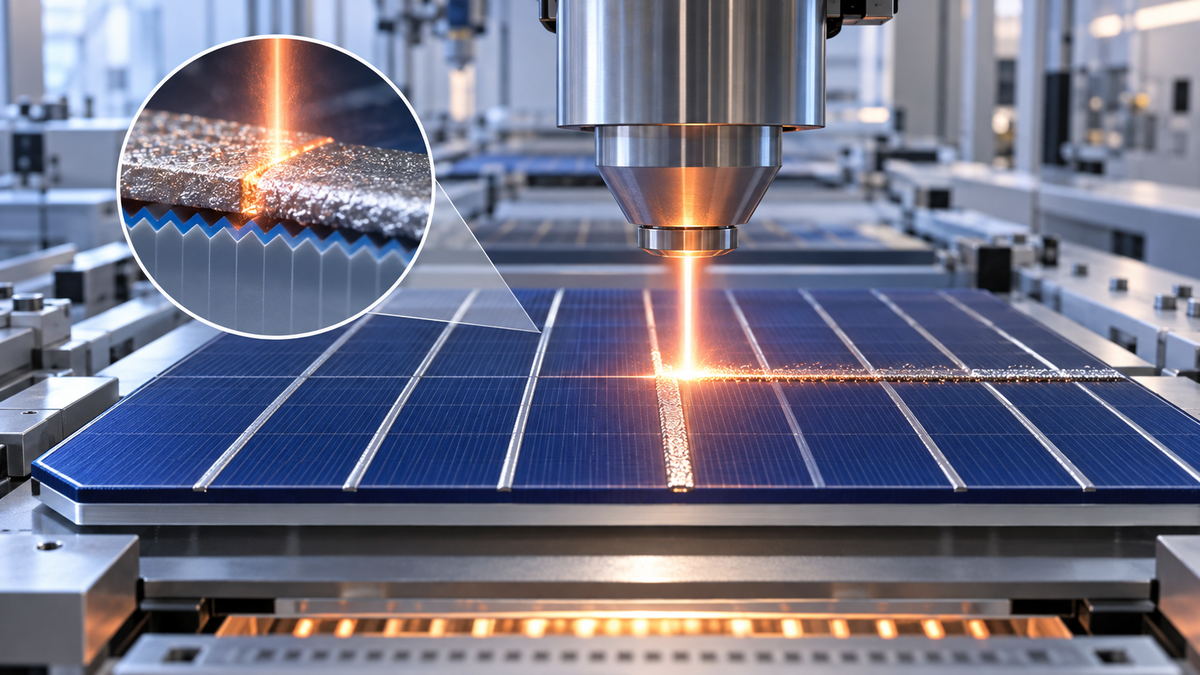
In 2026 LECO turned from lab novelty to TOPCon production baseline, lowering contact resistance and lifting efficiency by about 0.2-0.3 points. This edition treats the item as a dated industry update and separates reported observations from forward-looking interpretation.
The item is reported as an industry development; the supplied brief does not establish that it is a universal market rule or a NEUTRON product claim.
What is confirmed
LECO (laser-enhanced contact optimization) introduces a laser pulse during firing to refine the metal-silicon contact, cutting contact resistance by over 30%. The process adds about 0.2-0.3 percentage points of cell efficiency and is now a default step on new TOPCon lines.
The figures above should be read as the values stated in the supplied brief. They are not presented as a universal benchmark, a guaranteed product specification, or a rule that applies outside the stated test or procurement context.
Technical and commercial context
Combined with double-sided poly passivation (rear ultra-thin polysilicon pushing open-circuit voltage above 730 mV), LECO helped some TOPCon cells exceed 26.5% production efficiency. LECO requires compatible paste and firing profiles; lines without the upgrade risk missing the 23.2% tier-3 module threshold under the 2027 standard. The technique illustrates the broader 2026 theme: efficiency gains now come from process integration (LECO + poly + 0BB) rather than cell architecture alone.
The change matters because it connects a technical metric with a decision made downstream. A record result can affect qualification priorities; a manufacturing change can affect yield and traceability; and a control strategy can affect the evidence required for grid or customer acceptance.
What remains conditional
Several boundaries remain material: measurement method, sample size, test duration, product format, climate, operating profile, and the date on which the claim was made. Where the supplied brief does not state one of these boundaries, this article leaves the claim conditional rather than filling the gap with an inferred number.
The article also avoids turning an individual company announcement into an industry-wide conclusion. Buyers should compare the stated value with the applicable datasheet, tender language, standard, and acceptance test before changing a design or purchase decision.
Why this matters for project teams
For an engineering or procurement team, the useful question is whether the claimed cell or module improvement changes electrical design, thermal margins, mechanical loading, or the evidence required at acceptance.
In NEUTRON's content boundary, the news is useful as planning context for protection, distribution, and system integration work. It does not certify a component, approve a project, or replace a product-specific calculation.
Outlook
The new technology theme is likely to remain active through 2027 as more projects publish test conditions and buyers ask for repeatable evidence. The next useful update will be a dated result with a named method, a defined sample or operating envelope, and a clear distinction between demonstration, pilot production, and routine commercial delivery.
Until that evidence is available, the appropriate editorial status is monitored news: suitable for an industry update, with final publication still subject to media, route, and release checks.
Frequently asked questions
What is LECO in solar cell manufacturing?
LECO (laser-enhanced contact optimization) introduces a laser pulse during firing to refine the metal-silicon contact, cutting contact resistance by over 30%. The answer depends on the stated test method, product format, and date; this update does not extend the claim beyond those boundaries.
How much efficiency does LECO add?
The process adds about 0.2-0.3 percentage points of cell efficiency and is now a default step on new TOPCon lines. The answer depends on the stated test method, product format, and date; this update does not extend the claim beyond those boundaries.
Can an existing TOPCon line be retrofitted with LECO?
Combined with double-sided poly passivation (rear ultra-thin polysilicon pushing open-circuit voltage above 730 mV), LECO helped some TOPCon cells exceed 26.5% production efficiency. The answer depends on the stated test method, product format, and date; this update does not extend the claim beyond those boundaries.
What should a buyer verify before acting on this news?
Verify the event date, measurement method, product or project scope, applicable standard, and the acceptance evidence required by the contract. Do not treat an industry update as a substitute for a model datasheet or project calculation.
Use the news as a project input, then verify the scope.
This News item is editorial context. Confirm the final datasheet, applicable standard, project conditions and acceptance evidence before changing a design or purchase decision.
Discuss a project implication